

Commentary
Putin’s conservative staffing policies and search for ever greater control have cemented parliament’s transformation into a bureaucratic appendage of the executive branch.
Andrey Pertsev
{
  "authors": [
    "Kirill Krivosheev"
  ],
  "type": "commentary",
  "blog": "Carnegie Politika",
  "centerAffiliationAll": "dc",
  "centers": [
    "Carnegie Endowment for International Peace",
    "Carnegie Russia Eurasia Center"
  ],
  "collections": [
    "Aso Tavitian Initiative"
  ],
  "englishNewsletterAll": "ctw",
  "nonEnglishNewsletterAll": "",
  "primaryCenter": "Carnegie Russia Eurasia Center",
  "programAffiliation": "russia",
  "programs": [
    "Russia and Eurasia"
  ],
  "projects": [],
  "regions": [
    "Caucasus",
    "Russia",
    "Azerbaijan",
    "Armenia"
  ],
  "topics": [
    "Security",
    "Foreign Policy",
    "Economy"
  ]
}
Source: Getty
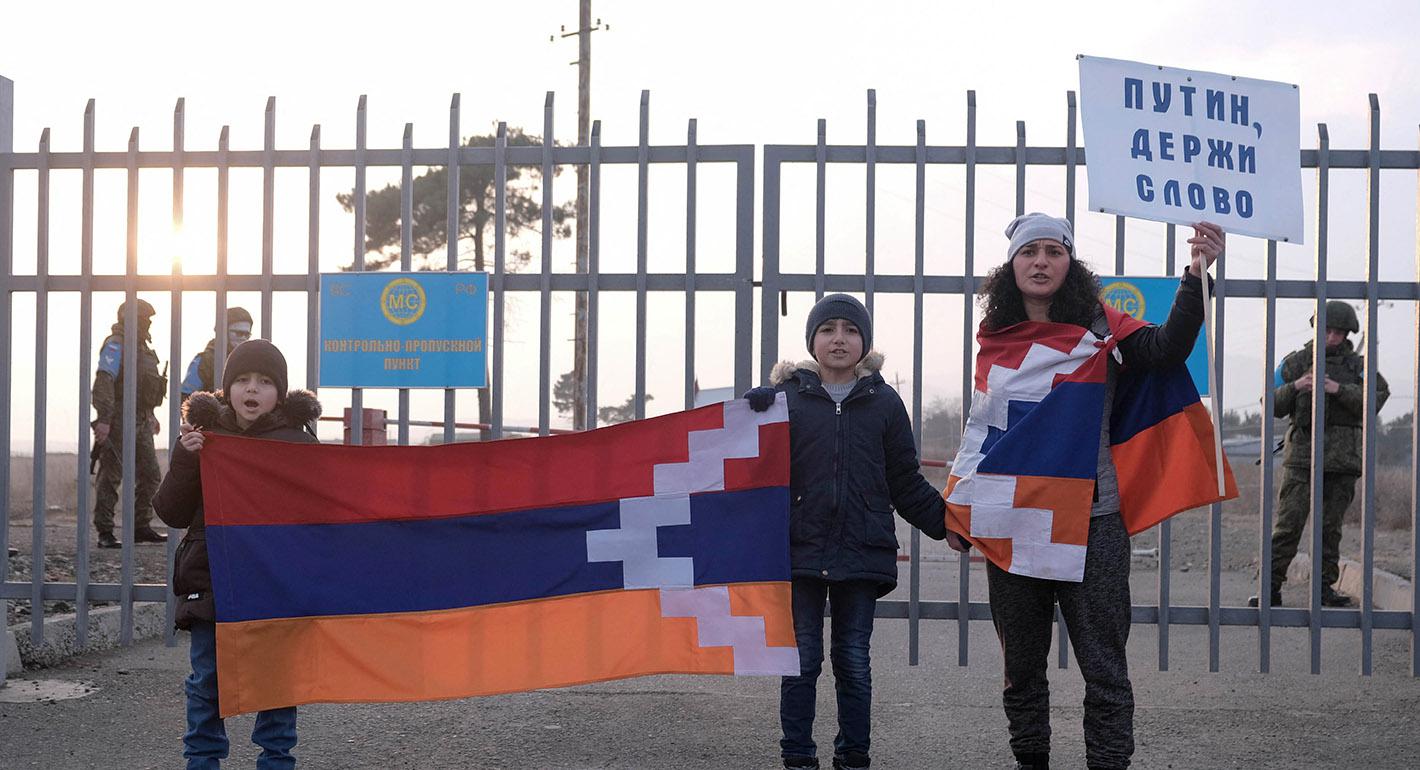
Relations with Russia will have to be overhauled, since the main subject of discussion—Karabakh—will disappear. For most Armenians, the Kremlin will be seen as an unreliable ally that abandoned them in their hour of need.
A turning point has been reached in the long-running conflict between Armenia and Azerbaijan. Last week, Armenian Prime Minister Nikol Pashinyan announced that Armenia could only achieve peace on one condition: that it limit its territorial ambitions to the borders of the Armenian Soviet Socialist Republic. In other words, it must relinquish its claim to Nagorno-Karabakh, having fought multiple wars with Azerbaijan for control of the mountainous region.
A few days later, on April 23, Azerbaijan set up a checkpoint in the Lachin Corridor, the so-called “road of life” between Armenia and the unrecognized Nagorno-Karabakh Republic. It seems that Yerevan is ready to decisively surrender Karabakh.
Pashinyan’s announcement was widely publicized and stunned many with its bluntness, though in essence there was nothing new in it. For several years, beginning with defeat in the 2020 war, the Armenian government has tried to find a formula for Karabakh’s future that would satisfy Baku and wouldn’t result in widespread dissatisfaction in Armenia.
As early as April of last year, Pashinyan spoke of a change in priorities. The key issue for Yerevan was not Karabakh’s status, but “security and rights guarantees” for those living there. In other words, Karabakh would be a part of Azerbaijan, but there would be tough negotiations on specific issues such as the status of the Armenian language. The prime minister also tried to avoid responsibility by saying that Yerevan’s decision had been made at the request of international partners “near and far.”
In September, Pashinyan announced that he was ready to sign a peace deal with Baku: and yes, many Armenians would regard him as a traitor, but the main thing was “long-term peace and security for Armenia, with a territory of 29,800 square kilometers”—i.e., the borders of the Armenian Soviet Socialist Republic, without Karabakh.
Against the backdrop of these statements, Baku has been gradually expanding the area it controls in Karabakh. Yerevan’s international partners didn’t get involved, and the Armenian government decided not to respond, as it would have inevitably angered not only Baku but also international mediators.
Azerbaijan didn’t even face any consequences when it blockaded the Lachin Corridor linking Armenia and Karabakh in December 2022 (Baku maintained that there was no blockade on its part). Armenia’s response was limited to using an alternative route that had opened up in the spring: a dirt track that even off-road vehicles could barely navigate. Even that was soon off limits, however, with the Azerbaijanis shooting at Armenian police using this route and later setting up a checkpoint.
After that, it was only a matter of time before Azerbaijan set up a checkpoint on the main road to Stepanakert, the capital of the unrecognized Nagorno-Karabakh Republic. That happened on April 23. Russian peacekeepers didn’t get involved, even though according to the tripartite agreements of 2020, the Lachin Corridor was supposed to be under their control.
The checkpoint poses numerous new and difficult problems for the Armenians. What documents will Azeri border guards demand? Can they detain Armenians for simply looking suspicious? Will they only allow entry into Armenia, but maintain that there are no grounds to return to Karabakh?
The answers to these questions largely depend on whether the Armenians will accept this new reality. Right now, it seems they already have. Yerevan has realized that, ultimately, neither mass protests nor international partners who do nothing except “express concern” can make a difference to the fate of Karabakh.
Last summer, the Karabakh Armenians agreed to direct talks with Baku. Officially, the aim of the negotiations is merely to provide electricity and gas to the unrecognized republic, but it’s clear that the talks are covering more than that. Yerevan agrees that the Karabakh Armenians have to make their own deals: this is a concession to Baku that also allows Yerevan to avoid responsibility.
So what lies ahead for Karabakh? There are no grounds to expect the ethnic cleansing that has been spoken of in Yerevan or the partisan war that Baku could fear. Judging by the comments of the Azerbaijani authorities, they intend to treat the Karabakh Armenians as they do other national minorities, such as the Lezgins, the Talysh, and the Tats. There will be no special autonomous areas or adaptation programs. Still, it won’t be easy for the remaining Armenians in Karabakh to get an Azerbaijani passport. Confronted with the new, brutal reality, they may decide after all to move to Armenia.
That will give rise to another question: whether ethnic Armenians will be able to sell their property in Karabakh, or whether it will be appropriated. The Azerbaijani authorities will likely take different approaches to the region’s native inhabitants and settlers from Armenia.
Given these circumstances, the most realistic outcome appears to be the mass emigration of Karabakh Armenians. Only elderly residents with strong attachments to their homes will remain. They don’t take part in political life or create problems for the authorities.
All of this will no doubt anger Armenian society. It’s not just a matter of national pride, but also of material difficulties: it won’t be easy to house around 100,000 immigrants in a country of under 3 million. But these problems are nothing compared with the threat of a permanent, low-level war along the entire length of its border.
A recent event in the village of Tegh in the Armenian border region of Syunik was a sobering reminder of the reality of that threat. The Azerbaijanis took offense to the fact that the Armenians were building a new guard post there. There was a shootout, and soldiers on both sides—seven in total—were killed.
The Armenian authorities now know that the EU observation mission that they invited in for the next two years won’t miraculously save them. When the shooting began, the European observers weren’t on site. Their report merely noted that “in the absence of a demarcated border, the border of 1991 should be observed and the forces of both parties should move back to a safe distance from that line.” Yerevan was so disappointed that Pashinyan again spoke of a readiness to place a competing mission from the Russia-led Collective Security Treaty Organization on the border.
There are fears in Yerevan that tensions on the border could continue even after the conclusion of the Karabakh conflict. There is also, for example, the issue of the Azerbaijani exclave of Nakhichevan, which according to the 2020 tripartite agreement should be linked by road to the rest of Azerbaijan. Disputes on its status risk new escalations.
The Armenians have already been through the denial and anger stages of grief, and now they are in the process of bargaining. Before they can reach the final stage of acceptance, they will have to go through depression, which will be softened by talk in Yerevan of peaceful development through, for example, the opening of a land border with Turkey and revitalizing economic ties with it. Statements on the widening of cooperation with the United States and EU further the same ends.
Relations with Russia, meanwhile, will have to be overhauled, since the main subject of discussion—Karabakh—will disappear. For the majority of Armenians, the Kremlin will be seen as an unreliable ally that abandoned them in their hour of need. Only a few opposition figures from the old elites will maintain that this is all Pashinyan’s fault, and that if he had only recognized Crimea as Russian territory, everything would have been different. In all other respects, Moscow’s influence will be on par with that of Ankara, Brussels, and Washington.

Kirill Krivosheev
Journalist
Carnegie does not take institutional positions on public policy issues; the views represented herein are those of the author(s) and do not necessarily reflect the views of Carnegie, its staff, or its trustees.

Putin’s conservative staffing policies and search for ever greater control have cemented parliament’s transformation into a bureaucratic appendage of the executive branch.

Andrey Pertsev

Russia’s AI-driven propaganda campaigns operate in a fragmented, chaotic, and often illogical manner. That’s not necessarily a problem for the Kremlin, though: It’s much easier to mimic genuine public debate that way.

Ilya Klishin

Without a ceasefire with Ukraine on attacking each other’s energy infrastructure—to which the Kremlin is unlikely to agree—the diesel agreement between Putin and Trump is largely for show, rather than representing a genuine increase in the volumes of Russian diesel on the global market.

Sergey Vakulenko

Russian strikes are weakening the economy sustaining Ukraine’s war effort. Closing the growing funding gap will require more European support and politically contentious reforms in Kyiv.

Balázs Jarábik

Despite a new textbook, an influx of Russian teachers and managers, and an end to the teaching of Ukrainian, the Kremlin is unlikely to have “reprogrammed” locals.

Konstantin Skorkin