

Commentary
A leak of Russian gas price data helps establish that China is paying Russia far less than Central Asian countries and Gazprom’s former European customers.
Sergey Vakulenko
{
  "authors": [
    "Mikhail Komin"
  ],
  "type": "commentary",
  "blog": "Carnegie Politika",
  "centerAffiliationAll": "",
  "centers": [
    "Carnegie Endowment for International Peace",
    "Carnegie Russia Eurasia Center"
  ],
  "collections": [],
  "englishNewsletterAll": "",
  "nonEnglishNewsletterAll": "",
  "primaryCenter": "Carnegie Russia Eurasia Center",
  "programAffiliation": "",
  "programs": [],
  "projects": [],
  "regions": [
    "Russia",
    "Caucasus"
  ],
  "topics": [
    "Political Reform",
    "Security",
    "Military",
    "Technology",
    "Economy",
    "Domestic Politics"
  ]
}
Source: Getty
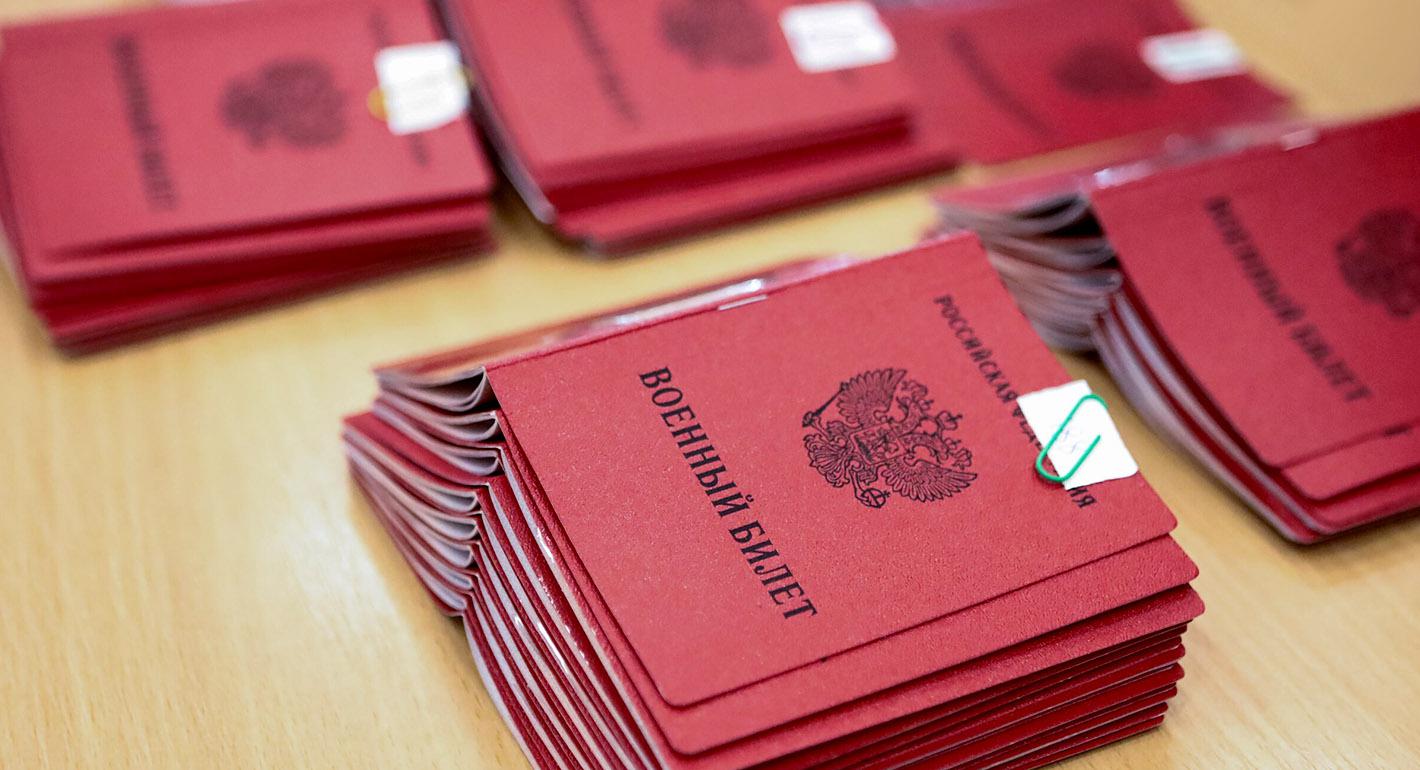
The main obstacle to the creation of a planned digital database of Russians eligible for military service is not the technology required, but the struggle between various agencies for control of this powerful new tool.
Controversial new amendments to Russia’s law on military conscription promise to radically alter the relationship between the state and society. The digitization of public services was once presented as a way of minimizing interactions between Russians and their country’s ineffective and often corrupt bureaucracy. Now it is increasingly clear that the wealth of data built up by the government is being turned into a tool for controlling people’s lives.
The problem for the state is that it is easier to find the political will to create a “digital gulag” than the technological wherewithal required. It is a monumental task that will need to be completed in record time and at a time when resources are becoming more and more scarce, not least thanks to the brain drain of IT talent from Russia and the country’s loss of access to various technologies following its invasion of Ukraine. All this gives reason to question the future effectiveness of the system being developed.
Russia’s principal means of digital control over men eligible to serve in the army is not the electronic delivery of conscription notices that will now be allowed under the amendments as much as it is the purpose-built super-database listing all those eligible to be drafted or mobilized. That would cover more or less all Russian men up to the age of fifty.
The amendments outline five categories of information to be contained in the database, starting with basic details such as contact and passport information, national insurance and individual taxpayer identification numbers, and whether a person is married or has children.
That will not be hard for the government to obtain, as it is already on file and in the possession of the tax authorities, whose digitization was one of the current Prime Minister Mikhail Mishustin’s major achievements as tax chief from 2010 to 2020. It is also available through Gosuslugi—a website and app used by millions of Russians to perform everyday tasks such as applying for a passport—which requires users to input those details in order to use it.
The second category is information on a person’s location, from any addresses where they are officially registered permanently (a requirement for all Russian nationals) or temporarily, to whether they are a national or resident of any foreign countries. Here, it’s not such plain sailing for the state. The agency in possession of most of this information is the Interior Ministry, which is averse to sharing information with other institutions. It is also rarely if ever externally audited, calling into question the quality and accuracy of its records.
The many, many Russians who do not reside where they are registered largely fly under the radar of the Interior Ministry and other security services, since the mechanism by which the authorities are informed of changes of address exists only on paper. To be sure, if need be, any individual can be tracked down with the help of banks and mobile operators. But that cannot be scaled up for millions of military-age men.
The third category of information is that provided by the permanent enlistment offices that exist in Russia, where nearly all men aged eighteen to thirty are expected to perform obligatory national service. The first wave of wartime conscription last fall revealed that none of the enlistment offices’ records had been digitized. Back then, President Vladimir Putin tasked the Federal Tax Service and the Digital Development Ministry with creating a database of Russians eligible for conscription by April 2024.
These bodies’ authorship of the database is reflected in the penalties draft dodgers will now face, from the inability to take out loans or register small businesses to being prevented from selling vehicles and property. These punishments can be doled out on the basis of details that are already available to the Federal Tax Service and which constitute the fourth category of information contained in the database.
Draft dodgers will also be banned from leaving the country, and that will be far trickier to enforce. Only the Federal Security Service (FSB)’s border force may stop people at the border, and it will need the passport numbers of conscription-eligible men to do so. That’s easier said than done. Back in the fall, border guards did stop some military-age men from fleeing abroad, ordering those unlucky few to attend their local enlistment offices, but it was obvious that there was no rhyme or reason to the system.
The digital mechanism behind those checks was the Mir information system, an extremely expensive product of an earlier drive to digitize the passport details and border crossing records of Russian citizens. But that same system was in 2020 found to be seriously lacking by the Accounts Chamber, the state auditor: it was not even always accurate in recording people’s biological sex, never mind details such as changes of surname. There is no reason to believe that this system will perform better next time it is tested.
The fifth and final category of information is grounds for exemption from conscription, ranging from university studies to disability and other health conditions. Disability records will be relatively straightforward to integrate using Pension Fund data on welfare payments, but health and education details will not. Collecting, standardizing, and processing education data in coordination with thousands of educational institutions will be impossible in such a short period of time. Accomplishing the same with health records will face the added challenge of laws on patient confidentiality.
The government may well push these problems onto those facing conscription, requiring them to provide enlistment offices with documents supporting their cases for exemption. Yet in the fall, some IT specialists arrived at enlistment offices with proof of their exemption only to find themselves dispatched to the front anyway.
Ultimately, the main obstacle to the database’s creation is not poor government data or the challenge of integrating public records. It is the infighting within the state, where many institutions are reluctant to allow their information systems to be absorbed into a super-database. After all, that would mean an end to the awarding of contracts for hundreds of IT systems created for a specific function for those agencies: contracts that are currently given to favored suppliers as part of a rents chain. In addition, holding their own data helps these agencies to prove to Russia’s leadership that they are essential.
The security services are particularly protective of their records, hiding behind their classification to avoid taking part in data integration efforts. They may, however, see the creation of the database as an opportunity to appropriate others’ information systems.
Institutions have already started arguing over who is responsible for the project’s execution. Yet regardless of whether the architect turns out to be the FSB, the Federal Tax Service, or the Digital Development Ministry, tight deadlines and the difficulty of the task mean there is little chance of the database delivering results.

Mikhail Komin
Political scientist
Carnegie does not take institutional positions on public policy issues; the views represented herein are those of the author(s) and do not necessarily reflect the views of Carnegie, its staff, or its trustees.

A leak of Russian gas price data helps establish that China is paying Russia far less than Central Asian countries and Gazprom’s former European customers.

Sergey Vakulenko

Japan’s long-term security policy is driven by concerns about China, and there is little appetite for (or interest in) pursuing a confrontation with Moscow.

James D.J. Brown
The truth of the strategic situation is that Europe and Russia are extremely unlikely to be able to “turn the page” on their confrontation within the next two decades.

Arkady Moshes

Russia spent years building a “sovereign internet,” concentrating web infrastructure exclusively within Russian territory. Ukrainian drone attacks have shown how vulnerable that approach has left the Russian internet.

Maria Kolomychenko

Putin’s conservative staffing policies and search for ever greater control have cemented parliament’s transformation into a bureaucratic appendage of the executive branch.

Andrey Pertsev