

Commentary
The European far right might fail to steer EU policy in the direction Russia wants, but they will create enough chaos inside Europe to benefit the Kremlin.
Dimitar Bechev
{
  "authors": [
    "Emil Avdaliani"
  ],
  "type": "commentary",
  "blog": "Carnegie Politika",
  "centerAffiliationAll": "dc",
  "centers": [
    "Carnegie Endowment for International Peace",
    "Carnegie Russia Eurasia Center"
  ],
  "collections": [
    "Aso Tavitian Initiative"
  ],
  "englishNewsletterAll": "ctw",
  "nonEnglishNewsletterAll": "",
  "primaryCenter": "Carnegie Russia Eurasia Center",
  "programAffiliation": "russia",
  "programs": [
    "Russia and Eurasia"
  ],
  "projects": [],
  "regions": [
    "Caucasus",
    "Russia",
    "Georgia"
  ],
  "topics": [
    "Foreign Policy",
    "Economy"
  ]
}
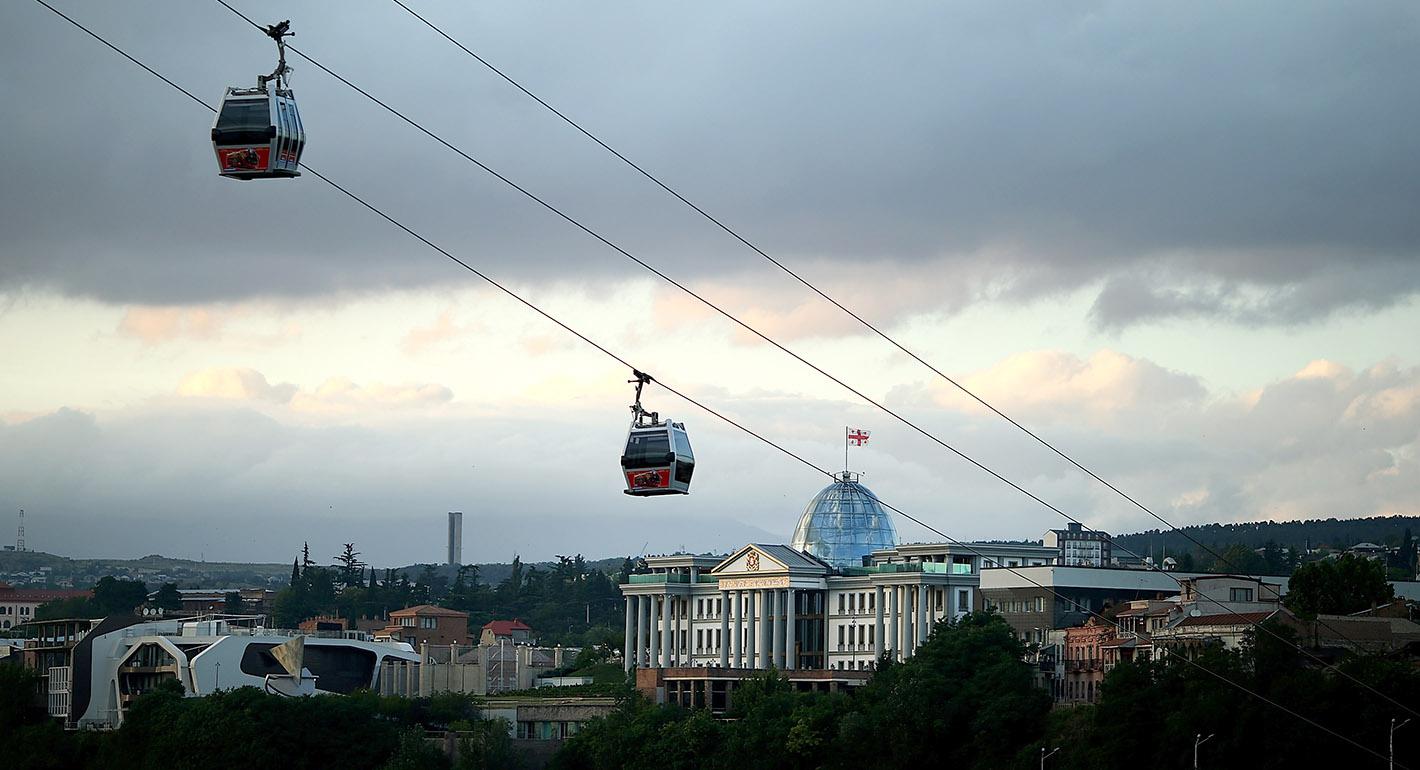
Source: Getty
As the war in Ukraine grinds on, the notoriously troubled relationship between Georgia and Russia has, to the surprise of many, entered a new period of increased stability.
Since Russia’s full-scale invasion of Ukraine, Georgia has abstained from joining anti-Russian sanctions, nor has it openly criticized Moscow for its actions in Ukraine. Moscow has responded by restoring direct flights between the two countries and abolishing the visa requirements imposed on Georgian nationals in the early 2000s. Russian officials have repeatedly praised the current Georgian government for maintaining a constructive approach deemed worthy of a sovereign country, and bilateral trade has grown. In 2022, Georgia’s exports to Russia increased by 6.8 percent to $652 million, while imports soared by 79 percent to $1.8 billion: the highest level for the past sixteen years.
Georgia’s behavior seems particularly counterintuitive given that the two countries have had difficult relations since the early 1990s, especially after 2008, when Russia invaded Georgia. Moscow has effectively maintained control over 20 percent of Georgia’s territory ever since, with military bases in the country’s breakaway regions of Abkhazia and South Ossetia.
This progress with Russia comes at a time when Tbilisi’s relations with its traditional Western partners have soured. Mutual criticism abounds, and there are uncertainties around Georgia’s progress on most of the twelve recommendations laid out by the EU in order for Georgia to attain EU candidate status.
The Georgian government’s motivations for this improved relationship vary, but a key factor is the country’s growing regional importance. The protracted war in Ukraine has forced the EU to reevaluate its energy and trade reliance on Russia and pushed it to look for alternative routes through which it could reach China and Central Asia. The Middle Corridor transport route that runs through Georgia appears to be the most convenient option.
Since Georgia is the shortest land bridge between the EU and China, Brussels has upped its involvement in the South Caucasus through newly signed gas and infrastructure projects with Azerbaijan and Georgia. As a result, Georgia has gained significantly greater geopolitical leverage than it had before the war in Ukraine. The Georgian government may also be using the prospect of rapprochement with Russia as a negotiating tactic when dealing with hesitant Western partners.
Yet portraying Georgia as becoming a pro-Russian country also misses the point. Tbilisi believes Russia will be mired in Ukraine for years, if not decades. Amid this significant distraction, Russia’s power has diminished in the South Caucasus, giving other actors—chiefly Turkey and Iran—greater space for maneuver. The invasion of Ukraine has ended the post-Soviet era and ushered in the effective end of exclusive Russian dominance in the South Caucasus.
This means more room for bolder foreign policy moves from Georgia to exploit Russian weakness. The expectation is that Moscow could push Abkhazia and South Ossetia—which it currently props up—to make some conciliatory gestures toward Tbilisi that would create a semblance of potential conflict resolution. Those could include closer economic ties between the two territories and the rest of Georgia, and even some minor political contacts with Tbilisi. Another move could be to facilitate free movement among the local population and reduce the number of kidnappings of Georgian nationals by Russian-Ossetian forces.
Indeed, Tbilisi’s calculus is based on the understanding that Georgia now has more to offer Russia than it did before 2022, increasing its value and leverage in Moscow’s eyes. Firstly, it is in Russia’s interests to keep the border with Georgia open, as it helps embattled Russia with transit to Turkey and Armenia. Secondly, for Russia, improving ties with Georgia means that Georgia-EU relations could further stagnate: a surefire recipe for diminished Western influence in the region. Thirdly, Georgia could play the NATO card, by being less vocal about its membership aspirations.
Another consideration is that, to Tbilisi, Western military aid for Ukraine looks insufficient to end the war, while Russia has succeeded in retaining control of large parts of the country. Georgian officials believe the balance of power is shifting in Russia’s favor, and that it was NATO’s expansion that led to the war. This is strikingly similar to how the majority of the Global South perceives the war in Ukraine.
Yet these geopolitical calculations are also fraught with potential miscalculations that could have lasting effects on Georgia and its Western vector. It is far from clear that either increasingly unstable or victorious Russia would be beneficial to Georgia’s security and pursuit of territorial reintegration. Moreover, a slight shift toward improvement of ties with Russia could further distance Tbilisi from the West. Should Brussels refuse Georgia EU candidate status later this year, Georgia’s tilt toward greater rapprochement with Russia could become more pronounced.
Any normalization of ties between Tbilisi and Moscow will eventually come down to the question of Georgia’s territorial integrity. Russia has always been notoriously unwilling to make any concessions in that regard. Nor will Russia be willing to let Abkhazia and South Ossetia go willingly if it is defeated in Ukraine.
For the moment, Georgia’s best bet is to navigate between increasingly dangerous Russia and the West, which is gradually expanding eastward, but not quickly enough to engulf geographically distant Georgia before it will be threatened by Russia once again.

Emil Avdaliani
Professor of international relations at European University in Tbilisi, Georgia
Carnegie does not take institutional positions on public policy issues; the views represented herein are those of the author(s) and do not necessarily reflect the views of Carnegie, its staff, or its trustees.

The European far right might fail to steer EU policy in the direction Russia wants, but they will create enough chaos inside Europe to benefit the Kremlin.

Dimitar Bechev

Minsk clearly expected the dialogue with Washington to yield more results, in particular the lifting of EU sanctions and permission to export potash.

Artyom Shraibman

Russia’s ruling party would have benefited from Putin appearing as its distant patron, but as an active frontman imposing his views on the public, he has done nothing but harm both the party’s election campaign and the ruling system overall.

Andrey Pertsev

Depleted financial reserves and a shrinking tax base mean it is no longer possible to simultaneously deliver high defense spending, price stability, and economic growth.

Alexandra Prokopenko
Blurring the line between humans and animals is a long-standing tradition in social utopian prose. In his latest novel, Leonid Bershidsky reminds us that in social experiments, people are often treated no differently than animals.

Alexander Baunov