

Commentary
Konstantin Skorkin
{
  "authors": [
    "Konstantin Skorkin"
  ],
  "type": "commentary",
  "blog": "Carnegie Politika",
  "centerAffiliationAll": "dc",
  "centers": [
    "Carnegie Endowment for International Peace",
    "Carnegie Russia Eurasia Center"
  ],
  "collections": [],
  "englishNewsletterAll": "ctw",
  "nonEnglishNewsletterAll": "",
  "primaryCenter": "Carnegie Russia Eurasia Center",
  "programAffiliation": "russia",
  "programs": [
    "Russia and Eurasia"
  ],
  "projects": [],
  "regions": [
    "Eastern Europe",
    "Ukraine"
  ],
  "topics": [
    "Economy"
  ]
}
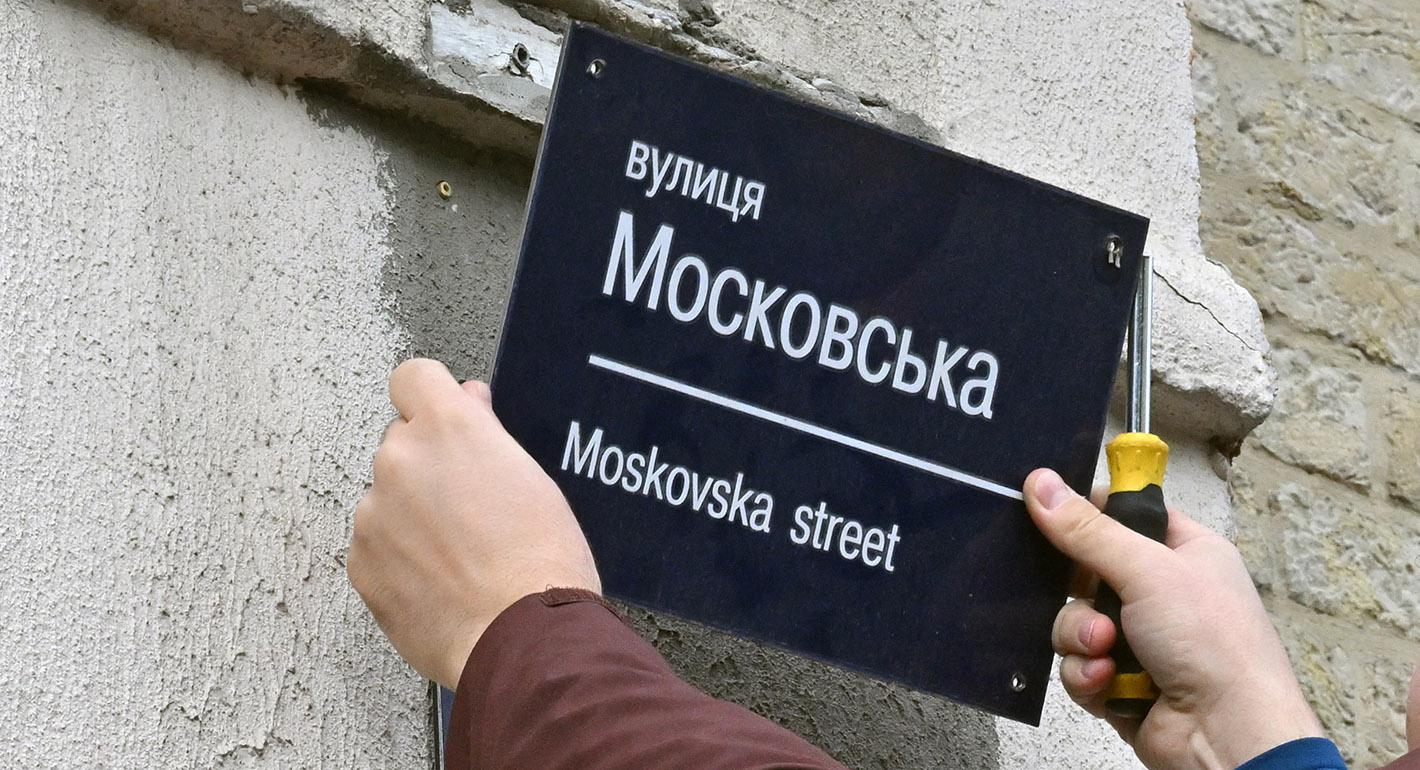
Source: Getty
Election talk is back in Ukraine, and with it speculation as to how the country’s Russian-speakers might vote next time around.
Russia’s invasion of Ukraine has brought about an unprecedented consolidation of the Ukrainian nation: the existential threat has at least temporarily bridged the country’s regional and linguistic divides. Still, talk of holding elections as early as next year has revived politics in Ukraine and raised the question of who might get the votes of Russian-speaking Ukrainians.
The pro-Russian parties of yesteryear will no longer be on the ballot: they have been proscribed and their leading figures either integrated into Russian officialdom, forced to go on the run, or left to navigate Ukraine’s new patriotic consensus. But nature abhors a vacuum, and despite the triumph of civic nationalism, regional differences remain, creating a niche that new players are seeking to fill with the aim of making the patriotic consensus more inclusive.
Prior to the war, pro-Russian forces were polling at 18–20 percent: significantly down from their 2010–2013 peak of 40 percent, but still enough to guarantee them substantial representation in parliament. The invasion changed everything, reducing the pro-Russian electorate to 3–5 percent by August 2023.
Indeed, nothing short of a fundamental values shift has occurred in southeastern Ukraine, where Russian-speaking Ukrainians are concentrated. In May 2022, only 4 percent of those in the east and 1 percent of those in the south viewed Russia favorably. Meanwhile, record levels of up to 69 percent in the east and 81 percent in the south supported accession to NATO.
Still, Ukraine remains a linguistically diverse country, with almost half the population of southeastern Ukraine admitting that they speak both Russian and Ukrainian on a regular basis. This makes even minor conflicts along linguistic lines extremely divisive for Ukrainian society.
Over the past few months, there has been no shortage of trivial scandals that have provoked nationwide debates. Nataliia Pipa, a parliamentary deputy from the western city of Lviv, reported a teenage busker to the police for performing Russian-language songs by the late cult Soviet singer-songwriter Viktor Tsoi (erroneously believing he was violating a law on performing modern Russian music in public places); the writer Larysa Nitsoi reprimanded a wounded soldier in a military hospital for speaking Russian; and the Lviv journalist Ostap Drozdov has accused Ukrainian refugees in Europe who speak Russian of “bringing shame” on Ukraine.
For the language purists, language is the be-all and end-all of identity, so speaking the enemy’s is tantamount to treason. To speak Russian is to abet Russia by providing it with an imagined constituency of Russian-speakers in need of liberation. After all, ever since Russian troops first entered Ukraine nine years ago, one of the Kremlin’s main justifications for its aggression has been the alleged protection of Russian-speakers from discrimination.
Some lawmakers agree, and the Ukrainian parliament has amended the law on national minorities to exempt the “aggressor state’s language” from its protections, in wartime and for five years following the end of hostilities. Nonetheless, the effect for Russophone Ukrainians, who have felt more Ukrainian than ever since the invasion and have rallied to the defense of their country, has been alienating.
This alienation creates new opportunities to battle it out for the votes of Ukraine’s Russian-speakers. That battle is already underway.
Having performed well in southeastern Ukraine in 2019, Zelensky’s Servant of the People party is ahead of the pack in chasing these votes. It is well placed to win them: like the voters in question, the party is a recent convert to the patriotic line. Servant of the People can be expected to appeal to the southeast with nationalist populism plus a regional twist of Russophone patriotism, with the active participation of local leaders.
In addition, a new group linked to Oleksiy Arestovych, Zelensky’s former adviser, is targeting Russophone voters with an inclusive vision of the nation that could also be described as Russophone patriotism. It argues that Ukraine must claim its share of its imperial inheritance, including the trophies that are the Russian language and Russian culture.
Arestovych and his allies are already capitalizing on discontent in some parts of society with nationalist excesses. Arestovych himself has launched a lawsuit against Pipa, the Lviv parliamentarian, accusing her of “sowing discord and enmity between Ukrainians.”
Arestovych periodically voices harsh criticism of Zelensky’s administration. Yet if he goes ahead with forming a party and running in the next election, it will most likely aid Servant of the People by drawing votes away from revanchist, anti-systemic elements.
Dmytro Razumkov, the half-forgotten former speaker of parliament, is another former Zelensky ally who may target the Russophone vote. He had already started putting together his own party before the invasion, only for the war to interrupt his plans. Razumkov has repeatedly spoken out in support of Ukraine’s Russian-speakers: in 2020, as speaker, he ordered a review of the country’s language law, criticizing it as divisive, and often gave speeches in Russian himself.
At the next election, Razumkov could pitch the voters of the southeast a more moderate brand of centrism than Servant of the People’s. Notably, his allies—as well as some current and former members of Servant of the People—have expressed opposition to the attempts to outlaw the branch of the Ukrainian Orthodox Church linked to the Moscow Patriarchate. Indeed, the question of what to do about the church has had as polarizing an effect as the language issue.
The Russophone patriotism movement may also attract regional leaders like Ihor Terekhov, the Kharkhiv mayor who continues the policy of his predecessor, the late Hennadiy Kernes, of addressing his constituents in Russian: the most common first language in Ukraine’s second city. “The more you press [on the question of language], the more resistance there will be,” he has warned.
The current political situation requires a fundamentally new approach to the representation of Russophone Ukraine. In the past, the now defunct pro-Russian Party of Regions and its successors banked on the nation remaining divided, with half of it oriented toward Russia and culturally isolated.
Ukraine’s Russian-speakers are at a fork in the road. Some will opt for full assimilation with a new patriotic, Ukrainian-speaking identity, while others may opt for the status of a cultural and national minority. By all indications, though, the majority of Russian-speakers in Ukraine will try to make the Ukrainian nation currently under construction more inclusive: an endeavor in which they will inevitably be joined by no small number of politicians, notwithstanding Ukraine’s new patriotic consensus.

An independent journalist.
Recent Work
Konstantin Skorkin
Konstantin Skorkin
Carnegie does not take institutional positions on public policy issues; the views represented herein are those of the author(s) and do not necessarily reflect the views of Carnegie, its staff, or its trustees.

Russian strikes are weakening the economy sustaining Ukraine’s war effort. Closing the growing funding gap will require more European support and politically contentious reforms in Kyiv.

Balázs Jarábik

Despite a new textbook, an influx of Russian teachers and managers, and an end to the teaching of Ukrainian, the Kremlin is unlikely to have “reprogrammed” locals.
Konstantin Skorkin

For every ruble allocated to social policy, health, and education in 2027, double that amount is earmarked for the army, the police, and the security services.

Alexandra Prokopenko

If the Russian-speaking community in Latvia cannot articulate their interests without being seen as disloyal, they could end up embracing a pro-Kremlin agenda.

Sergejs Potapkins

Depleted financial reserves and a shrinking tax base mean it is no longer possible to simultaneously deliver high defense spending, price stability, and economic growth.
Alexandra Prokopenko