

Commentary
A leak of Russian gas price data helps establish that China is paying Russia far less than Central Asian countries and Gazprom’s former European customers.
Sergey Vakulenko
{
  "authors": [
    "Emil Avdaliani"
  ],
  "type": "commentary",
  "blog": "Carnegie Politika",
  "centerAffiliationAll": "dc",
  "centers": [
    "Carnegie Endowment for International Peace",
    "Carnegie Russia Eurasia Center"
  ],
  "collections": [
    "Aso Tavitian Initiative"
  ],
  "englishNewsletterAll": "ctw",
  "nonEnglishNewsletterAll": "",
  "primaryCenter": "Carnegie Russia Eurasia Center",
  "programAffiliation": "russia",
  "programs": [
    "Russia and Eurasia"
  ],
  "projects": [],
  "regions": [
    "Caucasus",
    "Russia",
    "Azerbaijan",
    "Armenia",
    "Georgia"
  ],
  "topics": [
    "Foreign Policy"
  ]
}
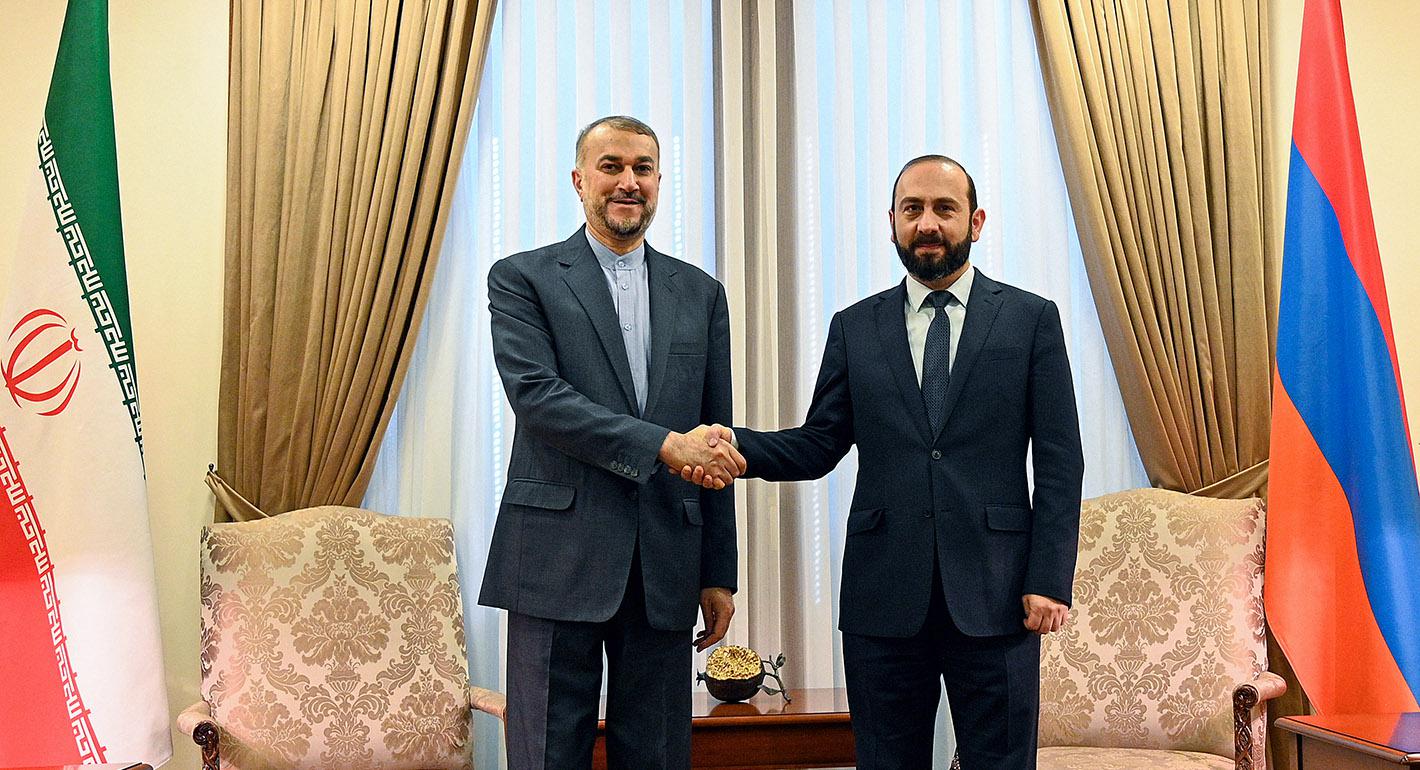
Source: Getty
Rapid geopolitical change is curtailing Russian power in the South Caucasus, boosting the influence of Middle Eastern countries and bookending the region’s “post-Soviet” history.
The South Caucasus is undergoing a geopolitical transformation. The war in Ukraine and the effective resolution of the Nagorno-Karabakh conflict between Armenia and Azerbaijan mean that the region is entering a new age. Armenia, Azerbaijan, and Georgia have gradually become more confident on the world stage, with each trying to limit its dependence on Russia by diversifying its foreign policy.
Georgia has boosted relations with the European Union, China, and—to some extent—the United States, while Azerbaijan has sought closer ties with Turkey, Israel, Central Asia, and a number of European countries. Having gone through the traumatic loss of Nagorno-Karabakh, Armenia has pushed for closer engagement with the EU, rapprochement with Turkey, and even military links with India and some European states.
Instead of an arena for competition between Russia and the West, the South Caucasus has turned into a highly congested geopolitical space, with up to six major powers vying for influence. We are not, however, just witnessing the end of the post-Soviet period. We are witnessing the end of exclusive Russian influence in the South Caucasus, which has been the status quo for almost two hundred years.
The decline of Russian power has led to the reemergence of close links between the South Caucasus and the broader Middle East. Indeed, geography favors such a connection. Russia lies across the formidable Caucasus mountains, and Middle Eastern states have long regarded the South Caucasus as a natural continuation of their own territories.
The deepening ties are visible in growing trade, investment, energy infrastructure, and railways that link the South Caucasus to two large neighboring powers: Turkey and Iran.
Turkey is a key ally of Azerbaijan, and also enjoys close links with Georgia, while Armenia has Iran’s backing. In particular, Turkey has been pushing for the development of east-west connectivity that cuts through the traditional Russia-sponsored north-south infrastructure. The successful completion of the Baku-Tbilisi-Kars railway is one example; another is the push by Baku and Ankara to open a new route via Armenia’s southernmost province of Syunik.
Iran, too, has scored significant victories. In October, it inked a deal with Baku on a new transit corridor linking Azerbaijan to its exclave of Nakhchivan via Iranian territory. Tehran has also advanced work on the International North-South Transport Corridor, which runs from southern Iran to Russia via Azerbaijan and the Caspian Sea. Other initiatives involve the development of roads through Armenia, which could provide solid links between Iran and Georgia’s Black Sea ports of Poti and Batumi.
Energy infrastructure in the South Caucasus, too, is increasingly tied to the Middle East. Azerbaijan has become one of Turkey’s major gas suppliers, covering about 16 percent of the country’s needs in 2022, while Iran and Armenia have agreed to extend their gas trade agreement through 2030.
The civil war in Syria showed how political and military developments in the Middle East impact the South Caucasus. For instance, residents of the Pankisi Gorge in Georgia volunteered to fight with radical Islamist groups in Syria and Iraq, sparking fears of terrorism spreading. Syria is also one of few countries that has recognized the independence of Georgia’s separatist regions of Abkhazia and South Ossetia. And the Second Nagorno-Karabakh War of 2020 allegedly saw Syrian soldiers fighting for Azerbaijan.
Even beyond security, Armenia and Georgia have built robust relations with other prominent Middle Eastern countries. Saudi Arabia recently agreed to establish diplomatic relations with Armenia, which has also expanded its ties with other Gulf states. Similar trends are visible in Georgia’s relations with nations like Saudi Arabia, Iraq, and Jordan.
Other actors like Israel are also playing an increasingly active role. Israel’s relations with Azerbaijan are especially noteworthy, with the two states enjoying close military ties. Azerbaijan used high-tech Israeli weaponry to devastating effect in the Second Nagorno-Karabakh War, and, more recently, in September 2023, when it reclaimed full control over the disputed region. Azerbaijan is also a major supplier of oil to Israel, meeting as much as 40 percent of the country’s demand.
Azerbaijan’s links with the Middle East mean that flare-ups between Israel and Iran could have local consequences. Iran has expressed concern about Israel allegedly using Azerbaijan for espionage activities, and Azerbaijan was one of just a few Muslim countries not to condemn Israel’s military operation in Gaza, sparking anger in Tehran.
With an end to Russian dominance in the South Caucasus, it’s clear that the region is growing closer to the Middle East. Historically speaking, this is actually a return to normal practice, with Middle Eastern powers traditionally the most influential in the region. For Iran and Turkey, Russian hegemony was always an aberration.
The process could yield benefits for the West. After all, shifting tectonic plates create opportunities for multiple actors to project power. But the EU and United States are limited by geographical distance, and the absence of significant economic levers. Turkey and Iran are both nearby, and eager to accrue more influence in the South Caucasus.

Emil Avdaliani
Professor of international relations at European University in Tbilisi, Georgia
Carnegie does not take institutional positions on public policy issues; the views represented herein are those of the author(s) and do not necessarily reflect the views of Carnegie, its staff, or its trustees.
A leak of Russian gas price data helps establish that China is paying Russia far less than Central Asian countries and Gazprom’s former European customers.

Sergey Vakulenko

Japan’s long-term security policy is driven by concerns about China, and there is little appetite for (or interest in) pursuing a confrontation with Moscow.

James D.J. Brown
The truth of the strategic situation is that Europe and Russia are extremely unlikely to be able to “turn the page” on their confrontation within the next two decades.
Arkady Moshes
Russia spent years building a “sovereign internet,” concentrating web infrastructure exclusively within Russian territory. Ukrainian drone attacks have shown how vulnerable that approach has left the Russian internet.

Maria Kolomychenko

Putin’s conservative staffing policies and search for ever greater control have cemented parliament’s transformation into a bureaucratic appendage of the executive branch.

Andrey Pertsev