

Commentary
Alexandra Prokopenko
{
  "authors": [
    "Alexandra Prokopenko"
  ],
  "type": "commentary",
  "blog": "Carnegie Politika",
  "centerAffiliationAll": "",
  "centers": [
    "Carnegie Endowment for International Peace",
    "Carnegie Russia Eurasia Center"
  ],
  "englishNewsletterAll": "",
  "nonEnglishNewsletterAll": "",
  "primaryCenter": "Carnegie Russia Eurasia Center",
  "programAffiliation": "",
  "programs": [],
  "projects": [],
  "regions": [
    "Russia"
  ],
  "topics": [
    "Economy",
    "Trade"
  ]
}
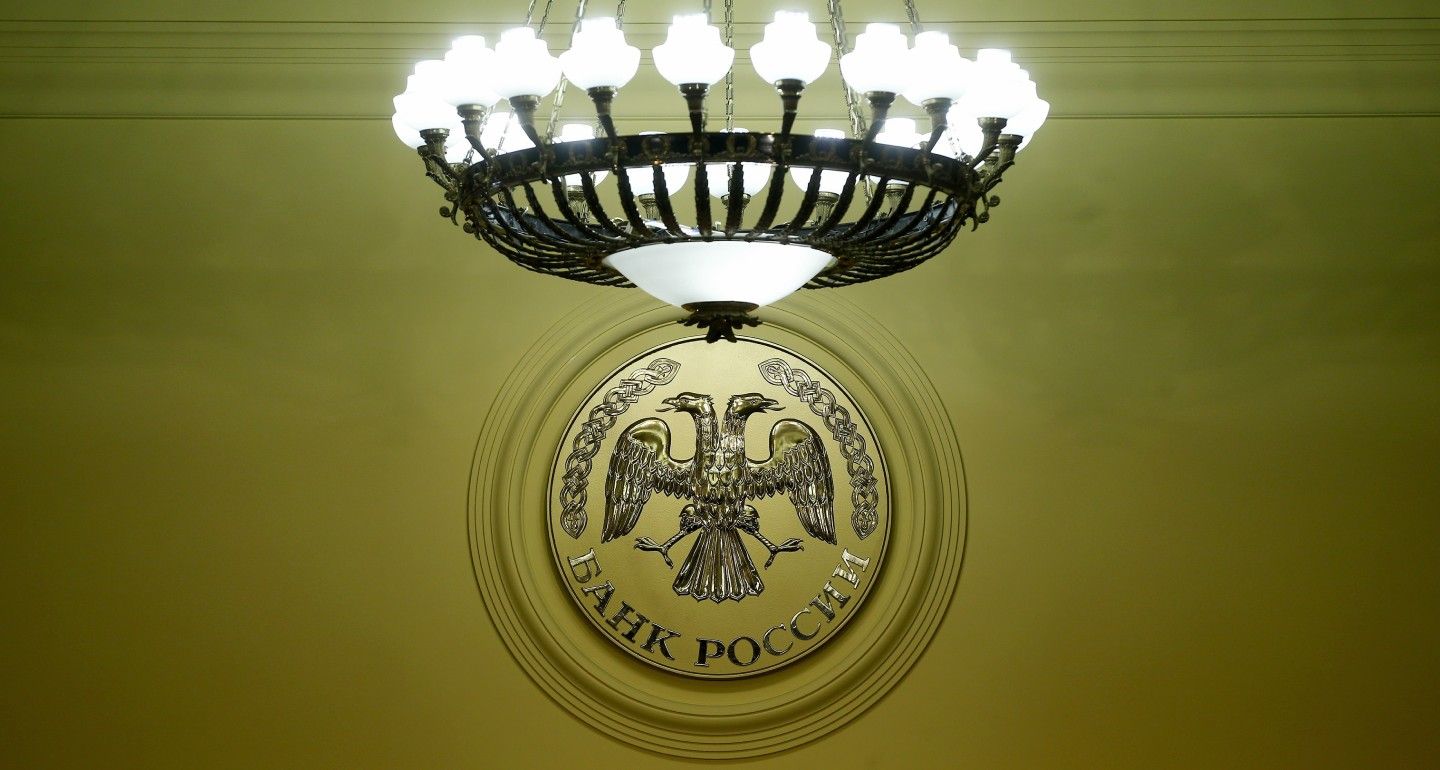
Source: Getty
Russia’s central bank finds itself in the firing line amid sky-high interest rates and an economy that looks headed toward recession and stagflation.
Record interest rates (at least 22 percent for businesses and 25 percent for individuals) have led Russian business leaders to launch fierce attacks on the central bank. The country’s biggest industrial lobbyist, the Russian Union of Industrialists and Entrepreneurs (RSPP), has even proposed giving the government oversight of some aspects of monetary policy.
Criticism has been raining down ever since the central bank raised interest rates to 21 percent in October as a result of high inflation. With the Russian economy overheated, further hikes are likely: annual inflation is currently approaching 8.7 percent; Russia has said it will spend an extra 1.4 trillion rubles ($13.9 billion) before the end of the year; labor shortages are acute; and salaries are growing.
At the same time, there is more and more evidence that the economy is slowing down. Investment has halved, and only sectors linked to the military are seeing growth. The prospect of a recession has spurred a hunt for scapegoats, and business wants to blame the central bank.
The decision to raise interest rates to 21 percent set the third interest rate record in a decade. The first was in 2014 amid the switch to a free-floating currency, when the regulator hiked rates to 17 percent (a rate cut followed two months later). The second was in 2022 following the full-scale invasion of Ukraine, when rates went up to 20 percent. That helped quell panic and stop the outflow of deposits from the banking system, and rate cuts began three months later.
This time, however, high interest rates look set to be around for much longer. The current rate-hike cycle began in August 2023 following the weakening of the ruble and growing inflation. Rates have increased 5 percentage points to the current 21 percent since they reached 16 percent at the beginning of 2024.
As rates tick upward, business leaders have turned their fire on the central bank. Billionaire Oleg Deripaska has repeatedly criticized the increases, and steel tycoon Alexei Mordashov complained business development was being stifled. Sergei Chemezov, head of the Rostec conglomerate, said Russia may be obliged to halt arms exports. And the influential Center for Macroeconomic Analysis and Short-Term Forecasting think tank—run by the brother of Defense Minister Andrei Belousov—called for rates to be cut by 5 percentage points by the summer of 2025 to avoid the economy succumbing to stagflation (inflation without growth).
The recent criticism has been particularly notable because it has been accompanied by a concrete proposal—put forward by the RSPP—that the central bank should be required to get the government to sign off on a major document, the Main Directions of Monetary Policy, in which the regulator explains its decisionmaking, gives forecasts, and justifies previous predictions. At the moment, this document only needs to be approved by parliament, to which the central bank is accountable. But the RSPP would like the government to formally assess the document for “compliance with the goals of socioeconomic development and the strengthening of state sovereignty,” which would effectively amount to political interference in central bank policy.
The central bank has already hit back, pointing out that it has a good working relationship with the government and that “sustainable economic development is impossible to achieve without an independent regulator.
History does suggest that an independent central bank is the bedrock of an effective monetary policy and a healthy economy, and that political pressure does not actually boost economic growth. Instead, leaning on central banks to reduce interest rates only tends to embed high levels of inflation over the long term.
The recent history of Türkiye is a good example of what happens when there is political pressure on a central bank. With President Recep Tayyip Erdogan controlling the policymaking of the Turkish central bank, real interests entered negative territory at the start of 2023 despite an official rate of 9 percent, and inflation at about 70 percent. Now, with the central bank’s independence partially restored, Türkiye has interest rates of 50 percent with inflation at about 50 percent—but the Turkish lira has weakened significantly, and the country has squandered its currency reserves. Despite the war in Ukraine, Russia has managed to avoid these sorts of vicissitudes—and a major reason for that is the independence of its central bank.
In Russia’s authoritarian system, however, the last word lies with President Vladimir Putin. While Putin has traditionally supported the central bank and ignored complaints from big business, the current wave of criticism is taking place amid war and extensive sanctions—and it’s possible it could lead to changes.
The war with Ukraine means that Russia’s economic policymaking is caught in a paradox: on the one hand, the government is increasing expenditure (over 8 percent of GDP is being spent on the war), which fuels inflation, while on the other, the central bank is trying to dampen inflation by raising interest rates. It is this paradox that drives calls for greater coordination between the government and the central bank. Of course, the looming specter of a recession and stagflation also mean that there is a preemptive hunt under way for scapegoats.
Western sanctions mean that the Russian elite has no institutional alternative to Putin and Russia’s current economic course. They can’t flee to the West, and their only option if they want to earn money is to remain in the country. But high interest rates are squeezing their margins and cutting into profits. Business lobby groups have complained that companies are scaling back investment plans.
In a private conversation, the deputy head of a large company said the defense sector was “hardly paying its contractors because it’s more profitable to put the money in savings accounts.” He added: “High interest rates mean it makes no sense to take out loans, and the size of the pie is shrinking. Everyone’s angry.”
If Putin can be persuaded that central bank chairwoman Elvira Nabiullina’s decisions are damaging Russian sovereignty and causing the economy to lag behind that of other countries, then he could withdraw his support. He is distracted by the war, and it’s possible that hawkish members of his inner circle might be able to sway his thinking. Inevitably, any replacement for Nabiullina would likely be more amenable when it comes to interest rates, providing a reprieve for Russian business—but only in the short term.
The independence of Russia’s central bank is one of the last bulwarks against the economy descending into an unmanageable crisis. As resources shrink and Putin’s determination to continue the war in Ukraine shows no sign of fading, this bulwark is in danger of buckling under the pressure.

Senior Fellow, Carnegie Russia Eurasia Center
Alexandra Prokopenko is a senior fellow at the Carnegie Russia Eurasia Center.
Recent Work
Alexandra Prokopenko
Alexandra Prokopenko

Russia’s ruling party would have benefited from Putin appearing as its distant patron, but as an active frontman imposing his views on the public, he has done nothing but harm both the party’s election campaign and the ruling system overall.

Andrey Pertsev

Depleted financial reserves and a shrinking tax base mean it is no longer possible to simultaneously deliver high defense spending, price stability, and economic growth.
Alexandra Prokopenko
Blurring the line between humans and animals is a long-standing tradition in social utopian prose. In his latest novel, Leonid Bershidsky reminds us that in social experiments, people are often treated no differently than animals.

Alexander Baunov
While France and Australia are seeking to establish the legal obligations of messaging apps like Telegram, Russia wants total subordination.

Maria Kolomychenko
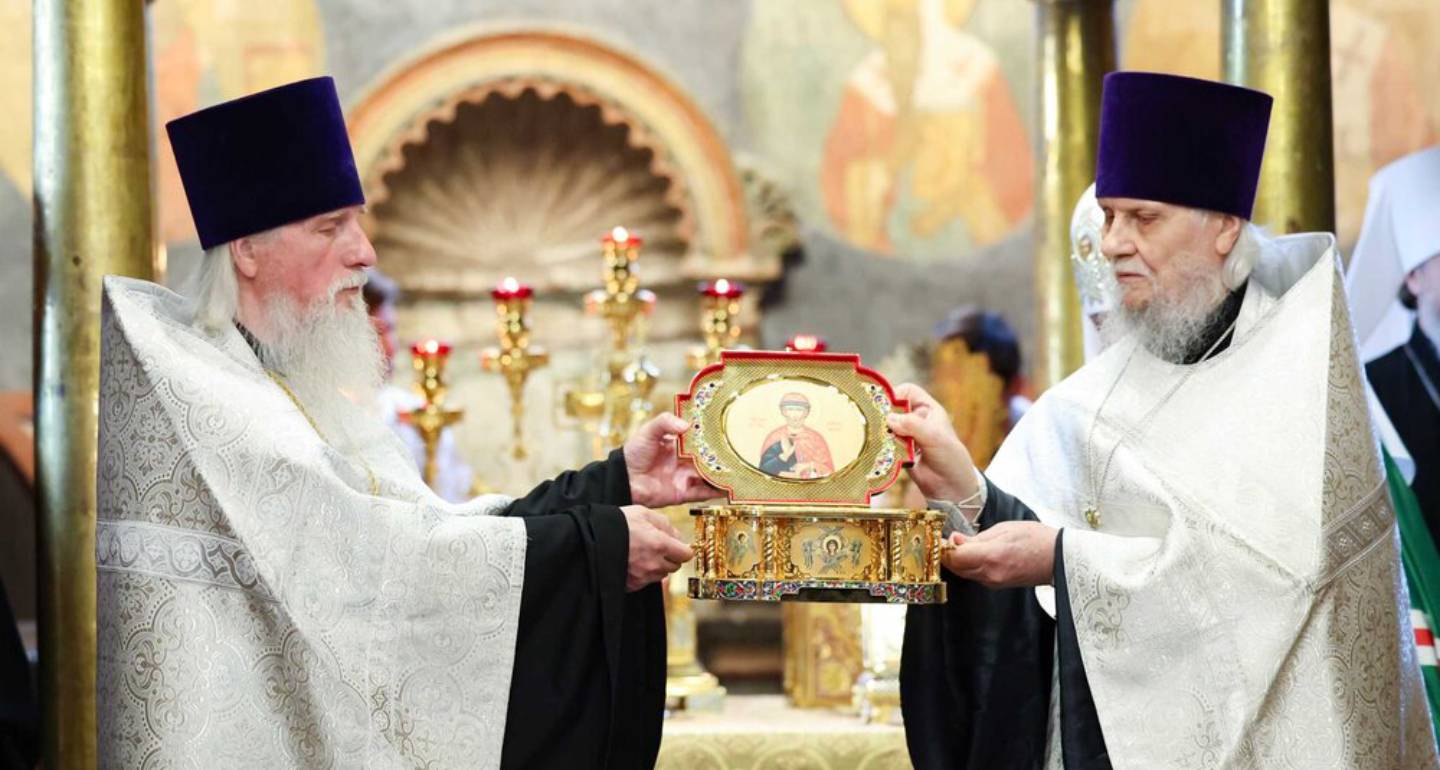
The recent uncovering of Dmitry Donskoy’s relics in the Cathedral of the Archangel is yet another attempt by the Russian Orthodox Church to help the state solve its problems. However, parroting the state’s version of Russian history leaves the Church with no message except “patriotism.”
Alexander Zanemonets