

Commentary
The pressures of war are gradually warping Russia’s system of governance, making it more vulnerable to a future crisis.
Tatiana Stanovaya
{
  "authors": [
    "Edward C. Chow"
  ],
  "type": "commentary",
  "blog": "Carnegie Politika",
  "centerAffiliationAll": "",
  "centers": [
    "Carnegie Endowment for International Peace",
    "Carnegie Russia Eurasia Center"
  ],
  "englishNewsletterAll": "",
  "nonEnglishNewsletterAll": "",
  "primaryCenter": "Carnegie Russia Eurasia Center",
  "programAffiliation": "",
  "regions": [
    "Russia"
  ],
  "topics": [
    "Energy"
  ]
}
Source: Getty
Russia does not have to treat Western companies as equal partners. A centralized regime built on a foundation of oil and gas income was never going to relinquish what it saw as sovereign control.
The diesel deal that the Donald Trump administration in the United States has struck with Moscow has revived the international debate over the benefits of energy agreements with Russia. There is little new in those discussions. Over three decades ago, long before the U.S. shale boom, I made my first trip to the former Soviet Union looking to strike what American oil executives like me regarded as an unassailable bargain: access to the region’s abundant natural resources in exchange for Western capital, technology, and know-how.
But doing business with Russia turned out to be far more costly to the Western oil industry than we could have ever imagined back then. And doing so again today, as Trump’s associates appear poised to do, would be far worse, given that any deals Russian President Vladimir Putin proposes would almost certainly compromise Western security and foreign policy interests.
In the early 1990s, Russia and other former Soviet republics—collectively the world’s largest oil-and-gas producer—desperately needed fresh capital to revive their oil-reliant economies that had collapsed alongside energy prices a decade earlier. They also needed to become more efficient at producing oil. The prospect was good for the United States and Europe, too: The West wanted to stabilize the former Soviet space and increase the world’s supply of oil and natural gas to keep prices low.
The bargain worked well—and continues to work well—in Central Asia and the Caucasus, where the complementary interests were clear. Kazakhstan and Azerbaijan had major oil discoveries that were made during Soviet times, but they did not have the capacity to develop them and wanted to diversify their economic relations beyond Russia. The Western oil companies avoided risky exploration but took responsibility for field development and oil transport. The major early deals (Tengiz in Kazakhstan and offshore Azerbaijan) are still in place, operating under terms negotiated more than thirty years ago by the same Western oil companies—including my former employer, Chevron.
The picture is completely different in Russia, which in many ways held the most romance, given the number and scale of oil and gas opportunities. Every major post-Soviet deal that Western oil companies entered into in Russia has been radically altered.
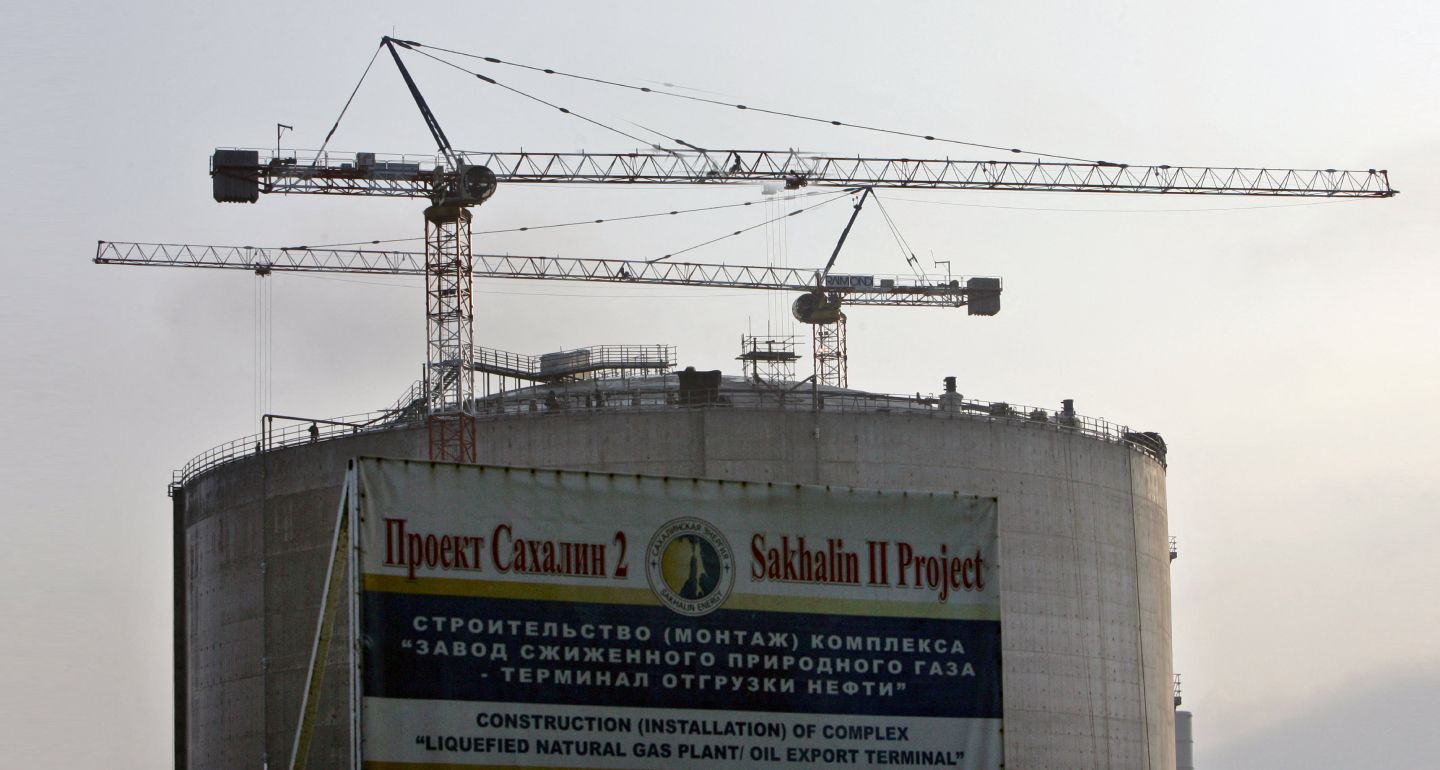
BP was forced into a marriage with Russian oligarchs in TNK-BP to protect its investments, but nevertheless later had to sell its share of the joint venture to the state oil company Rosneft. Shell was forced out of operatorship of the Sakhalin-2 LNG project and to sell its interest at a knock-down price to state gas company Gazprom. Exxon lost its operatorship and part ownership of the Sakhalin-1 project and wrote off its investment.
TotalEnergies exited the Arctic-2 LNG project but is hanging on to its interests in Yamal LNG and the Russian company Novatek with an uncertain future. The European companies that were partners in the Nord Stream 1 and 2 undersea gas pipelines were blindsided by Russia’s all-out invasion of Ukraine in 2022 and lost billions of dollars in investment.
In hindsight, the reasons for these failures are simple and obvious. The balance of interest was never as clear in Russia. Russians already knew how to produce massive amounts of oil and gas, even if their methods were not the most efficient. Their financial position improved after the steep rise in oil prices in the mid 1990s. Cooperation with Western oil companies taught them they could just buy modern equipment and oilfield services and hire Western managerial talent.
Russia does not have to treat Western companies as equal partners. A centralized regime built on a foundation of oil and gas income was never going to relinquish what it saw as sovereign control. At the end of the day, state interest as defined by the ruler trumps commercial interests. More than fifty years of reliable gas trade with Europe can be forfeited if control of Ukraine is at stake.
This brings us to the energy opportunities reportedly offered by the Kremlin to President Trump’s “diplomatic” representatives. The illusory partnerships of the 1990s had some basis in energy facts, even if they were later overridden by political reality. The Trump administration is now inviting imports of diesel from a country that is itself short of refined products—Russia—to one that is the largest exporter of refined products including diesel: the U.S. This does nothing to lower American diesel prices unless the administration disconnects the country from international oil markets.
Apparently, that was just a starter course on the Kremlin’s menu of tempting dishes. The other reported offerings are even more farfetched, such as U.S. participation in resuming Russian oil and gas pipeline exports to Europe, which plans to ban all such imports after Russia’s war on Ukraine; Russian involvement in the economically dubious Alaska LNG; the United States operating a Ukrainian nuclear power plant on territory illegally occupied by Russia; and favoring an American investor’s purchase of sanctioned Russian oil company LUKoil’s international assets.
Curiously, no one in the established U.S. energy industry asked for these grandiose proposals. Only financial speculators are rumored to be interested.
Energy insiders understand they operate in an industry that depends on stable long-term investment conditions, as major projects take a long time to execute and generate meaningful return on capital. This is not like real estate, where one can flip a property before generating real economic value. Project timelines are measured in decades and do not fit well with political calendars. Investor confidence takes time to be restored once destroyed. Even China does not invest in any significant way in Russian oil and gas, though it is a major purchaser of both.
In the 1990s, some of us were naïve to believe that the convergence of state and commercial interests in energy cooperation between Russia and the West could overcome treacherous business and political conditions. However, speculative commercial interests should never influence the conduct of foreign policy. Believing in the efficacy of energy deals to bring peace to Ukraine or anywhere else would be self-delusionary. Even worse, it would send a dangerous signal that the U.S. government cares more about commercial deals than national security interests.

Non-resident senior associate in CSIS
The pressures of war are gradually warping Russia’s system of governance, making it more vulnerable to a future crisis.

Tatiana Stanovaya
A leak of Russian gas price data helps establish that China is paying Russia far less than Central Asian countries and Gazprom’s former European customers.

Sergey Vakulenko
Japan’s long-term security policy is driven by concerns about China, and there is little appetite for (or interest in) pursuing a confrontation with Moscow.

James D.J. Brown
The truth of the strategic situation is that Europe and Russia are extremely unlikely to be able to “turn the page” on their confrontation within the next two decades.
Arkady Moshes
Russia spent years building a “sovereign internet,” concentrating web infrastructure exclusively within Russian territory. Ukrainian drone attacks have shown how vulnerable that approach has left the Russian internet.

Maria Kolomychenko