

Report
Mr. Husain Haqqani, Ashley J. Tellis
{
  "authors": [
    "Husain Haqqani"
  ],
  "type": "legacyinthemedia",
  "centerAffiliationAll": "dc",
  "centers": [
    "Carnegie Endowment for International Peace"
  ],
  "collections": [],
  "englishNewsletterAll": "ctw",
  "nonEnglishNewsletterAll": "",
  "primaryCenter": "Carnegie Endowment for International Peace",
  "programAffiliation": "russia",
  "programs": [
    "Russia and Eurasia"
  ],
  "projects": [],
  "regions": [
    "Iraq",
    "South Asia",
    "India",
    "Pakistan"
  ],
  "topics": []
}
REQUIRED IMAGE
Source: Carnegie
Originally appeared in the Gulf News,
March 29, 2003
The global economy is facing a slowdown and economists forecast that growth in the major industrialised countries over the next two to five years will fall to a mere 0.8 per cent from the current average of 2.8 per cent per annum. South Asia, as a region, might have to bear serious political and social consequences as a result of this low growth scenario. If the global economy does not improve and the unease resulting from the U.S.-led war in Iraq aggravates, the situation would be even worse.
Pakistan's economic growth, averaging 3.2 per cent per annum since 1999, is insufficient in view of its 2.1 per cent population growth rate. The country's macro-economic indicators have started looking up mainly because of external factors--compensation for supporting the U.S. in the war against terrorism, debt relief provided by international financial institutions, and remittances from expatriate workers.
Lower global growth could start having an adverse impact on all the factors that have enabled Pakistan to complete an IMF programme successfully.
Although Pakistan's economy has been growing at a rate far less than India - or for that matter Bangladesh - several macro-economic indicators have recently been seen as improving. But these improvements are illusory. The government of General Pervez Musharraf has enjoyed a windfall in foreign inputs after 9/11. International sanctions resulting from the country's 1998 nuclear tests have ended. Foreign exchange reserves are at an all-time high of $9 billion.
The Karachi Stock Exchange (relatively small by international standards) has boomed as a result of public sector institutional investment and speculation driven by expectation of more international concessional inflows. Prospect of sale of construction materials, including cement, for the rebuilding of war-torn Afghanistan is enabling some businesses to prosper.
The government's budgetary pressures have eased and the rupee has gained almost 10 per cent in value against the dollar over the last year. These numbers have made the government complacent about economic reform and oblivious to income disparity issues. There is no guarantee that the windfall resulting from political strategic factors will last the next two, or five, years.
Indians, on the other hand, have become accustomed to an economic growth rate of a little over five per cent over the past several years. In 2002-2003, predictions of growth falling to around four per cent were proven wrong and Finance Minister Jaswant Singh recently insisted that India would retain growth at 5 to 5.5 per cent.
But Singh has been warning of "imponderables" such as the impact of higher oil prices resulting from a war in Iraq and sluggish global trade. Indian planners seem concerned about issues such as monsoon deficiency as much as the low growth projections for the global economy.
Middle Class
India's limited connection to the global economy enables it to maintain relatively higher growth rates even in the time of global sluggishness. Agriculture (25 per cent of GDP) and industry (30 per cent of GDP) can continue to grow without being dragged down by international factors.
In these sectors, India produces and India consumes its own production. But in recent years, the prosperity of India's burgeoning middle class has been provided by the services sector. The technology boom, of which the software and data services industries are a highly visible part, is largely tied to demand in the rich industrialised nations that now face an economic slow-down. Reduced demand in the U.S. and western Europe will almost certainly affect both the employment and incomes of India's middle class.
Pakistan's coming socio-economic crisis is potentially even more serious. According to economist Omar Noman, investment has been declining, falling from 14.5 per cent of GDP in 2000-2001 to 12.2 per cent in 2002-2003 largely because of the conflict situations Pakistan finds itself in, namely Kashmir and domestic strife. Poverty is consistently increasing.
The number of poor households in Pakistan has risen from 18 per cent of the total in 1987 to 34 per cent in 2000. There are no authentic figures for unemployment but in the absence of investment, it is safe to assume that new jobs are not being created. Instead, ever-larger numbers of young people are joining the ranks of the unemployed or underemployed.
The scenario for lower global growth will clearly hurt Pakistan even if all the concessional financial flows continue, something that is unlikely in any case. Pakistan's exports are dependent on one agricultural crop - cotton - that also serves as raw material for the low technology export - textiles.
The global low growth scenario is likely to cause a decline in global demand for Pakistani goods. Prices are also unlikely to hold. Pakistan's expatriate workers are likely to return home in large numbers from western countries as a result of crackdowns on illegal immigration, and from the Middle East because of depressed economies as well as the war in Iraq. This in turn will create a dual problem: decline in worker remittances that currently provide a foreign exchange earnings cushion and further enlargement of the ranks of the unemployed.
Pakistan's Islamic political parties are likely to take advantage of the disaffection that growing poverty and shrinking opportunities are already generating. Over the past few years, the military leadership has pressured secular political parties with charges of corruption, leaving the Islamists as the only voice of the poor.
The Islamists won large numbers of seats in parliamentary elections last year in an election marked by a low turnout and the military's strategy of keeping the mainstream parties out. The depressive economic scenario will continue to help militant groups in finding recruits for Jihad, both in Kashmir and globally.
Disenchantment with established order might even help groups such as Al Qaida to find sanctuary among an increasingly religious under-class. Pakistan's poor turn to religion in hard times and distorted versions of religion are no exception.
Calculated policy
India's relative economic health could encourage anti-Pakistan hardliners in New Delhi to try and "spend Pakistan into the ground" - a calculated policy of increasing the cost of military competition to the point where Pakistan's economy collapses completely.
India is already turning increasingly towards Hindu nationalism, which is further aggravating ties with Pakistan. Inadequately performing economies in South Asia also create the risk of India and Pakistan externalising the resentments of their people.
Instead of allowing such frightening prospects manifest themselves as reality,
both need to start looking at ways to minimise the unsettling effects of the
global economic turndown on South Asia's precarious political and social balance.
Former Visiting Scholar
Recent Work
Mr. Husain Haqqani, Ashley J. Tellis
Mr. Husain Haqqani
Carnegie does not take institutional positions on public policy issues; the views represented herein are those of the author(s) and do not necessarily reflect the views of Carnegie, its staff, or its trustees.

With the growth in points of friction between the great powers, organizations like the SCO will continue to play a role in the strategic adaptation of the smaller powers caught between them.

Temur Umarov

The demands of the Kremlin’s war in Ukraine, demographic problems, and public hostility toward Central Asians mean Russia does not have enough workers.
Salavat Abylkalikov
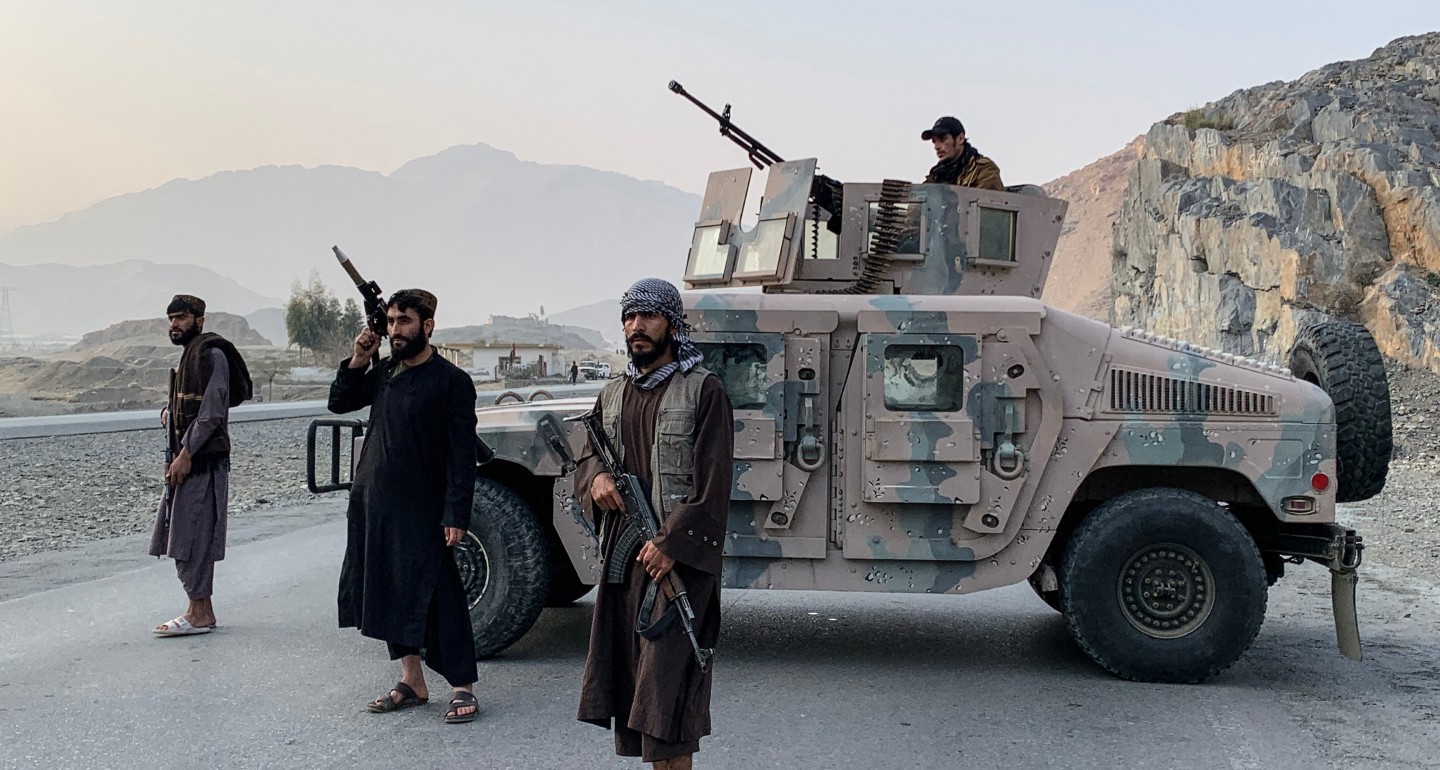
Not only does the fighting jeopardize regional security, it undermines Russian attempts to promote alternatives to the Western-dominated world order.

Ruslan Suleymanov
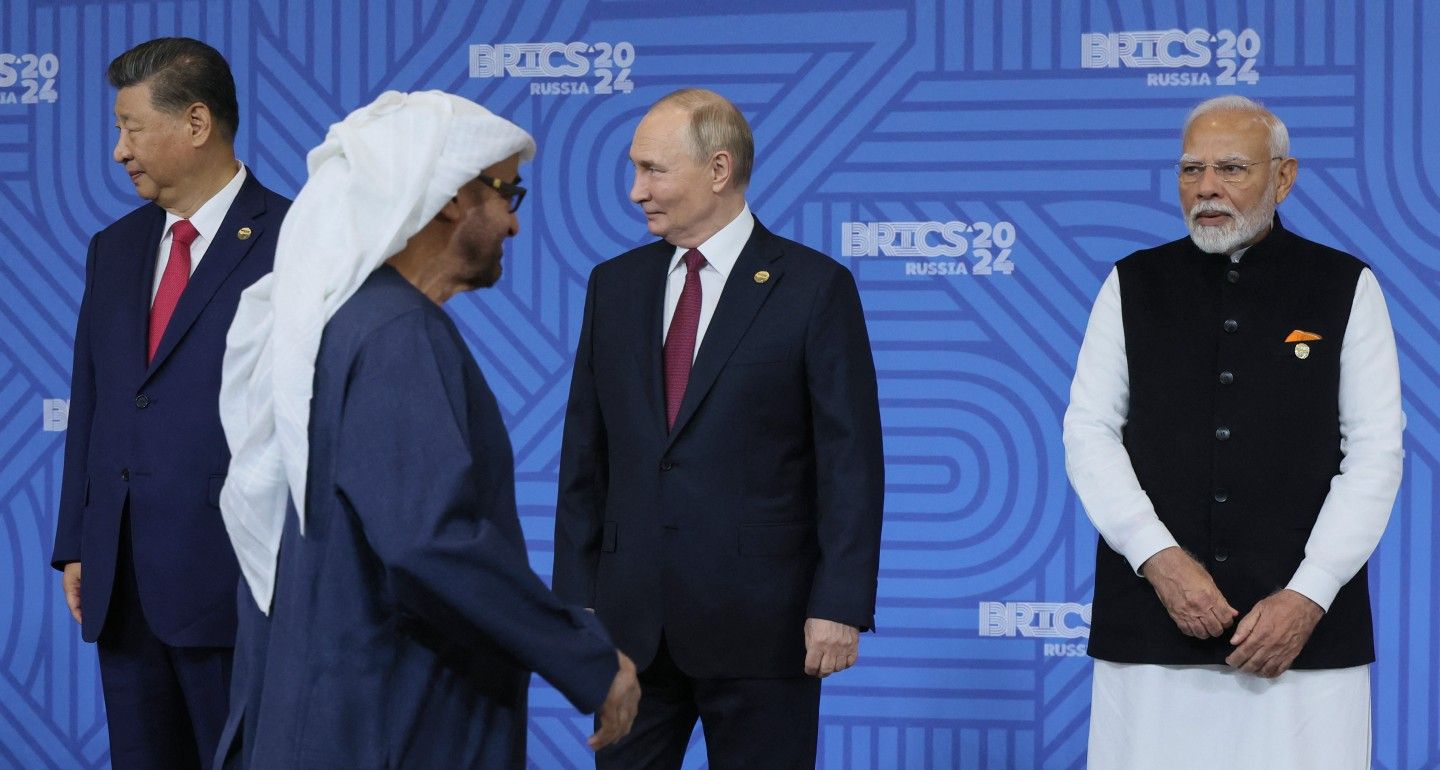
It might seem that within BRICS, Russia should be overshadowed by the giant economies of China and India, especially the former. Yet what is happening is almost the opposite, with Russia effectively taking over the leading role in the club.

Alexander Baunov
As Russia’s relationship with the West has deteriorated, the Kremlin’s view of the Taliban has changed. But substantive economic cooperation will be hard to achieve.
Ruslan Suleymanov