

Article
Andrew Kuchins
{
  "authors": [
    "Andrew Kuchins"
  ],
  "type": "legacyinthemedia",
  "centerAffiliationAll": "dc",
  "centers": [
    "Carnegie Endowment for International Peace"
  ],
  "collections": [],
  "englishNewsletterAll": "ctw",
  "nonEnglishNewsletterAll": "",
  "primaryCenter": "Carnegie Endowment for International Peace",
  "programAffiliation": "russia",
  "programs": [
    "Russia and Eurasia"
  ],
  "projects": [],
  "regions": [
    "Caucasus",
    "Russia"
  ],
  "topics": [
    "Political Reform",
    "Economy",
    "Foreign Policy"
  ]
}
REQUIRED IMAGE
Russia's stances toward the U.S., NATO and the EU have also become more contentious. Many of these discussions are replete with dubious interpretations of revisionist history and patently unconstructive approaches from both sides, especially concerning the future of Russia's role in the G-8 and its ties with the newly expanded NATO.
Source: Carnegie
Russia's ties with the West have been experiencing growing tension of late. The Yukos affair, the conduct of the parliamentary and presidential elections, increasingly Soviet-like national television and other developments have contributed to what U.S. Ambassador Alexander Vershbow and others have diplomatically alluded to as a "values gap." Debates about Russia and its place in international institutions have become more heated. Similarly, Russia's stances toward the United States, NATO and the European Union have also become more contentious. Unfortunately many of these discussions are replete with dubious interpretations of revisionist history and patently unconstructive approaches from both sides. This has been especially true concerning the future of Russia's role in the G-8 as well as its ties with the newly expanded NATO.
Bipartisan legislation in the U.S. House of Representatives, House Resolution 336, introduced by Democrat Tom Lantos and Republican Christopher Cox, calls for throwing Russia out of the G-8 if it does not make significant progress on a number of issues, including: the rule of law, including protection from selective prosecution and protection from arbitrary state-directed violence; a court system free of political influence and manipulation; a free and independent media; a political system open to participation by all citizens and that protects freedom of expression and association; and the protection of universally recognized human rights. This resolution follows similar legislation introduced into the Senate by Democrat Joe Lieberman and Republican John McCain in the fall, after the arrest of former Yukos CEO Mikhail Khodorkovsky.
There is no question that all of the above points are laudable issues. I and many of my colleagues in and out of government have expressed concern about them over the years and increasingly in the last six months. There is also no question that Russia is deficient on these points in comparison with other G-8 member states. But there are no formal membership criteria for the G-8. Informally, the criteria are that member countries be developed market democracies with large and influential economies. When Russia was invited to become a formal member of the G-8 in 1997, it did not meet any of the above criteria. Even today it really meets only one of those criteria since it was recognized as a market economy by the United States and the European Union in 2002. Even now, into its sixth year of economic growth, Russia is not one of the 10 largest economies in the world. And while Russia was hardly a perfect democracy in 1997, it would be difficult to posit the argument that positive progress has occurred on this front.
So if Russia didn't come close to meeting the loose membership criteria, why was it let in? Well, it was pretty simple. We wanted things from the Yeltsin administration, and membership in this prestigious international club was one of the things we could offer in return. In 1994, when the West wanted to ensure that the Russian military departed Estonia on time, we used the carrot of joining the political discussions of the G-7. In his memoir of Clinton administration Russia policy, former Deputy Secretary of State Strobe Talbott quoted then-U.S. President Bill Clinton as saying, "It's a pretty simple deal. We get 'em into the G-7, and they get out of the Baltics. If they're part of the big boys club, they've got less reason to beat up on the little guys." The same logic applied in 1997, when proposing formally turning the G-7 into the G-8 the following year was to compensate then-President Boris Yeltsin for the decision to expand NATO. Sure, it sounds condescending -- throwing "ole Boris" a bone, as it were -- but that is the way U.S.-Russia relations were in the 1990s, with Russian power and influence at near all-time lows.
Yeltsin understood the logic perfectly well, and he wrote in his memoir "Midnight Diaries" that he viewed his tough stance on NATO expansion as the main reason for the invitation to join the G-8. In 1999, during the negotiations to bring the Kosovo war to an end and to bring in Russian peacekeepers, then-Prime Minister Sergei Stepashin acknowledged that the pressure of the Cologne G-8 meeting scheduled for late June pressed the Russians to reach a deal earlier. The invitation to Russia in 2002 for full participation in political and economic discussions, as well as to host the 2006 meeting of the G-8, acknowledged Russian support in Afghanistan post-Sept. 11, 2001, and President Vladimir Putin's decision to accept the next round of NATO expansion quietly.
As this brief history suggests, Russia's inclusion into the G-8 has had little to do with its democratic or economic credentials. Now we can argue, and many have, that relaxing membership criteria for Russia to join the G-8, the Council or Europe or a number of other international institutions was and is a mistake. But in the case of the G-8, it is not even that the membership criteria were relaxed, but rather that Russia was let in for really quite different reasons. It seems just a tad self-righteous and hypocritical to come back now and argue that Russia should be excluded for reasons that were not really part of its membership criteria. But it provides a convenient excuse for some congressional grandstanding during an election year.
Similarly, the recent entry of seven new states, including the Baltic states, into NATO has triggered many well-worn and neuralgic arguments from Russian government officials and political elites about the potential threat that NATO presents. However, it is simply not credible that four old Belgian jets patrolling Baltic airspace present any kind of real threat to Russia. Nor does the possible creation of smaller "lily pad" bases in new member states like Romania and Bulgaria present any threat to Russia. Russia has a very different kind of relationship with NATO today than during the Cold War, so the movement of bases closer to Russia's borders does not simply equate to an increased threat environment for Moscow, as traditional military planning might suggest.
None of this is to suggest that Russia, the United States and Europe don't have real differences to address, or that existing institutions have fully adapted to rapidly changing conditions. On European security, resolving our differences over the Conventional Forces in Europe Treaty, including the importance of its ratification by the Baltic states, and for Russia to fulfill its Istanbul commitments to close bases in Moldova and Georgia, are and will be challenging. Let's not also forget, however, that Russia and NATO military forces are working increasingly closely to achieve joint operability. Putin and Defense Minister Sergei Ivanov last week articulated the importance of moving a positive agenda with NATO forward.
And while democracy in Russia has taken steps backward, throwing Russia out of the G-8 is not the solution, either. Part of the rationale for admitting Russia into the G-8 and other institutions is that through interaction with powerful market democracies in a format of equal partnership, Russia would over time be socialized to different standards of conduct. Just as it would be premature to pronounce the demise of NATO (as many Russians would like), so it would be premature and not in the interests of the West now to close the books on the long-term prospects for Russia's integration with the West.
Andrew C. Kuchins, director of the Carnegie Moscow Center, contributed this comment to The Moscow Times. This is the first in a series of essays written on the occasion of the center's 10th anniversary.
Originally published in The Moscow Times on April 21, 2004.

Former Senior Associate and Director, Russian & Eurasian Program
Recent Work
Andrew Kuchins
Andrew Kuchins
Carnegie does not take institutional positions on public policy issues; the views represented herein are those of the author(s) and do not necessarily reflect the views of Carnegie, its staff, or its trustees.
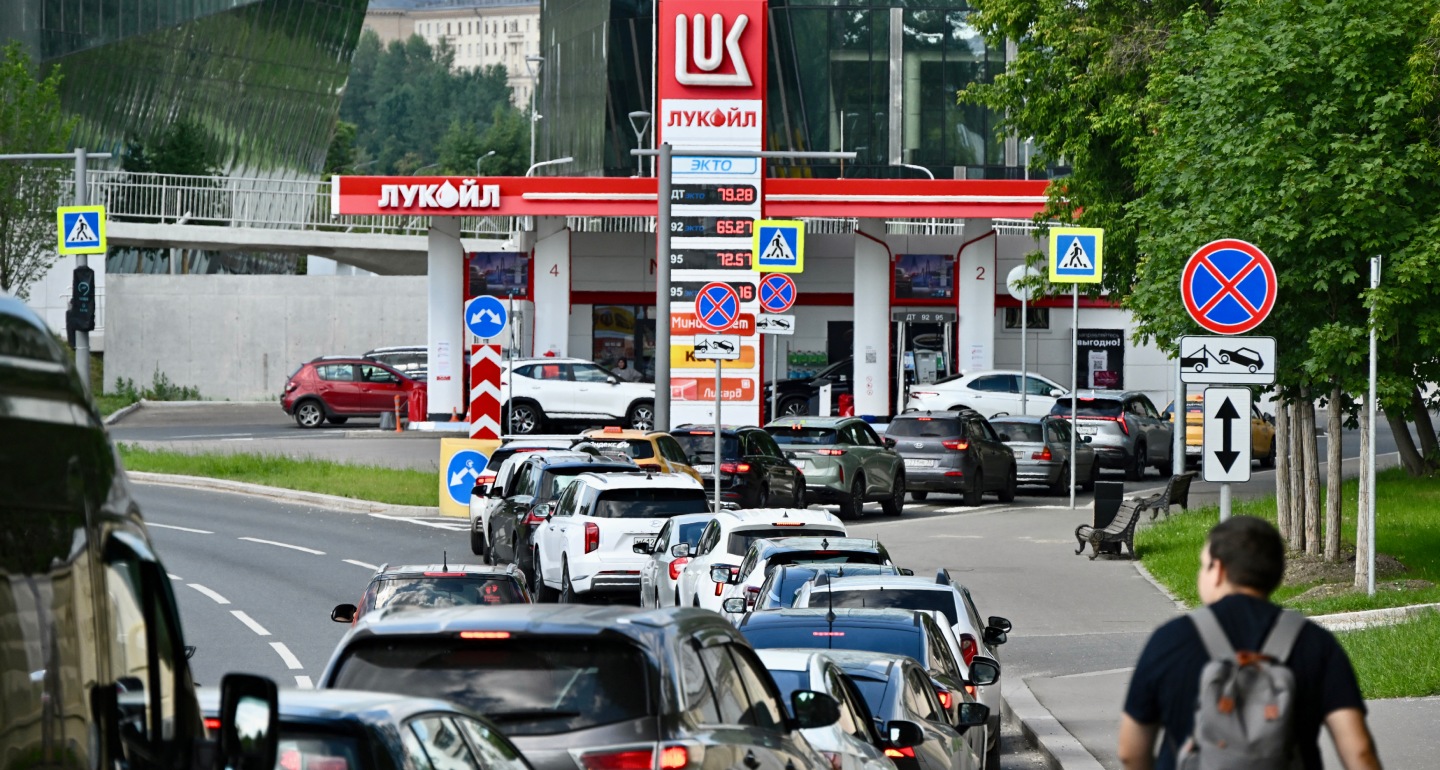
Official discussions about mini oil refineries are unlikely to come to anything—but the mere fact they’re happening reveals the regime is failing to deliver a functioning economy.

Sergey Vakulenko
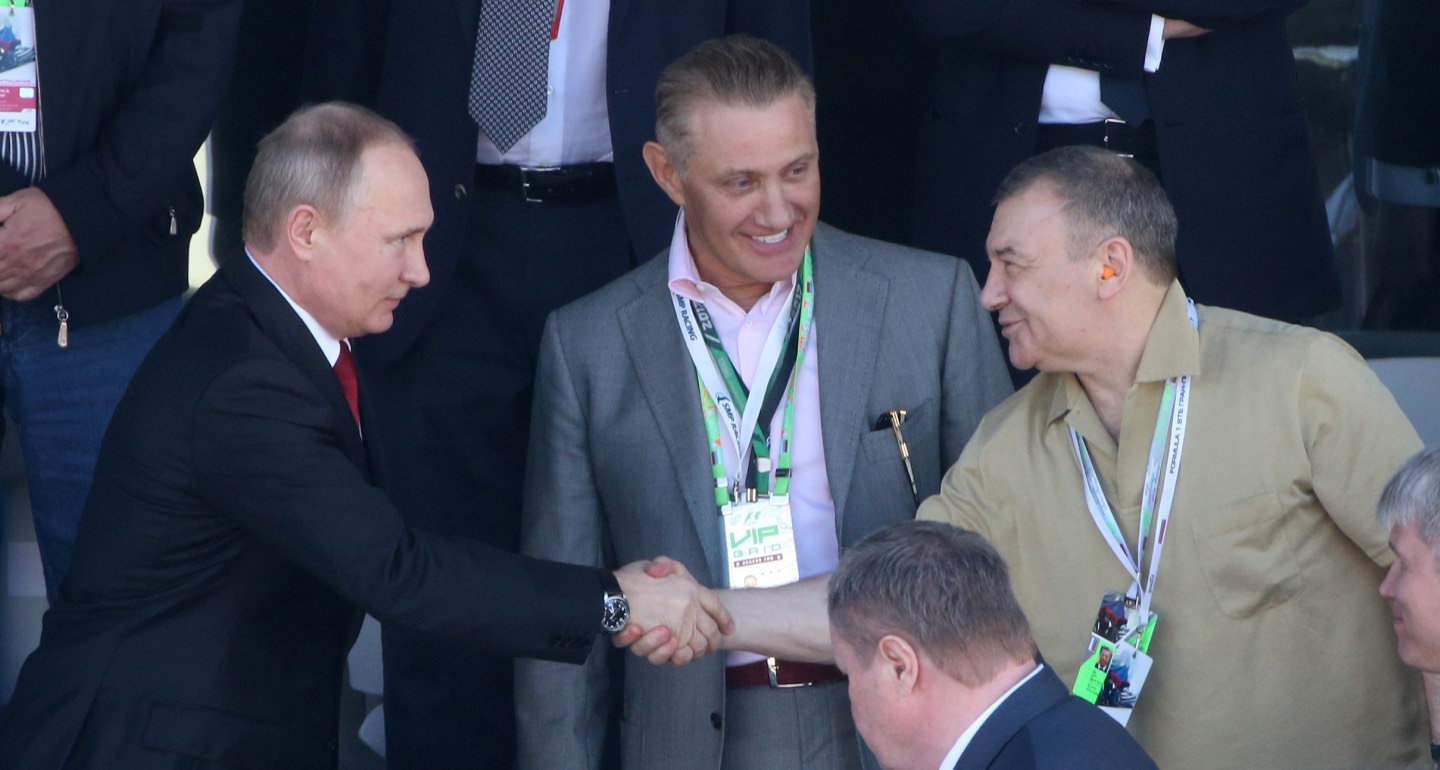
The security forces are targeting Arkady and Boris Rotenberg’s patronage network—and in Putin’s Russia, it’s extremely hard to stop a purge once it’s under way.

Mikhail Komin
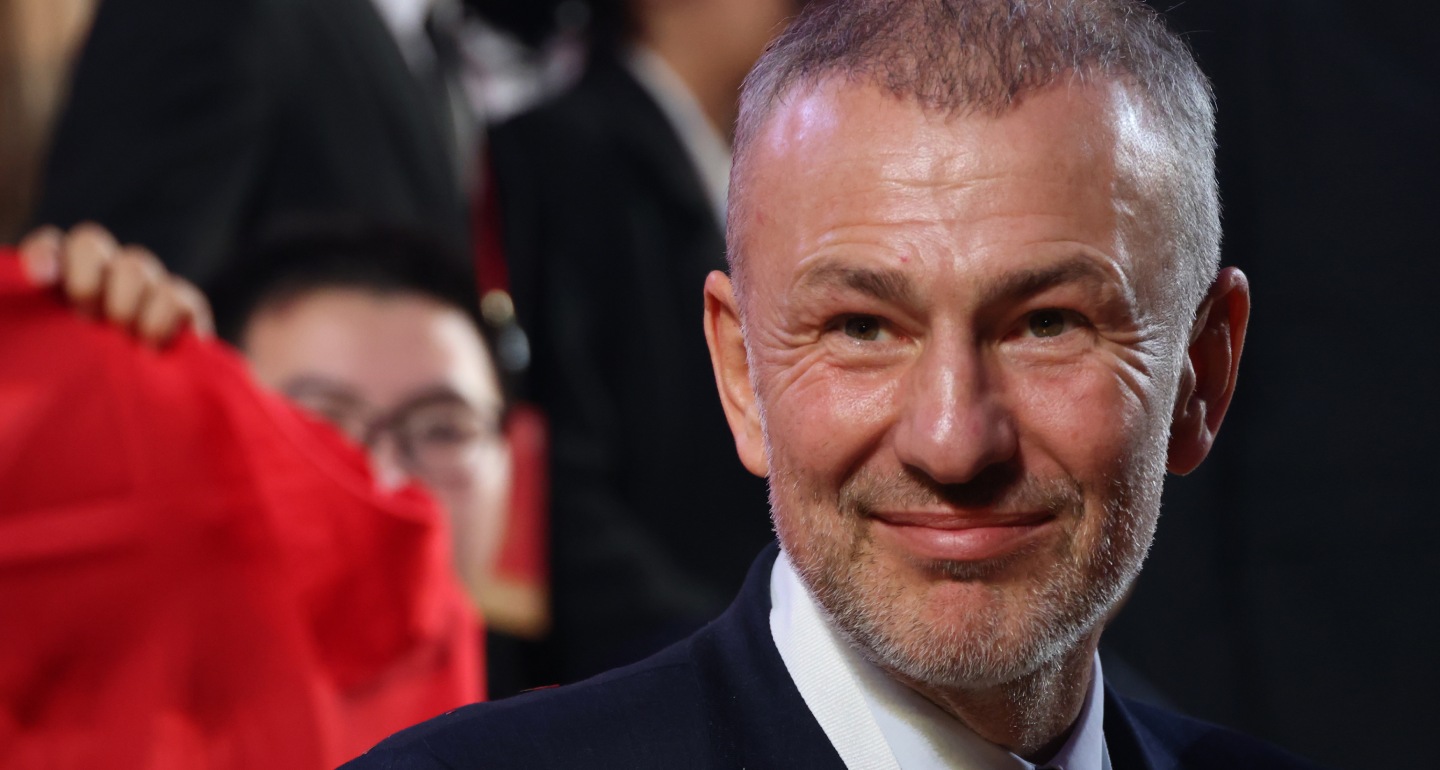
Andrey Melnichenko’s essay offers no answer to the fundamental question of how, under any kind of negotiated settlement, Europe can protect itself from the Russian ressentiment that is inevitable in all scenarios except for an outright victory for Putin.

Leonid Bershidsky
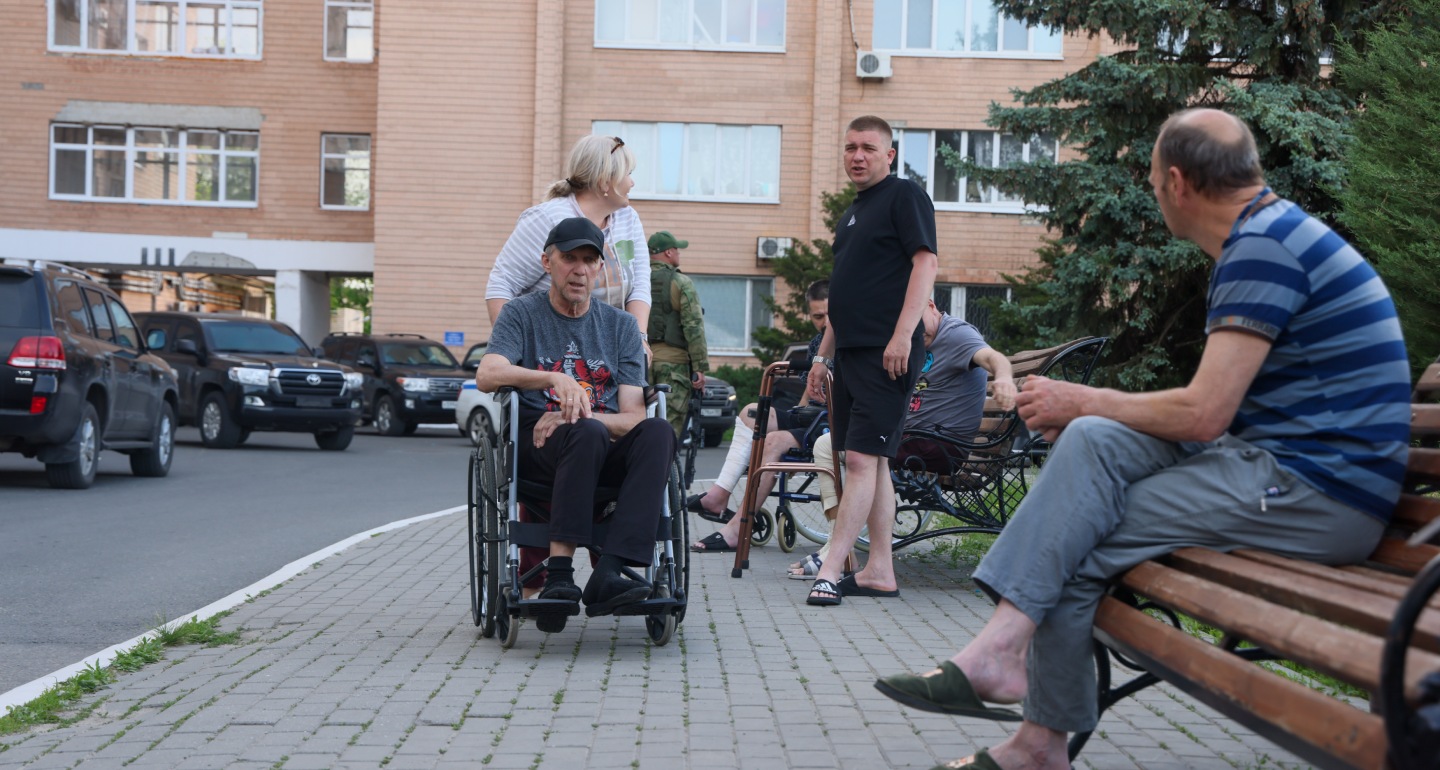
Despite unhappiness on the ground, Moscow is determined to use both carrot and stick to ensure there is record support for United Russia in occupied Ukraine.

Konstantin Skorkin
Whether PAS can refocus on the unfinished business of state-building may ultimately prove more consequential for Moldova’s European future than the pace of its accession negotiations.

Balázs Jarábik