

In The Media
Minxin Pei
{
  "authors": [
    "Minxin Pei"
  ],
  "type": "legacyinthemedia",
  "centerAffiliationAll": "dc",
  "centers": [
    "Carnegie Endowment for International Peace"
  ],
  "collections": [],
  "englishNewsletterAll": "asia",
  "nonEnglishNewsletterAll": "",
  "primaryCenter": "Carnegie Endowment for International Peace",
  "programAffiliation": "AP",
  "programs": [
    "Asia"
  ],
  "projects": [],
  "regions": [
    "China"
  ],
  "topics": []
}
REQUIRED IMAGE
Source: publisher
Reprinted from The Asian Wall Street Journal © 2004 Dow Jones & Company, Inc. All rights reserved., August 24, 2004
The mounting signs of a soft landing in China are being greeted with great relief in East Asia. Only a few months ago, the prevailing wisdom was that China's overheated economy was headed for a crash.
But in welcoming China's apparent success in cooling down its economy, we need to understand fully both the causes of overheating and the remedial measures applied to treat it. Otherwise, we will remain as ignorant as ever about the forces driving China's half-reformed economy.
For veteran China watchers, the current business cycle bears an uncanny resemblance to previous episodes of overheating since 1979. Generally, the Chinese business cycle tracks the country's political cycle closely. The Communist party convenes its national congress every five years (the latest one was held in 2002). Each congress determines leadership changes both at the top and, more importantly, at the provincial level. Just as the party derives its legitimacy from economic performance, central and provincial elites eager to demonstrate their ability and secure their jobs are motivated to turn in the best possible growth in what is China's closest equivalent to an election year in the West.
In an economy in which the ruling party controls the state, which in turn allocates about half of the fixed-asset investment, the effects of such political calculation on economic growth can be astonishing. Chinese data show that the growth rate in the year when a party congress is convened is significantly higher than in the preceding year. There were six Communist party congresses from 1977 to 2002. Except for 1997 (probably due to the East Asian financial crisis), the annual growth rate in the "congress years" (1977, 1982, 1992, 1997, and 2002) was, on average, 4.32% higher than that in the preceding year. In 1992, for example, the growth rate was 14.2% -- 5% higher than the 9.2% registered in 1991.
In the past, torrid growth in "convention years" usually sparked high inflation, prompting the central government to rein in fixed investment, either immediately or with a one-year lag. Consequently, growth tapered off. But a soft landing was never assured. Following the last four episodes of overheating (1977, 1982, 1987, 1992), China only managed a soft landing in 1993-96. In the other three cases, their efforts ended in hard landings. In 1985-86, for example, output plunged by 4.7%. In 1989-90, growth fell by almost two-thirds compared with 1988.
This time, however, high growth was driven by additional political momentum. From mid-2001 to late 2002, the Communist party conducted the most extensive leadership overhaul in the provinces in recent memory. As a result, in China's 31 provinces, 23 provincial Communist party chiefs and 26 governors were freshly installed. In 17 provinces, both the party chief and the governor were new appointees. Because job security of provincial chiefs depends on their economic performance (growth and tax revenue), new appointees have strong incentives to expand fixed-asset investment in their jurisdictions to increase growth and enlarge the tax base. A study by Yasheng Huang of Massachusetts Institute of Technology's Sloan School of Management estimates that when a new party boss and a governor are appointed in a province in the same year, fixed-asset investment in the same province would rocket by 36% from the previous year.
Provincial leaders can dramatically raise fixed-asset investments mainly because they have access to bank credit and other forms of capital. The state nominally owns the four dominant state commercial banks, but in reality, provincial authorities can dictate their lending decisions. Managers in the provincial branches of the state-owned banks owe their jobs, not to the technocrats in Beijing, but to local party bosses who control their political future. Few would dare to deny credit to the pet projects picked by these local strongmen.
Obviously, market-based measures are ineffective in cooling off an economy that is fueled by the political ambitions of local leaders. And Chinese leaders have long mastered the only effective tool to deal with overheating -- administrative fiat. Typically, Beijing would first softly urge provincial leaders to rein in investment. It would then follow up with a few pin pricks, such as increasing reserve requirements in banks or ordering the cancellation of a few projects). Only when such tinkering fails does Beijing announce drastic administrative steps: suspending the lending power of local banks, imposing strict credit limits, and freezing fixed-asset investment. To mean business, Beijing has been known to threaten to punish -- even dismiss -- provincial leaders who fail to comply.
That is what happened again during the most recent round of overheating. Judging by recent signs of economic cooling, it is hard to begrudge a measure of admiration for the effectiveness of Beijing's actions. Nonetheless, the fact that Beijing used administrative fiat rather than pro-market measures to slow its economy, only shows how far China still has to go before it becomes a genuine market economy.
Former Adjunct Senior Associate, Asia Program
Pei is Tom and Margot Pritzker ‘72 Professor of Government and the director of the Keck Center for International and Strategic Studies at Claremont McKenna College.
Recent Work
Minxin Pei
Minxin Pei
Carnegie does not take institutional positions on public policy issues; the views represented herein are those of the author(s) and do not necessarily reflect the views of Carnegie, its staff, or its trustees.
With no key agreement signed on the Power of Siberia 2 gas pipeline, there is a risk that the window of opportunity for Russia will close if Chinese power generation becomes so green that new gas sources are no longer of any interest to Beijing.

Alexander Gabuev
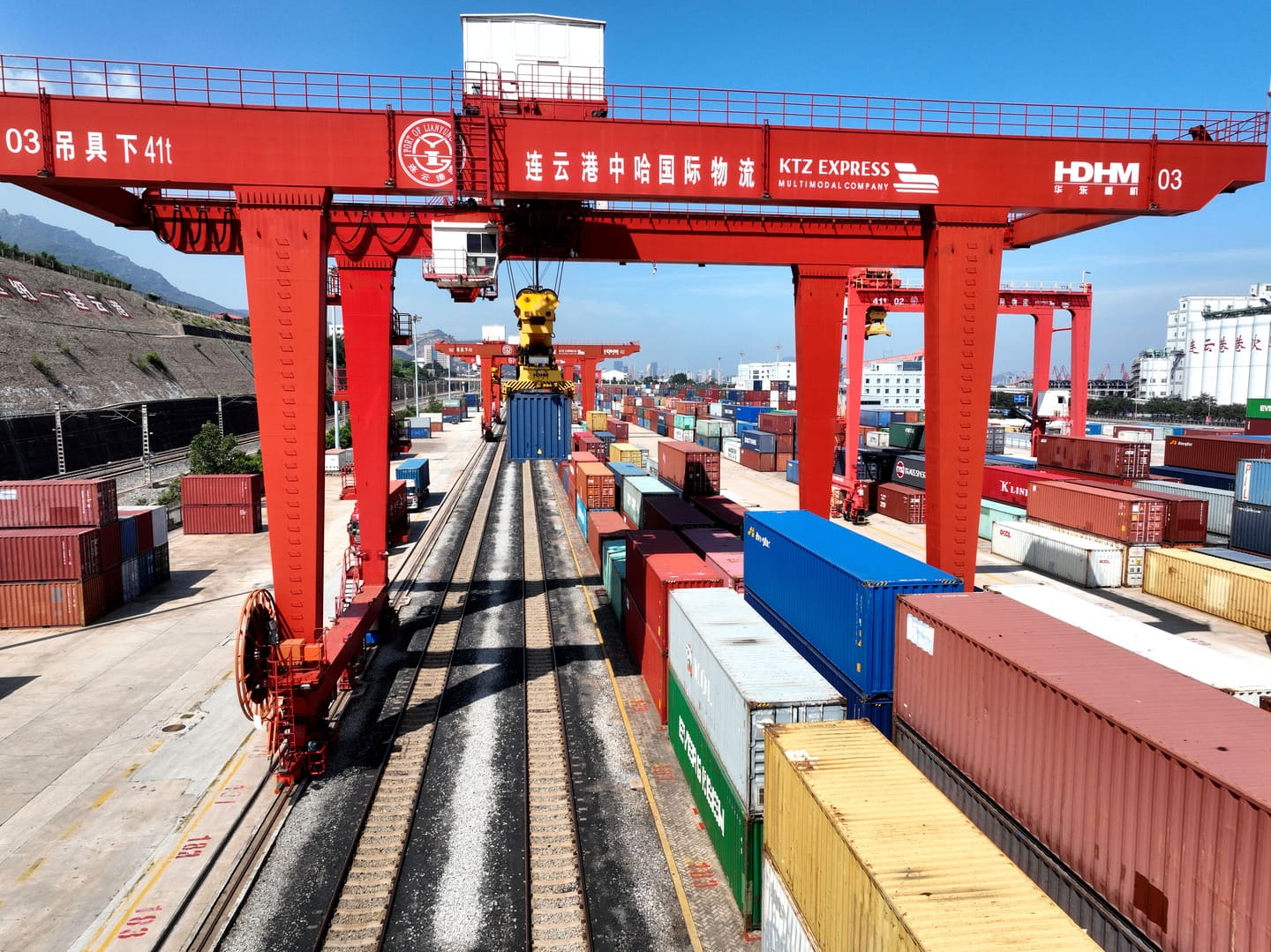
For the Middle Corridor to fulfill its promises, one of these routes must become scalable. At present, neither is.

Friedrich Conradi

Most of Moscow’s military resources are tied up in Ukraine, while Beijing’s foreign policy prioritizes economic ties and avoids direct conflict.

Alexander Gabuev, Temur Umarov

The interventions in Iran and Venezuela are in keeping with Trump’s strategy of containing China, but also strengthen Russia’s position.

Mikhail Korostikov
For a real example of political forces engaged in the militarization of society, the Russian leadership might consider looking closer to home.

James D.J. Brown