

Q&A
Suzanne Maloney, Aaron David Miller, Karim Sadjadpour
{
  "authors": [
    "Karim Sadjadpour"
  ],
  "type": "legacyinthemedia",
  "centerAffiliationAll": "dc",
  "centers": [
    "Carnegie Endowment for International Peace"
  ],
  "collections": [],
  "englishNewsletterAll": "menaTransitions",
  "nonEnglishNewsletterAll": "",
  "primaryCenter": "Carnegie Endowment for International Peace",
  "programAffiliation": "MEP",
  "programs": [
    "Middle East"
  ],
  "projects": [],
  "regions": [
    "Middle East",
    "Iran"
  ],
  "topics": []
}
REQUIRED IMAGE
The Bush administration, following its own pronouncements as well as House and Senate legislation, is expected to decide soon whether to classify Iran's most formidable military force, the Islamic Revolutionary Guard Corps, as a terrorist organization. This would be a serious mistake. By labeling all 125,000 Revolutionary Guards untouchable "terrorists," Washington would forgo the possibility of exploiting the organization's internal divisions and further decrease the likelihood of diplomatic progress with Tehran.
Source: The Washington Post
The Bush administration, following its own pronouncements as well as House and Senate legislation, is expected to decide soon whether to classify Iran's most formidable military force, the Islamic Revolutionary Guard Corps, as a terrorist organization. This would be a serious mistake. By labeling all 125,000 Revolutionary Guards untouchable "terrorists," Washington would forgo the possibility of exploiting the organization's internal divisions and further decrease the likelihood of diplomatic progress with Tehran.Instead of making a disastrous military option more likely, the United States should seek to tip the balance within the guard in favor of pragmatists, rather than hard-liners who thrive in a state of isolation and confrontation.
Created shortly after the 1979 revolution whose principles it was tasked with upholding, the guard has arguably eclipsed the clergy as Iran's most powerful political and economic institution. President Mahmoud Ahmadinejad and lead nuclear negotiator Ali Larijani have served stints, and alumni outnumber clerics nearly two to one in parliament. As its political clout has grown, so has the guard's economic prowess: In the past two years alone, guard front companies have been awarded oil contracts worth upward of $10 billion, in addition to the billions they make each year importing, exporting and smuggling such things as gasoline, automobiles and liquor.
Washington's greatest concerns are that the guard is running Iranian foreign policy in Iraq, Afghanistan and Lebanon, where it is probably aiding and arming radical forces that target U.S. soldiers and interests, and that the guard is linked to Iran's nuclear program. Gen. Yahya Rahim Safavi, who headed the guard until last month, once bombastically declared that Iran has a strategy to "destroy the roots of Anglo-Saxon civilization."
The guard certainly has many unsavory characters, but unlike al-Qaeda, it is not a monolith of Islamist radicals. Polls conducted at guard barracks in 1997 and 2001 found that about three-quarters of members supported then-President Mohammad Khatami, a reformist, evidence that the guard is actually more reflective of Iranian society -- and its discontents -- than was once thought.
Mohsen Rezai, who was a longtime head of the guard and is still influential among its members, has advocated U.S.-Iranian reconciliation for years, echoing the sentiments of many mid-ranking members I used to encounter in Tehran. It is not unlike the recent experience in the United States that military men who have faced the horrors of combat are often less likely than their civilian counterparts to favor new military adventures.
The conventional wisdom that the guard is closely aligned with Iran's president is mistaken. Lacking the popular base that Khatami enjoyed as president, Ahmadinejad has pandered to the guard to project power and influence, not vice versa. Senior commanders were known to have voted in the 2005 presidential election for their former colleague Mohammad Bagher Ghalibaf, a conservative pragmatist -- and current mayor of Tehran -- who advocates a more conciliatory foreign policy and whose political star seems to be rising as fast as Ahmadinejad's is falling.
Two lessons from U.S. policy experiences are instructive here. First, while Bush administration officials often liken their Iran policy to some of America's Cold War policies, they ignore a fundamental aspect of the reform processes in the Soviet Union and Eastern Europe: They began to bear fruit when disillusioned communist dons and military personnel became convinced that they and their countries would be better off in a different system.
The second lesson is from Iraq. When the Baathist army was disbanded, nearly 300,000 men -- few of whom had a strong affinity for Saddam Hussein -- were stripped of their livelihoods and made to feel they had no place in Iraq's future. As a result, many joined forces with the insurgency.
In Iran today the only groups that are both armed and organized are the guard and the Basij militia, its larger but less prestigious affiliate. Successful political reform must co-opt these forces and make them feel they will have some position in a changed Iran. Branding the guard a terrorist entity would make its members feel more, rather than less, invested in retaining the status quo.
The United States can and should, however, put pressure on the guard. Actively discouraging foreign companies from working with guard entities and subtly targeting the financial activities of senior commanders and the elite Quds Force would send the right signal. But simultaneously continuing the dialogue about Iraq is imperative. Given the guard's prominence in Iraq and the nuclear issue, we don't have the luxury of waiting for liberal democratic interlocutors in Tehran.
The goal should be to widen divisions among Tehran's disparate ruling elites, not to unite them behind a confrontational approach that few want to take. The majority of guard officials may have little affinity for Ahmadinejad's style, but they aren't likely to argue for a more conciliatory approach toward a U.S. government that considers all of them terrorists.

Senior Fellow, Middle East Program
Karim Sadjadpour is a senior fellow at the Carnegie Endowment for International Peace, where he focuses on Iran and U.S. foreign policy toward the Middle East.
Recent Work


Suzanne Maloney, Aaron David Miller, Karim Sadjadpour

Aaron David Miller, Karim Sadjadpour, Robin Wright
Carnegie does not take institutional positions on public policy issues; the views represented herein are those of the author(s) and do not necessarily reflect the views of Carnegie, its staff, or its trustees.
Ongoing uncertainty in the Middle East allows Moscow to both increase its influence in Tehran and continue to enjoy the financial windfall of higher oil prices.

Nikita Smagin
This year’s wars have made alternative routes to transit through Russia no less risky for Central Asian countries.

Galiya Ibragimova
The Russian leadership wants to avoid a dangerous precedent in which it is squeezed out of Iran by the United States and Israel—and left powerless to respond in any meaningful way.
Nikita Smagin
Not only does the fighting jeopardize regional security, it undermines Russian attempts to promote alternatives to the Western-dominated world order.

Ruslan Suleymanov
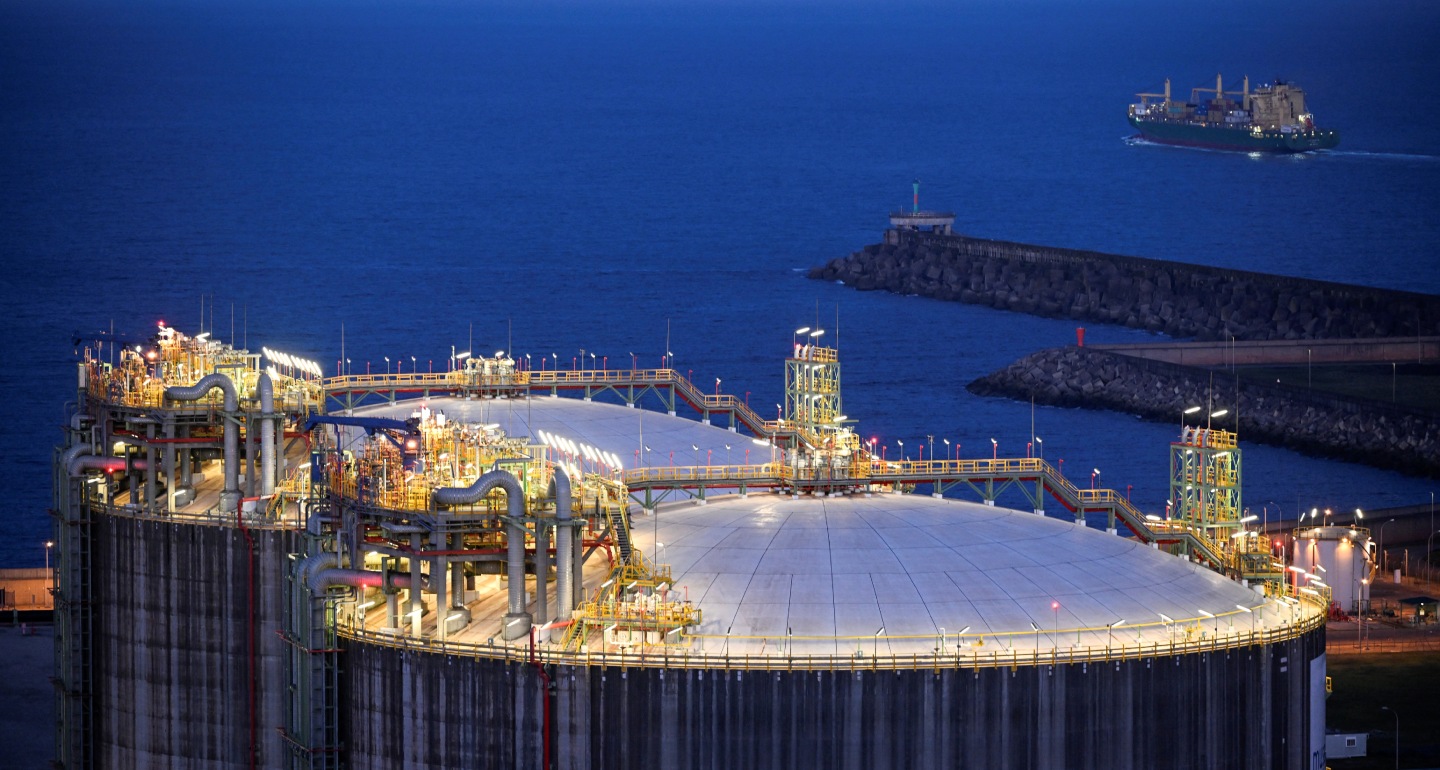
The future trajectory of the U.S.-Iran war remains uncertain, but its impact on global energy trade flows and ties will be far-reaching. Moscow is likely to become a key beneficiary of these changes; the crisis in the Gulf also strengthens Russia’s hand in its relationships with China and India, where advantages might prove more durable.

Sergey Vakulenko