

Q&A
- +2
Judy Dempsey, Alexander Gabuev, Rose Gottemoeller, …
{
  "authors": [
    "Rose Gottemoeller"
  ],
  "type": "legacyinthemedia",
  "centerAffiliationAll": "dc",
  "centers": [
    "Carnegie Endowment for International Peace",
    "Carnegie Europe"
  ],
  "collections": [],
  "englishNewsletterAll": "ctw",
  "nonEnglishNewsletterAll": "",
  "primaryCenter": "Carnegie Endowment for International Peace",
  "programAffiliation": "russia",
  "programs": [
    "Russia and Eurasia"
  ],
  "projects": [],
  "regions": [
    "North America",
    "United States",
    "Caucasus",
    "Russia"
  ],
  "topics": [
    "Foreign Policy"
  ]
}
Source: Getty
On my way out of Moscow on the day when George Bush and Vladimir Putin met for the last time in Sochi, Russian blogs were alight with complaints about how Putin had lost big at the NATO summit meeting in Bucharest the day before. As I flew across the ocean a few hours later, I sat next to a well-placed Washington operative on his way back from Bucharest. "Bush lost big at the summit," he said."
Source: International Herald Tribune

The Russian president may have prevented Ukraine and Georgia from gaining Membership Action Plans (MAPs), the bloggers said, but Bush won by insisting NATO sign up to a clear statement that their future would be in the alliance.
As I flew across the ocean a few hours later, I sat next to a well-placed Washington operative on his way back from Bucharest. "Bush lost big at the summit," he said. " He put it all out there in public to get MAPs for Ukraine and Poland, and Merkel and Sarkozy stood him down. All he got was a paltry statement of intent about their chance to join NATO in future."
The contrasting assessments on the same day got me thinking about the role of misperception in the U.S.-Russian relationship, and that got me thinking in turn about the "Russian St. Valentine."
In Krasnoyarsk, a town in the middle of Siberia, stands a memorial to Nikolai Rezanov, a Russian nobleman and explorer who reached California in 1806 and there fell in love with a famed beauty, Concepción Arguello, known as Conchita, the daughter of the comandant of San Francisco, Don José Darío Arguello.
Conchita returned Rezanov's feelings, and they pledged to marry. But as she was Roman Catholic and he Russian Orthodox, he needed permission from the patriarch. So Rezanov raced back across Siberia, resolved to return quickly. Not stopping to take care of a case of pneumonia, he perished in Krasnoyarsk - hence the memorial, which is visited by newlyweds who toast him as a symbol of eternal love.
If you visit the San Francisco Presidio, though, you might get a different story. Conchita stayed faithful to Rezanov throughout her life, finally taking the veil and devoting her life to good works. Although, according to history, she was told that "his last words were of you," one often hears of Rezanov the faithless bounder who abandons Conchita never to return.
Rezanov as St. Valentine or Rezanov as Don Juan - Russian and American misperceptions are not limited to geopolitics, I thought, but even come up in old stories. But then I heard the tale told on a Moscow stage.
In 1983, the Lenkom Theater in Moscow staged "June and Avos," a rock opera based on the Rezanov story by the composer Aleksey Rybnikov and the poet Andrei Voznesensky. People formed long lines to get tickets. The original Rezanov was a Soviet heartthrob who played the role for nearly two decades, and his Conchita was always a red-headed beauty with a fiery temper - no nun she, but an early women's lib symbol in the USSR.
This year, Lenkom is celebrating the 25th anniversary of "Juno and Avos," and it's still a hot ticket in Moscow - so much so that I had to pay Broadway prices for two seats in the upper balcony.
The night we went, the aisles were packed with standing-room spectators in a way that would have made a New York City fire chief shudder. As the lights went down, I was really curious about what a Soviet rock opera would make of this story.
The first answer is sex. No wonder the show was a smash in 1983 - there's a seduction scene, and Conchita delivers a stillborn child after Rezanov leaves for Russia.
The second answer is showmanship. Although static by Broadway standards - the leads stand at the front of the stage belting rock songs into microphones, and the dancers have never met Bob Fosse - the show is a knock-out. Half-dressed sailors swinging from ship rigging, a romantic ball scene, Conchita with a whip, lots of smoke, strobe lights - what more do you need?
The third answer is message. The one about America and Russia loving each other is front and center, hokey and simple.
More remarkable though, is the timing of that message. When the show opened, it was the era of Yuri Andropov, the last time Americans were wondering what a KGB man was doing in the Kremlin. We were truly worried about the "evil empire" and the thousands of nuclear warheads pointing our way. Yet the Lenkom Theater was embarked on a kind of summer of love Soviet-style, packing in rapt audiences who were ready to think about America in quite a different light.
Twenty-five years later, the latest KGB man to occupy the Kremlin has created a new perception of threat between us, and Americans are not sure why - does Putin really think that way?
As I sat and watched the audience absorbed once again by the story of Conchita and Rezanov, I thought that maybe misperception doesn't matter so much, that it's a trap if we treat it as anything other than a fact of our relationship.
What's more important is to expect the unexpected from Russia. Just when we think we have the talking points right, Russia turns out to be something quite different - the evil empire lashed up with the summer of love.
So perhaps the main thing is stay tuned to the trends going in the right direction, for that is where the United States may pursue its own interests. As for the negative trends - of course we must be alert to them, but not so that they overwhelm our sense of opportunity with Russia. And if the Russians ask me, I will say the same to them.

Nonresident Senior Fellow, Nuclear Policy Program
Rose Gottemoeller is a nonresident senior fellow in Carnegie’s Nuclear Policy Program. She also serves as lecturer at Stanford University’s Freeman Spogli Institute for International Studies and is a research fellow at the Hoover Institution. Ambassador Gottemoeller served as the deputy secretary general of NATO from 2016 to 2019.
Recent Work


Judy Dempsey, Alexander Gabuev, Rose Gottemoeller, …
Carnegie does not take institutional positions on public policy issues; the views represented herein are those of the author(s) and do not necessarily reflect the views of Carnegie, its staff, or its trustees.
Blurring the line between humans and animals is a long-standing tradition in social utopian prose. In his latest novel, Leonid Bershidsky reminds us that in social experiments, people are often treated no differently than animals.

Alexander Baunov
While France and Australia are seeking to establish the legal obligations of messaging apps like Telegram, Russia wants total subordination.

Maria Kolomychenko
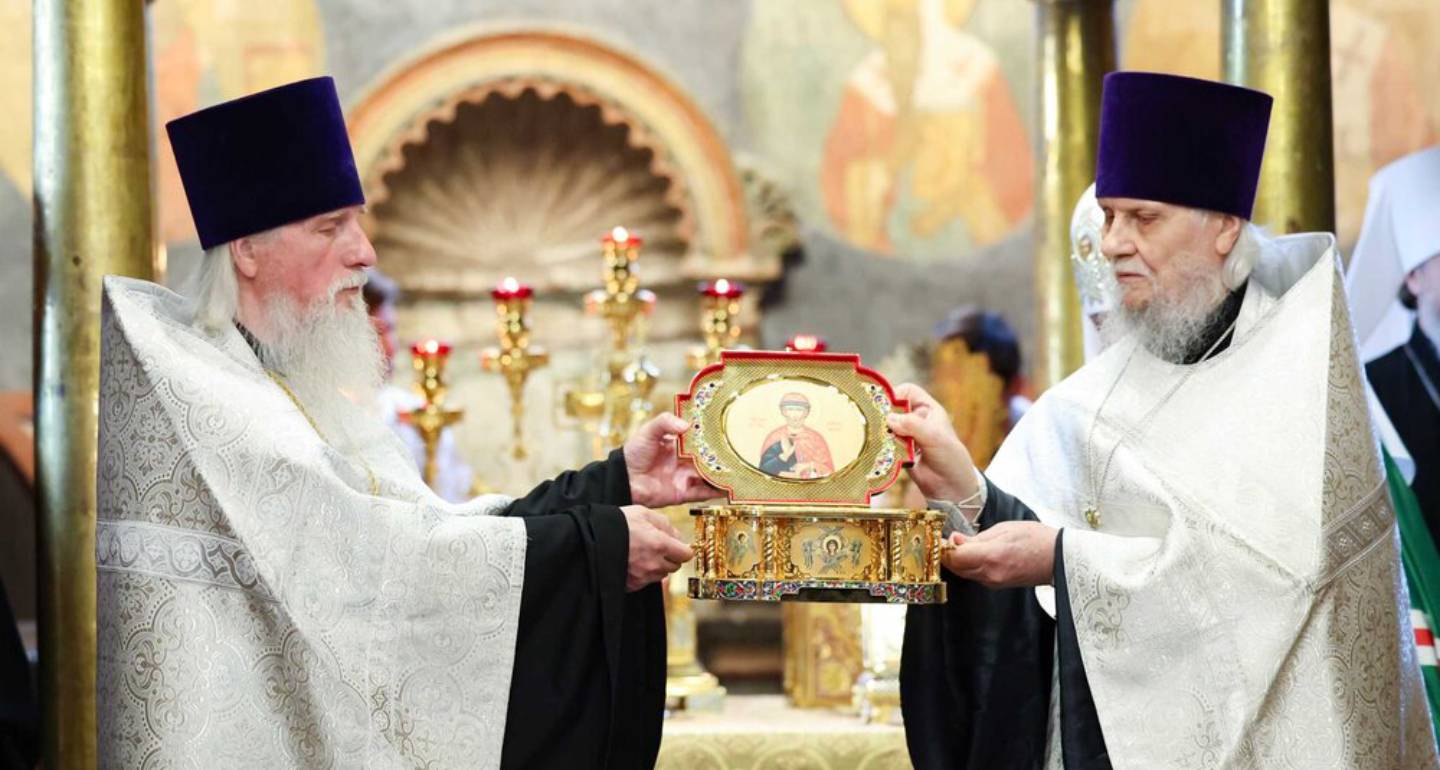
The recent uncovering of Dmitry Donskoy’s relics in the Cathedral of the Archangel is yet another attempt by the Russian Orthodox Church to help the state solve its problems. However, parroting the state’s version of Russian history leaves the Church with no message except “patriotism.”
Alexander Zanemonets

With the growth in points of friction between the great powers, organizations like the SCO will continue to play a role in the strategic adaptation of the smaller powers caught between them.

Temur Umarov

The war in Ukraine and a change in ownership led VK to neglect its commercial ventures in favor of implementing the Kremlin’s online agenda. Now it’s been sanctioned by the EU.
Maria Kolomychenko