

Paper
Douglas H. Paal
{
  "authors": [
    "Douglas H. Paal"
  ],
  "type": "legacyinthemedia",
  "centerAffiliationAll": "dc",
  "centers": [
    "Carnegie Endowment for International Peace",
    "Carnegie China"
  ],
  "collections": [],
  "englishNewsletterAll": "asia",
  "nonEnglishNewsletterAll": "",
  "primaryCenter": "Carnegie China",
  "programAffiliation": "AP",
  "programs": [
    "Asia"
  ],
  "projects": [],
  "regions": [
    "China",
    "East Asia"
  ],
  "topics": [
    "Economy",
    "Military",
    "Foreign Policy",
    "Security"
  ]
}
REQUIRED IMAGE
Yesterday U.S. Secretary of State Condoleezza Rice dropped in on an important Asian political conference she has missed in recent years. Ms. Rice's decision to attend the Association of Southeast Asian Nations' Regional Forum in Singapore this week is a welcome if belated sign that the Bush administration has begun to give Asia its due as the new global center of gravity.
Source: The Wall Street Journal Asia

However late in the game Ms. Rice's trip comes, it means a lot in a region too often neglected by Washington. In late 1991, President George H.W. Bush planned an extensive trip through Asia to make good on past promises for visits the Gulf War had postponed. With the departure date closing in, pollster Bob Teeter told Mr. Bush the public thought he was paying too much attention overseas and not enough at home. The administration scrapped the trip, and announced its decision to the White House press corps before informing ambassadors or foreign capitals. It was not that Mr. Bush's most sensitive moment.
But it was part of a broader pattern on the U.S. side of shortchanging Asia. Because of the distances involved, both geographical and cultural, American leaders traditionally have visited Asia less than Europe. Yet as Asia rises in the global economy and international relations, we cannot afford to continue that pattern.
Whatever its party, the next U.S. administration will find itself facing the challenge of organizing coalitions in Asia that manage both to involve many of the relevant actors and to advance American interests. U.S. leaders have long complained that Asia presents too many international fora doing too little besides talking. The time is ripe for proposing constructive alternatives.
Consider the current panoply of ineffective groups and meetings. The Asia-Pacific Economic Cooperation meetings assemble the right heads of state to discuss security -- but are confined by the group's charter to economic talks. Asean organizes many ministerial and lower-level meetings, but has rarely been able to leverage that attendance into anything more than symbolism. The six-party talks on North Korea could offer new advances on security cooperation, but no one knows yet whether that group will even be effective in its current mission, let alone any expanded functions.
To constructively engage the region by building an effective organization, the U.S. could try to build on one or more of the existing groups, but it would probably have to press for either additions to, or subtractions from, the membership. Or it could propose something new, which would include the right people to address important issues like humanitarian assistance, pandemics, environmental challenges, finance, trade and eventually security.
The important thing will be for U.S. leaders to develop a clear idea of American objectives, and also of the best way to achieve those goals. The U.S. also must show Asian countries, regularly and publicly, that their concerns are being considered at the highest levels of American government.
In Asian countries, where one is always expected to respect "face," canceling participation in a meeting or simply failing to attend causes needless ill will. As secretary of state, George Shultz set a high standard in dealing with the region. Despite the many pressures on his schedule, he regularly made the Asia-Pacific rounds, stopping sometimes in lesser capitals to advance the American agenda. He referred to the practice as "gardening."
The U.S. hasn't been out to the garden often enough in recent years, and the next administration will likely be called upon to pay more attention to it. Showing up is a good start.
The article first appeared on the Wall Street Journal Asia

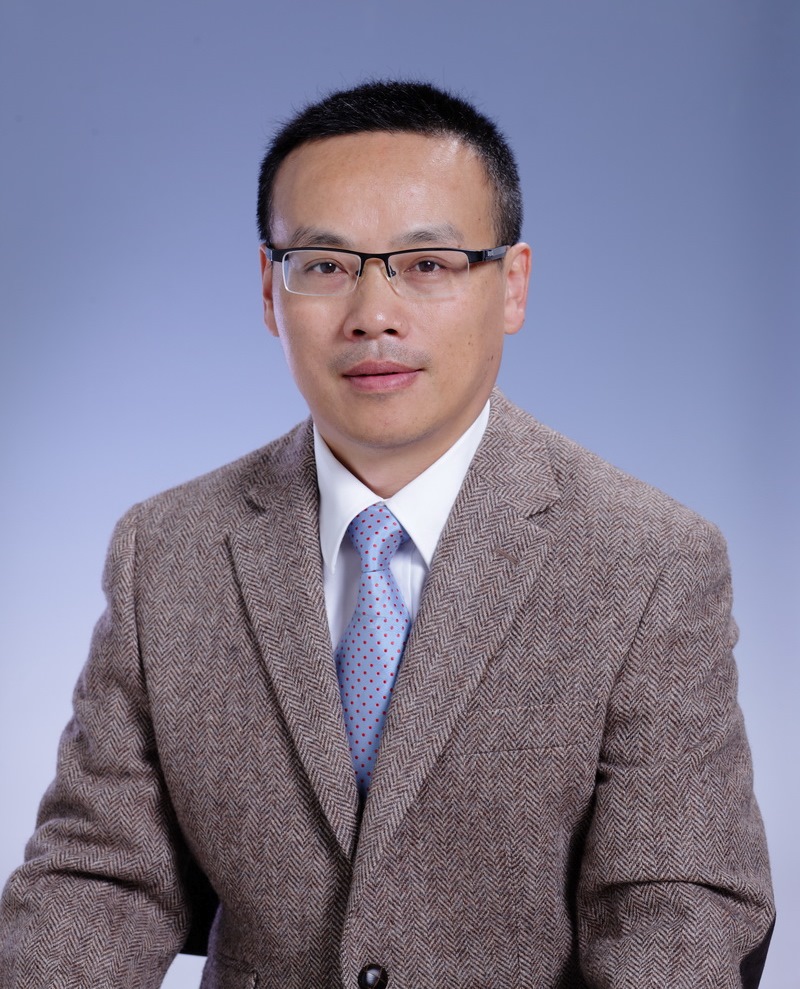
Distinguished Fellow, Asia Program
Paal previously served as vice chairman of JPMorgan Chase International and as unofficial U.S. representative to Taiwan as director of the American Institute in Taiwan.
Recent Work
Douglas H. Paal

Douglas H. Paal, Tong Zhao, Chen Qi, …

The European far right might fail to steer EU policy in the direction Russia wants, but they will create enough chaos inside Europe to benefit the Kremlin.

Dimitar Bechev

Minsk clearly expected the dialogue with Washington to yield more results, in particular the lifting of EU sanctions and permission to export potash.

Artyom Shraibman

Depleted financial reserves and a shrinking tax base mean it is no longer possible to simultaneously deliver high defense spending, price stability, and economic growth.

Alexandra Prokopenko

With the growth in points of friction between the great powers, organizations like the SCO will continue to play a role in the strategic adaptation of the smaller powers caught between them.

Temur Umarov

When faced with fuel shortages in the past, Central Asian governments could always count on additional supplies from Moscow. That safety net no longer exists.

Galiya Ibragimova