

Paper
Sven Behrendt
{
  "authors": [
    "Sven Behrendt"
  ],
  "type": "legacyinthemedia",
  "centerAffiliationAll": "dc",
  "centers": [
    "Carnegie Endowment for International Peace",
    "Malcolm H. Kerr Carnegie Middle East Center"
  ],
  "collections": [],
  "englishNewsletterAll": "menaTransitions",
  "nonEnglishNewsletterAll": "",
  "primaryCenter": "Malcolm H. Kerr Carnegie Middle East Center",
  "programAffiliation": "MEP",
  "programs": [
    "Middle East"
  ],
  "projects": [],
  "regions": [
    "Middle East",
    "North Africa"
  ],
  "topics": [
    "Economy"
  ]
}
REQUIRED IMAGE
The financial crisis in the US provide a strong indication of how Wall Street has become the "near abroad" of Arab investors and how tightly the Arab world is weaved into global financial markets. How it navigates the financial turmoil is going to make a huge impact on its reputation and standing among other global investors.
Source: The Daily Star
The financial crisis in the US provide a strong indication of how Wall Street has become the "near abroad" of Arab investors and how tightly the Arab world is weaved into global financial markets. How it navigates the financial turmoil is going to make a huge impact on its reputation and standing among other global investors.
Only last winter did the Kuwait Investment Authority place a $3 billion investment in Citigroup and a $2 billion investment in Merrill Lynch. Likewise, the Abu Dhabi Investment Authority acquired a 4.9-percent stake in Citigroup. Sovereign investors from other emerging economies stepped in to provide additional funding to bail out US financial institutions.
What appeared to have been commercially interesting acquisitions at the time turned out to be highly risky investments. Merrill Lynch, as the other four big US investment banks, is no more, the US financial services industry is going through its worst crisis since the Great Depression.
It is therefore not surprising that Arab sovereign investors have been cautiously supporting the US banking system with additional liquidity. "Once bitten, twice shy," as one commentator recently remarked.
Indeed, there might be several reasons for Arab investors to sit quietly on the sidelines. They are already exposed to Western financial institutions. Further acquisitions would probably tip the balance of their portfolios too much in favor of the financial services industry. Also, the price of oil, the main source of funding for Arab sovereign wealth funds (SWFs), has been tremendously volatile as of late, ranging between $94 and $125 a barrel in the past days. And more broadly, the number of interesting investment opportunities in other parts of the world, in particular emerging economies and not least in their own economies and their near abroad, is growing.
Finally, Arab and other SWFs did not receive a particularly warm welcome in the US and elsewhere when they made their investments last winter. The public outcry that followed, driven by a populist sentiment against foreign investors, rather resulted in tighter regulation. It remains to be seen whether the Federal Reserve's recent announcement amid the current crisis that it would raise the maximum stake a minority investor could take in a bank holding company from 25 percent to 33 percent and would lift the ban on board representation for minority investors is going to make foreign investors more amenable.
It is most probably a combination of these factors that explains best the wait-and-see attitude of Arab investors.
But despite these disincentives, Arab financial institutions should not punch below their weight either.
In the past 10 years, the price of oil and gas, rising from below $10 to just under $145 at its peak, helped Arab oil exporters accumulate huge amounts of wealth that they used to capitalize an ever-growing number of sovereign funds. In consequence, Arab investors moved from the periphery to the center of the global financial market place, and with a combined value of more than $1 trillion Arab Sovereign Wealth Funds became one of the most important investor group in global financial markets.
This also means that the rest of the world no longer takes lightly what these funds do or don't do. With growing size comes growing influence and responsibility, requiring the leaders of Arab financial institutions to engage themselves more proactively in the politics that surround financial markets.
Two sets of policy issues are currently on the table. The first is Secretary of Treasury Henry Paulson's $700 billion rescue plan to buy toxic assets from banks. Seeking to internationalize the US banking crisis, he has asked other governments for support. Arab and other investors from emerging markets have long argued that they would be able to play a stabilizing role in global financial markets. Although they might eventually choose to avoid Paulson's plan, as other governments have declared, it might bolster their newfound position to make some contribution.
This might also give them credit to support their case for the second policy issue, which will have a much longer shelf life in the global policy debate. In response to the crisis, Europeans have called for greater international regulation and transparency of financial markets. These requests have been targeted at the US financial system and in particular hedge funds and private equity. But Arab SWFs are considered to be among the world's most opaque and un-transparent financial institutions. As such they will again be exposed to public scrutiny.
With these two issues in mind, the Arab world needs to position itself actively in the future world of global finance. Making a measured contribution to buffer some of the broader effects of the current financial turbulences, supporting its long-term objective to be seen as a respected player in the reform of the global financial architecture might be a useful path to be considered.
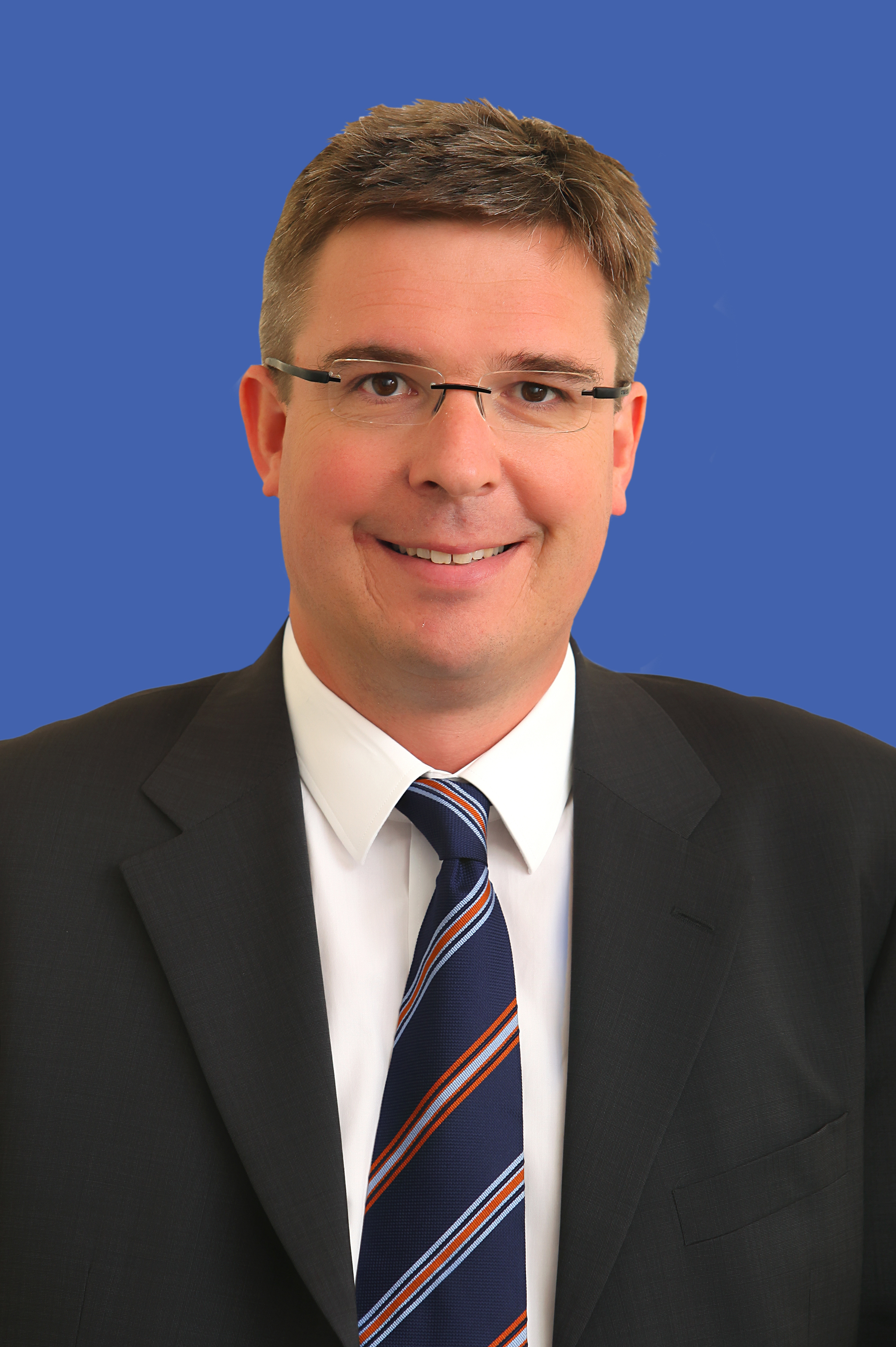
Former Visiting Scholar, Middle East Center
Behrendt is an expert in global issues, international negotiations, conflict resolution, and corporate strategy. He previously served at the World Economic Forum in various management positions.
Recent Work
Sven Behrendt
Sven Behrendt
Carnegie does not take institutional positions on public policy issues; the views represented herein are those of the author(s) and do not necessarily reflect the views of Carnegie, its staff, or its trustees.
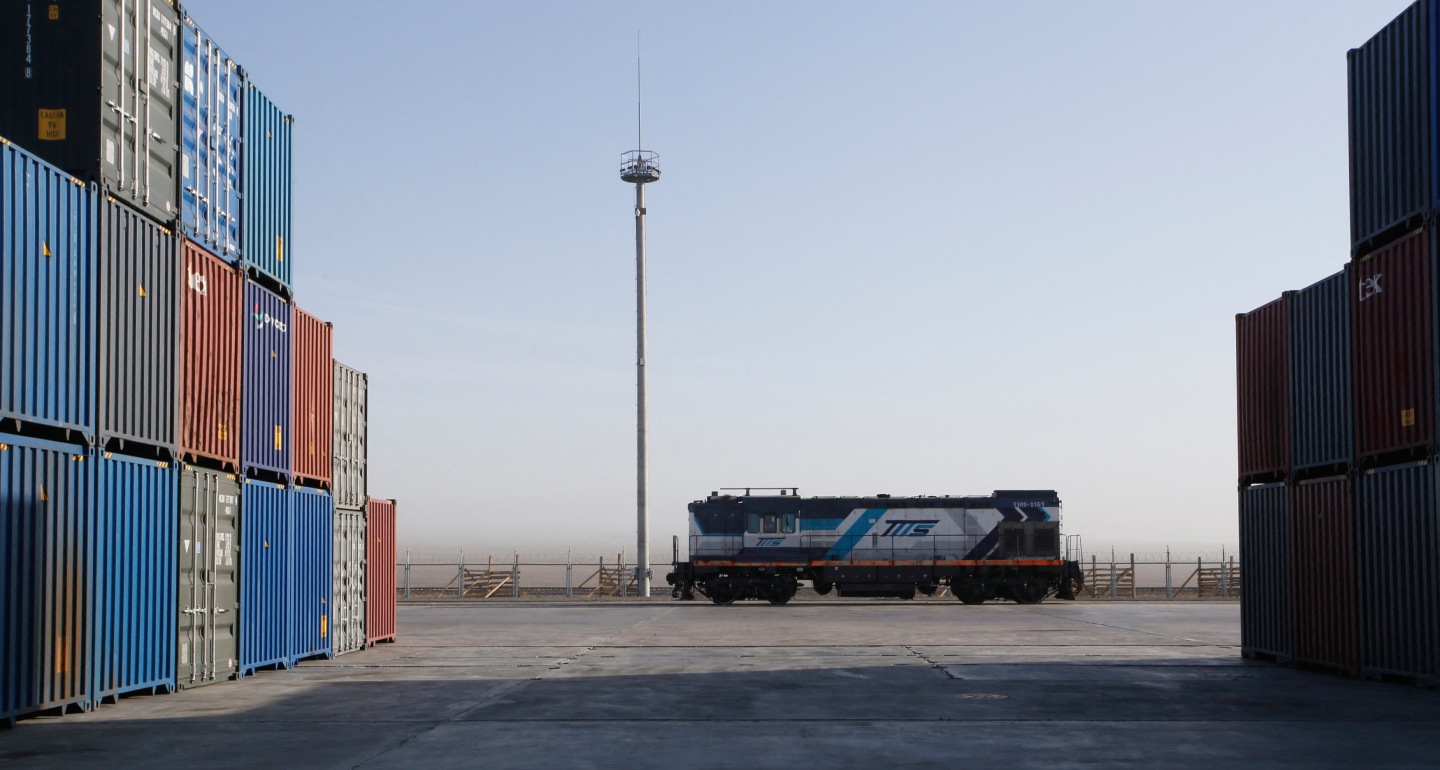
This year’s wars have made alternative routes to transit through Russia no less risky for Central Asian countries.

Galiya Ibragimova
A much-discussed disagreement over internet restrictions in Russia was never an existential threat for Putin: It was about elite groups protecting their interests.

Alexandra Prokopenko

The demands of the Kremlin’s war in Ukraine, demographic problems, and public hostility toward Central Asians mean Russia does not have enough workers.
Salavat Abylkalikov
Minsk’s faith in the future of its larger neighbor’s economy is fading as Belarusian firms in Russia see record losses.

Olga Loiko
The cost of air defense has become an unregistered tax on revenue for businesses. While military rents are consolidated in the federal budget, the costs of defense are being spread across the balance sheets of companies and regional governments.
Alexandra Prokopenko