• Research
  • Politika
  • About
Carnegie Russia Eurasia center logoCarnegie lettermark logo
  • Donate
{
  "authors": [
    "Douglas H. Paal"
  ],
  "type": "legacyinthemedia",
  "centerAffiliationAll": "dc",
  "centers": [
    "Carnegie Endowment for International Peace"
  ],
  "collections": [],
  "englishNewsletterAll": "asia",
  "nonEnglishNewsletterAll": "",
  "primaryCenter": "Carnegie Endowment for International Peace",
  "programAffiliation": "AP",
  "programs": [
    "Asia"
  ],
  "projects": [],
  "regions": [
    "North America",
    "United States",
    "East Asia",
    "China",
    "North Korea"
  ],
  "topics": [
    "Security",
    "Military",
    "Foreign Policy",
    "Nuclear Policy"
  ]
}
Source: Getty

In The Media

North Korea's Move Tests International Will on Nuclear Issues

North Korea's recent nuclear test seems to erase any progress in six years of multilateral negotiations. The United States can still pressure North Korea, but it will need China's cooperation.

Link Copied
By Douglas H. Paal
Published on May 25, 2009

Source: Newshour with Jim Lehrer

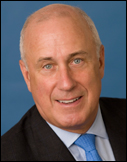
The Democratic People’s Republic of Korea (DPRK) tested its second underground nuclear device Monday. To discuss the North Korean nuclear developments and potential steps that the United States and other nations could take, Douglas Paal joined Joel Wit, a career State Department official and visiting fellow at Johns Hopkins School of Advanced International Studies, on the Newshour with Jim Lehrer.
 
Paal pointed out that there are still sanctions that the United States can pursue, like North Korea's ability to sell arms internationally or their access to financial services. Any further sanctions, however, will require the consent and assistance of China. Up to now, Beijing has been noncommittal on its desired outcome for North Korea, but Paal explained that the DPRK’s nuclear test may convince China to put more pressure on Pyongyang. 

About the Author

Douglas H. Paal

Distinguished Fellow, Asia Program

Paal previously served as vice chairman of JPMorgan Chase International and as unofficial U.S. representative to Taiwan as director of the American Institute in Taiwan.

    Recent Work

  • Paper
    America’s Future in a Dynamic Asia

      Douglas H. Paal

  • Q&A
    U.S.-China Relations at the Forty-Year Mark
      • +1

      Douglas H. Paal, Tong Zhao, Chen Qi, …

Douglas H. Paal
Distinguished Fellow, Asia Program
Douglas H. Paal
SecurityMilitaryForeign PolicyNuclear PolicyNorth AmericaUnited StatesEast AsiaChinaNorth Korea

Carnegie does not take institutional positions on public policy issues; the views represented herein are those of the author(s) and do not necessarily reflect the views of Carnegie, its staff, or its trustees.

More Work from Carnegie Russia Eurasia Center

  • Commentary
    Carnegie Politika
    The Afghanistan–Pakistan War Poses Awkward Questions for Russia

    Not only does the fighting jeopardize regional security, it undermines Russian attempts to promote alternatives to the Western-dominated world order.

      Ruslan Suleymanov

  • Commentary
    Carnegie Politika
    Moldova Floats a New Approach to Its Transnistria Conundrum

    Moldova’s reintegration plan was drawn up to demonstrate to Brussels that Chișinău is serious about the Transnistria issue—and to get the West to react.

      Vladimir Solovyov

  • Commentary
    Carnegie Politika
    Lukashenko’s Bromance With Trump Has a Sell-By Date

    Lukashenko is willing to make big sacrifices for an invitation to Mar-a-Lago or the White House. He also knows that the clock is ticking: he must squeeze as much out of the Trump administration as he can before congressional elections in November leave Trump hamstrung or distracted.

      Artyom Shraibman

  • Commentary
    Carnegie Politika
    What the Russian Energy Sector Stands to Gain From War in the Middle East

    The future trajectory of the U.S.-Iran war remains uncertain, but its impact on global energy trade flows and ties will be far-reaching. Moscow is likely to become a key beneficiary of these changes; the crisis in the Gulf also strengthens Russia’s hand in its relationships with China and India, where advantages might prove more durable.

      • Sergey Vakulenko

      Sergey Vakulenko

  • Commentary
    Carnegie Politika
    Beyond Oil: Hormuz Closure Puts Russia in the Lead in the Fertilizer Market

    The Kremlin expects to not only profit from rising fertilizer prices but also exact revenge for the collapse of the 2023 grain deal.

      Alexandra Prokopenko

Get more news and analysis from
Carnegie Russia Eurasia Center
Carnegie Russia Eurasia logo, white
  • Research
  • Politika
  • About
  • Experts
  • Events
  • Contact
  • Privacy
Get more news and analysis from
Carnegie Russia Eurasia Center
© 2026 Carnegie Endowment for International Peace. All rights reserved.











