

Commentary
Russian strikes are weakening the economy sustaining Ukraine’s war effort. Closing the growing funding gap will require more European support and politically contentious reforms in Kyiv.
Balázs Jarábik
{
  "authors": [
    "Robert Kagan",
    "Dan Blumenthal"
  ],
  "type": "legacyinthemedia",
  "centerAffiliationAll": "",
  "centers": [
    "Carnegie Endowment for International Peace"
  ],
  "collections": [],
  "englishNewsletterAll": "",
  "nonEnglishNewsletterAll": "",
  "primaryCenter": "Carnegie Endowment for International Peace",
  "programAffiliation": "",
  "programs": [],
  "projects": [],
  "regions": [
    "North America",
    "United States",
    "East Asia",
    "North Korea"
  ],
  "topics": [
    "Security",
    "Military",
    "Foreign Policy",
    "Nuclear Policy",
    "Nuclear Energy"
  ]
}
Source: Getty
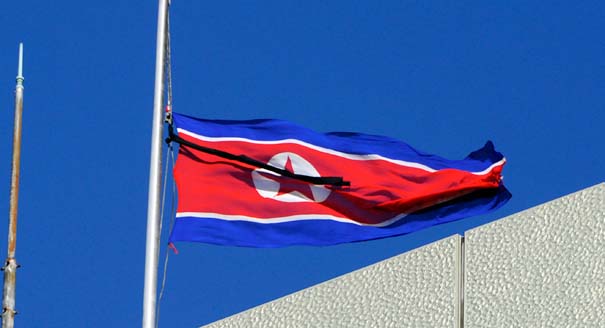
The North Korean launch of its Taeopodong-2 missile and its second nuclear test have exposed the futility of the six-party talks and, in particular, the much-hyped myth of China's value as a partner on strategic matters.
Source: Washington Post

After decades of diplomacy and "probing" Pyongyang's intentions, one thing is clear: Kim Jong Il and his cronies want nuclear weapons and the means to deliver them. What will dissuade them? Isolation and more punitive sanctions would make sense if China and Russia would go along. But they haven't, and they won't.
We would support military action against North Korean missiles and missile sites, if we had prepared ourselves over the past few years to protect our allies against possible North Korean retaliation. Former defense secretary William J. Perry and current defense undersecretary Ashton B. Carter recommended this course of action in The Post a few years ago. But the supposedly bellicose Bush administration didn't take such action, and the odds of this administration doing so are even smaller.
For several years, this lack of attractive options has driven many to look to the Chinese for help. Advocates of warm engagement with the Chinese have been the most enthusiastic promoters of this approach, less, we suspect, out of concern for solving the North Korea problem than to prove the worth of close cooperation with Beijing. North Korea, they have tirelessly claimed, is one of those common strategic interests that the United States and Beijing allegedly share.
This proposition has been discredited. Sure, in theory China could pressure Kim to give up his weapons -- it has the power and influence. But the fact is, China doesn't want to. Beijing is content to live with a nuclear and anti-Western North Korea. While China fears a collapsed North that would flood its struggling Northeast with refugees, it also fears a unified, democratic, prosperous Korea allied with the United States. China wants a puppet state in North Korea, which is why, far from joining in sanctions, it steadily increases its economic investment there.
Given these realities, the United States probably has little choice but to wait out Kim until the emergence of a leader who can make the strategic decision to abandon the nuclear weapons program. In the meantime, Washington should embark on a three-pronged approach. First, it should enhance its deterrent to protect itself, South Korea and Japan. That means, above all, bolstering American and allied missile defenses and deterrent capabilities. Unfortunately, it is precisely American missile defense capabilities that the Obama administration is now cutting -- despite the growing missile threat from North Korea and Iran. Second, it should strengthen multilateral efforts to stem North Korean proliferation, including more active efforts at interdiction and freezing bank accounts used to fund proliferation. Third, it should give up on the six-party talks. If it ever proves useful to talk to Pyongyang -- a big "if" -- let's do so directly.
The ultimate American aim should be to help bring about a unified Korean Peninsula and not cede influence over the two Koreas to Beijing. The current diplomatic arrangements have permitted China to set the political agenda while quietly increasing its leverage over the North. But Washington doesn't need to go through Beijing to get to Pyongyang. Direct negotiations between the United States and North Korea, in close consultation with Japan and South Korea, are better than working through a middleman who has no desire or interest in closing the deal. Both Japan and South Korea would welcome greater U.S. engagement with the North. Seoul wants reassurance that it will not shoulder the burden of unification by itself. Japan wants U.S. protection and a guarantee that Washington will have some presence on the peninsula for the long term.
If we decide to talk again, American diplomacy should expand beyond nuclear talks to begin preparing for the outcome it wants: a democratic, unified and eventually nonnuclear Korea. As Korea expert Andrei Lankov has suggested, America's new approach could include the opening of cultural, educational and economic exchanges with the North. Western experts should be encouraged to teach at North Korean universities; North Koreans should be allowed to study in the West; and the United States, Japan and South Korea should undertake cooperative economic projects in the North. The United States should also open more radio and television broadcasts from South Korea and the West. In short, Washington's diplomacy with North Korea should focus on measures that raise North Koreans' standard of living and exposure to the West. This would keep our focus on long-term strategic objectives. And who knows? Maybe a new American approach to North Korea will provide an added benefit: If China sees its prominence diminished in North Korean diplomacy, maybe it will finally have some reason to act more forcefully in disarming Kim.
This article originally appeared in the Washington Post.

Former Senior Associate
Kagan, author of the recent book, The Return of History and the End of Dreams (Knopf 2008), writes a monthly column on world affairs for the Washington Post and is a contributing editor at both the Weekly Standard and the New Republic.
Dan Blumenthal
American Enterprise Institute
Carnegie does not take institutional positions on public policy issues; the views represented herein are those of the author(s) and do not necessarily reflect the views of Carnegie, its staff, or its trustees.

Russian strikes are weakening the economy sustaining Ukraine’s war effort. Closing the growing funding gap will require more European support and politically contentious reforms in Kyiv.

Balázs Jarábik

Despite a new textbook, an influx of Russian teachers and managers, and an end to the teaching of Ukrainian, the Kremlin is unlikely to have “reprogrammed” locals.

Konstantin Skorkin

Cargo traffic through Russia’s Northern Sea Route has increased because of the disruption caused by the conflict in the Middle East, the Ukraine war, and U.S.-China tensions.

Mikhail Korostikov

Trump has promised Belarus a massive potash deal. But Minsk is seeking something greater: restored Western transit and greater room for maneuver from Russia.
Balázs Jarábik

The European far right might fail to steer EU policy in the direction Russia wants, but they will create enough chaos inside Europe to benefit the Kremlin.

Dimitar Bechev