• Research
  • Politika
  • About
Carnegie Russia Eurasia center logoCarnegie lettermark logo
  • Donate
{
  "authors": [
    "Mark Medish"
  ],
  "type": "legacyinthemedia",
  "centerAffiliationAll": "dc",
  "centers": [
    "Carnegie Endowment for International Peace",
    "Carnegie Russia Eurasia Center"
  ],
  "collections": [],
  "englishNewsletterAll": "ctw",
  "nonEnglishNewsletterAll": "",
  "primaryCenter": "Carnegie Endowment for International Peace",
  "programAffiliation": "russia",
  "programs": [
    "Russia and Eurasia"
  ],
  "projects": [],
  "regions": [
    "Caucasus",
    "Russia"
  ],
  "topics": [
    "Political Reform",
    "Security",
    "Foreign Policy"
  ]
}
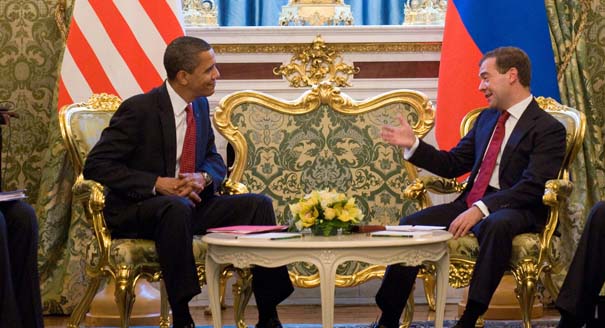
Source: Getty

In The Media

What's Russian for 'Empathy'?

Obama’s message in Moscow needs to translate his visionary pragmatism into a language that will resonate with Russians.

Link Copied
By Mark Medish
Published on Jul 6, 2009

Source: The Washington Post

What's Russian for 'Empathy'?The flap over the mistranslation of "reset button" into Russian was a harbinger of bigger translation challenges to come. The whole Obama phenomenon does not translate well into Russian. Obama is a visionary pragmatist, while the Russian political elite is full of cynical realists.

Empathy -- the centerpiece of Obama's philosophy -- does not have an exact Russian counterpart. The words "sochuvstvie" and "soboleznovanie" are closer to sympathy. The word "sostrandanie" means compassion. But empathy, the idea of putting yourself into somebody else's shoes as a way to think about the world, is a distinct concept. And it is not one that can be elegantly rendered into Russian.
There is a common view in Russia today that Obama is the representative of an America in decline. Just as the Soviet strategists thought that America was finished after Vietnam and Watergate, the cynical realists in the Kremlin today have a hard time understanding America's core dynamism. They look at the debacle in Iraq and the global financial meltdown, which started on Wall Street, and assume that American prospects must be going down. They look at Obama's use of the word "empathy" and think it means America is vulnerable.
 
Russians must be careful not to misunderstand the American president's intellectual solicitude as weakness because they would again be underestimating the nation's deep capacity for change and reinvention. Anybody who listens closely to Obama can hear that his empathy, an enormous intellectual and diplomatic asset, is matched by inner confidence and clarity of purpose, which are true gifts of leadership.
 
Following in the steps of Ronald Reagan who spoke brilliantly of freedom and trust before Russian students in 1988, Obama is expected to give a speech at a Moscow university. For his message to reach its student audience and beyond, Obama may require an extra dose of empathy for the lack of "empathy" in the Russian language.
What should be Obama's message in Moscow? He needs to translate his visionary pragmatism into a language that will resonate with Russians.
 
He should remind his listeners that Russia and America together defeated the two greatest evils of the 20th century: fascism and communism. The enormous sacrifices of our societies must not be forgotten.
 
He should pledge to work closely with Russia on all matters of security in Eurasia, with the expectation that Russia will reciprocate. Failure of this mutual commitment to peace in the region would be a betrayal of our shared victory over the divisions of the last century. The "reset button" is a metaphor for agreeing to avoid unnecessary and untenable confrontation, but we should be able to do much better than that.
 
Obama should restate his vision of a world without nuclear weapons. It is a distant goal, but it is one to which Russia and the United States together are uniquely positioned to lead the way. He should call on our scientific communities to work together on alternative energies for peace.
 
He should urge Russians to put away Cold War thinking, and he should also show that Americans are doing the same. One way is to commit himself to immediate repeal of the Cold War-era Jackson-Vanik Amendment, which denies most favored nation to countries with non-market economies that restrict emigration rights.
 
Finally, he should commit to tearing down the walls of visa restrictions that have made it more difficult for Russians and Americans to visit each other freely.
 
It is interesting to remember that Russia's greatest poet, Aleksander Pushkin, was of African descent, the great grandson of a man from Cameroon. Two centuries later, it is just possible that a young American president with Kenyan roots will also find the right language to move the Russian soul.
 
The article can also be found here.

About the Author

Mark Medish

Former Visiting Scholar

Medish served in the Clinton administration as special assistant to the President and senior director for Russian, Ukrainian, and Eurasian Affairs on the National Security Council from 2000 to 2001.

    Recent Work

  • Q&A
    Ukraine’s Presidential Election—The End of the Orange Revolution

      Mark Medish

Mark Medish
Former Visiting Scholar
Mark Medish
Political ReformSecurityForeign PolicyCaucasusRussia

Carnegie does not take institutional positions on public policy issues; the views represented herein are those of the author(s) and do not necessarily reflect the views of Carnegie, its staff, or its trustees.
More Work from Carnegie Russia Eurasia Center

  • Commentary
    Carnegie Politika
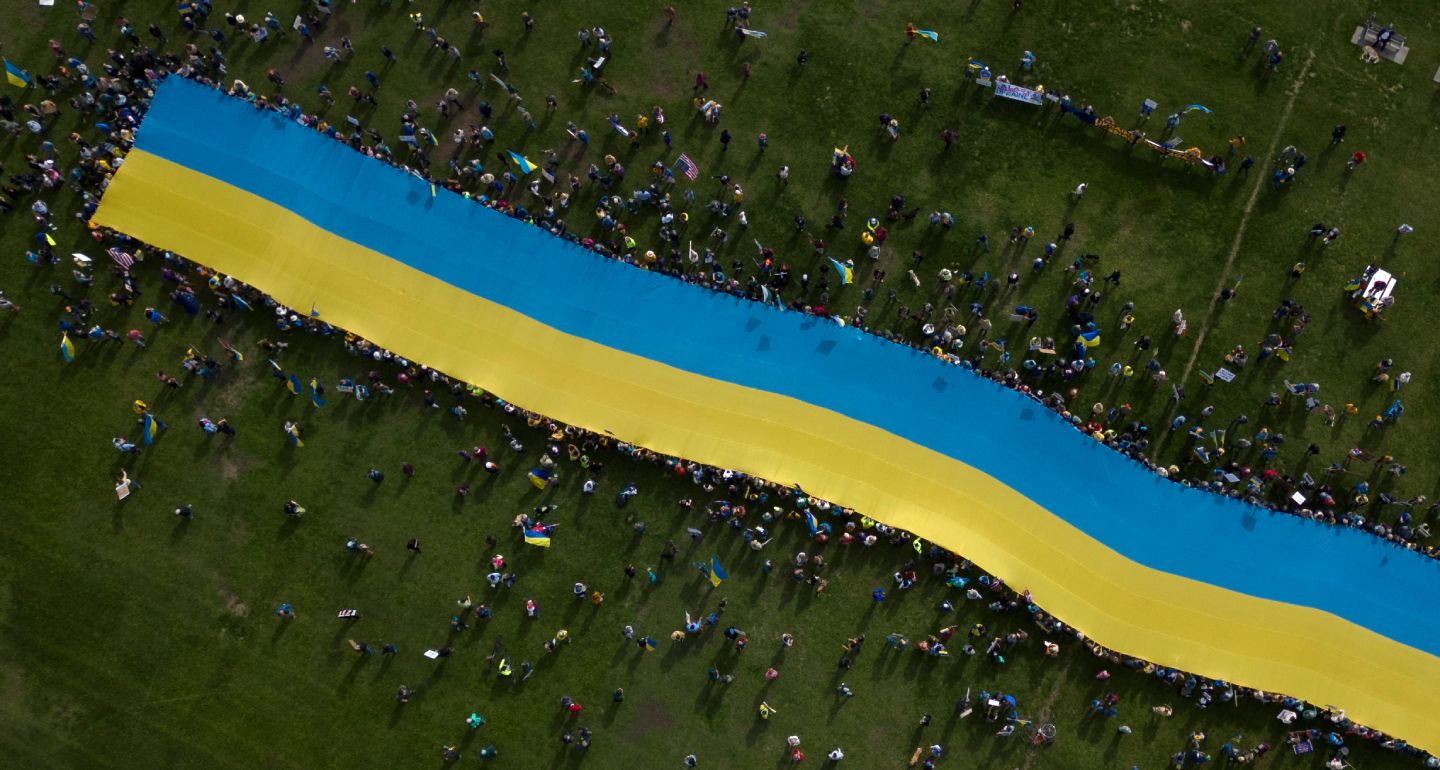
    By Waging War on Its Sovereignty, Putin Has United Ukraine

    The war does threaten Putin’s existence. That is why he does not negotiate.
      René Nyberg
  • Commentary
    Carnegie Politika
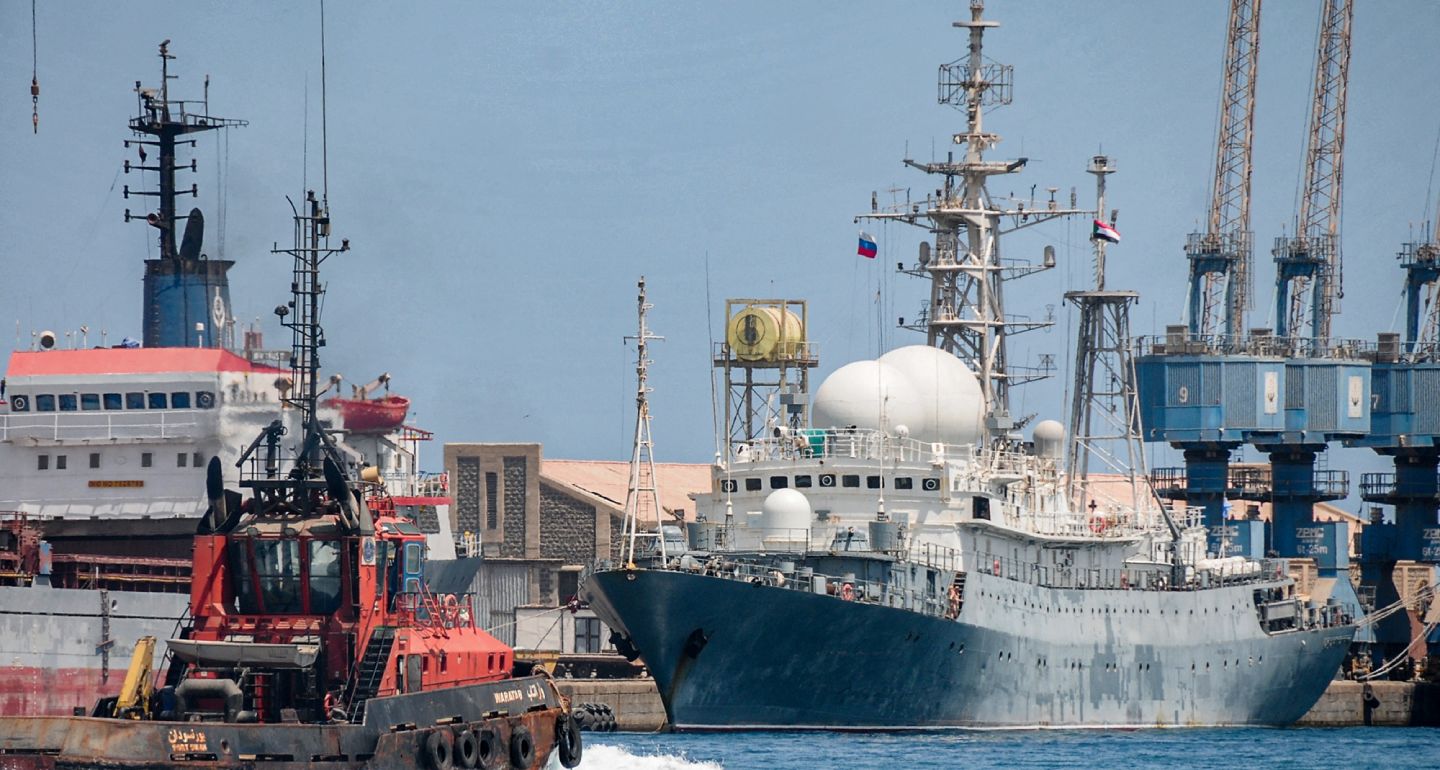
    Red Sea Mirage: Why Russia Is Still Waiting on a Military Base in Sudan

    Russia’s coveted Red Sea naval base has fallen victim to its erratic foreign policy.
      Sergey Konyashin
  • Commentary
    Carnegie Politika
    Deportation of Russian Propagandist Reveals Battle Over Church Influence in the Balkans

    Mikhail Zvinchuk’s detention could have dealt a serious blow to Russia’s propaganda infrastructure in the Balkans. Instead, the incident has made something else eminently clear: Moscow values and protects its propagandists, while Europe still hasn’t figured out what to do with them.

      Ivan Filippov, Ksenia Luchenko
  • Commentary
    Carnegie Politika
    Could Nuclear Warheads Really Be Deployed to the Baltic States?

    Latvia and Lithuania have been considering whether they could temporarily host NATO nuclear weapons in the event of war or a similar crisis.
      Sergejs Potapkins
  • Commentary
    Carnegie Politika
    The Fallacy of Energy Deals With Russia

    Russia does not have to treat Western companies as equal partners. A centralized regime built on a foundation of oil and gas income was never going to relinquish what it saw as sovereign control.

      Edward C. Chow

Get more news and analysis from
Carnegie Russia Eurasia Center
Carnegie Russia Eurasia logo, white
  • Research
  • Politika
  • About
  • Experts
  • Events
  • Contact
  • Privacy
  • For Media
Get more news and analysis from
Carnegie Russia Eurasia Center
© 2026 Carnegie Endowment for International Peace. All rights reserved.