• Research
  • Politika
  • About
Carnegie Russia Eurasia center logoCarnegie lettermark logo
  • Donate
{
  "authors": [
    "Larbi Sadiki"
  ],
  "type": "other",
  "centerAffiliationAll": "",
  "centers": [
    "Carnegie Endowment for International Peace",
    "Malcolm H. Kerr Carnegie Middle East Center"
  ],
  "collections": [],
  "englishNewsletterAll": "",
  "nonEnglishNewsletterAll": "",
  "primaryCenter": "Malcolm H. Kerr Carnegie Middle East Center",
  "programAffiliation": "",
  "programs": [],
  "projects": [],
  "regions": [
    "Egypt",
    "Gulf",
    "Levant",
    "Maghreb"
  ],
  "topics": [
    "Political Reform"
  ]
}
Source: Getty

Other
Malcolm H. Kerr Carnegie Middle East Center

Like Father, Like Son: Dynastic Republicanism in the Middle East

Democratic transition continues to elude Arab countries and Arab republicanism has lost much of its meaning, as presidential power is increasingly being bequeathed from father to son.

Link Copied
By Larbi Sadiki
Published on Nov 25, 2009
Arab autocrats have become quite skilled in public relations, mastering the language of democracy, human rights, and free markets while preserving old and arbitrary means of decision making. In the last ten years, Arab regimes have fallen into what could be referred to as “dynastic republicanism”—a form of government that translates roughly to an oxymoron: “monarchical presidency.”
 
Whatever outward appearances they project inside Arab regimes, republican governments come with no legal or historical guarantees. Family domination of Arab governments reduces states to vehicles for the advancement of private and particular interests rather than public ones. Arab states with limited political institutions are often beset by tribalism, and tribalism in turn results in skewed and undemocratic political institutions.
 
In Egypt, the stage is set for Gamal Mubarak to be the National Democratic Party’s sole candidate for succession. The likelihood of Gamal’s succeeding his father is high if succession happens while his father is still alive. Without Hosni Mubarak, Gamal is on his own, as there is no shortage of dark horses that could potentially and literally make a good showing in the race to the presidency.
 
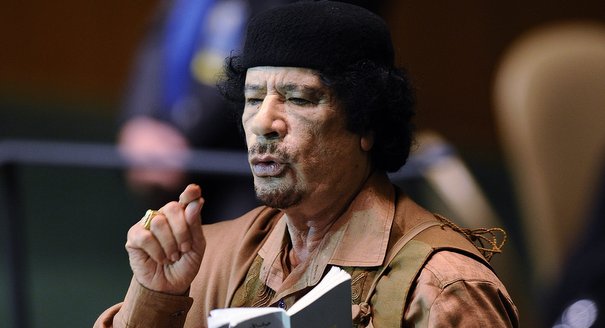
In Libya, Muammar Qaddafi has designated both military and political heirs; thus nothing is unpredictable about Libya’s hereditary succession. What is unpredictable is whether Qaddafi’s tribe puts its weight behind a political or a military successor.
 
In Yemen, political succession is based on an implicit pact between President Ali Abdullah Saleh’s Hashed tribe and the military, and only a member of the tribe is eligible for the country’s presidency. Saleh appears to be grooming his son Ahmed to take over, facilitating his meteoric rise through the military ranks and charging him with command of the deadliest forces in the land.
 
A banker (Gamal), a civil engineer/architect (Saif), and two military commanders (Ahmed Saleh & Mu‘tasim Qaddafi) constitute the litmus test of Arab republicanism and Western democracy promotion. Their succession could spell the death knell of all republican pretences or what is left of them.

About the Author

Larbi Sadiki

Former Non-resident Scholar, Middle East Center

Sadiki is senior lecturer in the Politics Department at the University of Exeter. Sadiki specializes in democratization in the Arab Middle East and lectures on Arab democratization and human rights, dialogue of civilizations, and Middle East–EU relations.

    Recent Work

  • Commentary
    Tunisian National Solidarity Fund as an Alternative Model

      Larbi Sadiki

  • Article
    On Tents, Fast Trains and the Greater Mediterranean: Franco-Maghrebi Relations

      Larbi Sadiki

Larbi Sadiki
Former Non-resident Scholar, Middle East Center
Political ReformEgyptGulfLevantMaghreb

Carnegie does not take institutional positions on public policy issues; the views represented herein are those of the author(s) and do not necessarily reflect the views of Carnegie, its staff, or its trustees.

More Work from Carnegie Russia Eurasia Center

  • Commentary
    Carnegie Politika
    The Kremlin Is Destroying Its Own System of Coerced Voting

    The use of technology to mobilize Russians to vote—a system tied to the relative material well-being of the electorate, its high dependence on the state, and a far-reaching system of digital control—is breaking down.

      Andrey Pertsev

  • Commentary
    Carnegie Politika
    Notes From Kyiv: Is Ukraine Preparing for Elections?

    As discussions about settlement and elections move from speculation to preparation, Kyiv will have to manage not only the battlefield, but also the terms of political transition. The thaw will not resolve underlying tensions; it will only expose them more clearly.

      Balázs Jarábik

  • Commentary
    Carnegie Politika
    Where Does the Split in the Ruling Tandem Leave Kyrgyzstan?

    Despite its reputation as an island of democracy in Central Asia, Kyrgyzstan appears to be on the brink of becoming a personalist autocracy.

      Temur Umarov

  • Commentary
    Carnegie Politika
    In Uzbekistan, the President’s Daughter Is Now His Second-in-Command

    Having failed to build a team that he can fully trust or establish strong state institutions, Mirziyoyev has become reliant on his family.

      Galiya Ibragimova

  • Commentary
    Carnegie Politika
    Japan’s “Militarist Turn” and What It Means for Russia

    For a real example of political forces engaged in the militarization of society, the Russian leadership might consider looking closer to home.

      James D.J. Brown

Get more news and analysis from
Carnegie Russia Eurasia Center
Carnegie Russia Eurasia logo, white
  • Research
  • Politika
  • About
  • Experts
  • Events
  • Contact
  • Privacy
Get more news and analysis from
Carnegie Russia Eurasia Center
© 2026 Carnegie Endowment for International Peace. All rights reserved.







