

Paper
George Perkovich
{
  "authors": [
    "George Perkovich"
  ],
  "type": "legacyinthemedia",
  "centerAffiliationAll": "dc",
  "centers": [
    "Carnegie Endowment for International Peace",
    "Carnegie Europe"
  ],
  "collections": [],
  "englishNewsletterAll": "ctw",
  "nonEnglishNewsletterAll": "",
  "primaryCenter": "Carnegie Endowment for International Peace",
  "programAffiliation": "NPP",
  "programs": [
    "Nuclear Policy"
  ],
  "projects": [],
  "regions": [
    "South Asia",
    "India",
    "East Asia",
    "Japan",
    "Asia"
  ],
  "topics": [
    "Nuclear Policy"
  ]
}
Source: Getty
Conditioning Japanese nuclear cooperation with India on India's nuclear testing restraint would be a reasonable compromise among Japanese interests and among those of its foreign nuclear partners and India, and a significant gain over the status quo.
Source: The Wall Street Journal

Over recent months, Indian policy makers have been lobbying Japan to supply civilian nuclear technology to the world's most populous democracy. The Bush administration and Congress paved the way for these kinds of transactions in the 2005 United States-India civil nuclear deal, which exempts India from nuclear trade restrictions on states that do not put all of their nuclear facilities under international safeguards.
In the past, Tokyo has been reluctant to pursue nuclear business in India. Some policy makers and nuclear disarmament advocates in Japan believe that granting India full nuclear cooperation would reward it for possessing nuclear weapons without gaining nonproliferation and disarmament quid pro quos.
Today, Japanese government ministries involved in technology approvals, such as the Ministry of Economy, Trade and Industry, want to open the valve for trade with India, arguing that Japan should not be more righteous than the U.S., France, Russia and anyone else who is eager to do nuclear business in India. Nonproliferation and disarmament advocates argue that Japan should defend the integrity of the nonproliferation regime even if the U.S. and others won't.
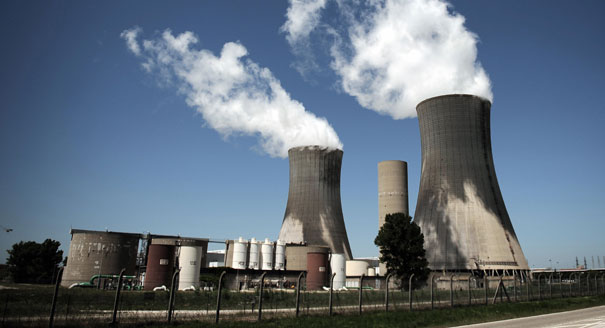
Japan has more leverage than is commonly recognized. France has already signed agreements to build several nuclear reactors in India, but state-owned French supplier Areva needs components that are built by Japanese companies. Similarly, America's General Electric hopes to build reactors in India but depends on its partner Hitachi to supply nuclear equipment and know-how. Thus, Tokyo's decision on nuclear cooperation with India affects the scale of India's nuclear power ambitions as well as the business prospects of these companies and their Japanese partners.
Japanese interests are multifaceted and conflicted. Japan wants a closer relationship with India to strengthen the balance of democracies vis-a-vis China and to promote mutually beneficial trade and investment. Japanese technology companies and policy makers recognize that nuclear cooperation could bring direct benefits and increase political goodwill. This could open the way for broader business in India's growing economy—a business that is sorely needed as Japan's economy sees a weak recovery.
On the other hand, Japan forswore the right to acquire nuclear weapons and joined the Nuclear Non-Proliferation Treaty in 1976 on the understanding that India and other states would not be accepted in the future as nuclear-weapon powers. The deal to exempt India from international nuclear nonproliferation sanctions therefore upset Japan because it ended India's penalty for getting the bomb. Some policy makers and the still important nuclear disarmament community in Japan argue that Tokyo should defend the original principles and terms of the nonproliferation regime.
Japan is not alone in feeling that the exemption India has gained gave away too much in return for too little. Brazil, Germany, Norway, South Africa and Turkey are only a few of the major states that are disturbed by it. India and Pakistan have not signed the Comprehensive Test Ban Treaty and, with China, have not agreed to end production of fissile materials for nuclear weapons. The U.S., Russia, France and the U.K. have ended such production.
Tokyo is likely to shy away from blocking Japanese companies and their foreign partners from entering the Indian nuclear market because India's future economic importance is too great, and French and U.S. nuclear partners are pressing hard. However, the Yukio Hatoyama government need not completely surrender Japan's principles, interests and nonproliferation leadership.
Japan could offer India nuclear cooperation with the explicit understanding that if India were to conduct nuclear weapon tests this would be grounds to terminate the cooperation. This condition could be written into contracts that Japanese vendors signed with Indian counterparts as well. Such a condition would be consistent with the terms that the U.S. Congress originally set in the Hyde Act of 2006, which was the precursor to allowing the Bush administration to negotiate a nuclear cooperation agreement with India.
No doubt India will emphatically object. However, since the 1998 nuclear tests, India's governments have consistently emphasized the country's moratorium on further nuclear tests. The conservative Bharatiya Janata Party-led government of the late 1990s stated that India would not stand in the way of a Comprehensive Test Ban Treaty's entry into force. Additional nuclear tests would certainly do that. Japan should not be faulted for holding India to its own word.
Conditioning Japanese nuclear cooperation on India's nuclear testing restraint would be a reasonable and honorable compromise among Japanese interests and among those of its foreign nuclear partners and India. It would not fully satisfy all the non-nuclear-weapon states meeting at the NPT conference this month in New York, but it would be a significant gain over the status quo.

Japan Chair for a World Without Nuclear Weapons, Senior Fellow
George Perkovich is the Japan Chair for a World Without Nuclear Weapons and a senior fellow in the Carnegie Endowment for International Peace’s Nuclear Policy Program. He works primarily on nuclear deterrence, nonproliferation, and disarmament issues.
Recent Work
George Perkovich
George Perkovich
Carnegie does not take institutional positions on public policy issues; the views represented herein are those of the author(s) and do not necessarily reflect the views of Carnegie, its staff, or its trustees.

With the growth in points of friction between the great powers, organizations like the SCO will continue to play a role in the strategic adaptation of the smaller powers caught between them.

Temur Umarov

The demands of the Kremlin’s war in Ukraine, demographic problems, and public hostility toward Central Asians mean Russia does not have enough workers.

Salavat Abylkalikov

The truth is that Japan’s government is seeking a degree of reengagement but at a vastly reduced level than under Abe. Most significantly, Japan has shown no willingness to ease sanctions.

James D.J. Brown
Tokyo would have to surmount a lot of obstacles—not least Western sanctions—if it wanted to return Russian oil imports to even modest pre-2022 volumes.

Vladislav Pashchenko
Troubled by the growing salience of nuclear debates in East Asia, Moscow has responded in its usual way: with condemnation and threats. But by exacerbating insecurity, Russia is forcing South Korea and Japan to consider radical security options.
James D.J. Brown