• Research
  • Politika
  • About
Carnegie Russia Eurasia center logoCarnegie lettermark logo
  • Donate
{
  "authors": [
    "Henri J. Barkey"
  ],
  "type": "legacyinthemedia",
  "centerAffiliationAll": "dc",
  "centers": [
    "Carnegie Endowment for International Peace",
    "Carnegie Europe",
    "Malcolm H. Kerr Carnegie Middle East Center"
  ],
  "collections": [
    "Turkey’s Transformation"
  ],
  "englishNewsletterAll": "menaTransitions",
  "nonEnglishNewsletterAll": "",
  "primaryCenter": "Carnegie Endowment for International Peace",
  "programAffiliation": "MEP",
  "programs": [
    "Middle East"
  ],
  "projects": [],
  "regions": [
    "Middle East",
    "Türkiye",
    "Levant",
    "Europe"
  ],
  "topics": [
    "Foreign Policy"
  ]
}
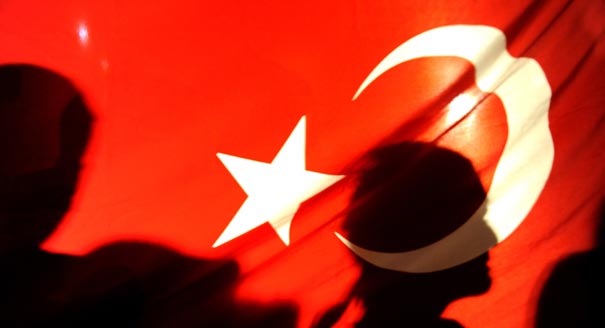
Source: Getty

In The Media

Don't Blame Europe for Turkey's Moves Away From the West

Fully engaging with and understanding Turkey is of critical importance for the United States, and blaming the European Union's continued reluctance to accept Turkey into its ranks oversimplifies the situation and could lead to unintended consequences.

Link Copied
By Henri J. Barkey
Published on Jul 20, 2010

Source: Los Angeles Times

Don't Blame Europe for Turkey's Moves Away From thIn an interview this month with the Italian newspaper Corriere della Sera, President Obama suggested that the European Union's continued reluctance to accept Turkey into its ranks has pushed Turkish leadership to "look for other alliances" and move toward closer relations with other Muslim nations in the Middle East. These comments echoed Defense Secretary Robert M. Gates, who last month blamed Europe for Ankara's movement away from the West.

Both men are wrong. They are wrong in their analyses of Turkish behavior and wrong on the policy prescriptions implied by their statements. Fully engaging with and understanding Turkey is of critical importance for this administration, and blaming Europe oversimplifies the situation and could lead to unintended consequences.
 
It is true that French President Nicolas Sarkozy and to a lesser extent German Chancellor Angela Merkel have poured cold water on Turkish ambitions for membership in the EU, in part because of Turkey's failure to resolve issues relating to the divided island of Cyprus. But in any circumstance, Turkey's entry into the EU is at least 20 years away, and continued rejection by the EU does not alone account for Turkey's growing ambivalence toward Europe and the West. The current Turkish government led by Recep Tayyip Erdogan and his Justice and Development Party (AKP) would have acted the same way even if membership to the EU were imminent.
 
The Turkish government's increasing overtures toward non-Western governments is driven in part by an over-inflated sense of its importance on the world stage. Turkish leaders believe their country should be among the premier world powers, and that its strategic location, economic prowess, historical ties and cultural affinities with the Muslim world are assets that can be marshaled behind an activist foreign policy designed to further enhance Ankara's importance. This ambition weighed down by an unhealthy dose of hubris is one of two drivers of the new foreign policy.
 
The second is Turkey's commercial interest. A forceful export drive and an appetite for foreign investment have fueled growth and made Turkey the 16th largest economy in the world. As President Obama acknowledged, trade benefits were one of the factors that drove the Turks to side with Tehran and against the U.S. in the U.N. Security Council vote on sanctions. Turkey is in a constant search for new markets for its wares and its Middle East policy has helped open new opportunities and consolidate existing ones.
 
When it comes to the EU, Turkey has two fundamental and difficult problems that are unlikely to disappear anytime soon and will remain the main impediments to progress for EU membership.
 
The first is the Kurdish question. Turkey is deeply divided over its Kurdish minority, and a 26-year insurgency by the Kurdistan Workers' Party is nowhere near being subdued. The ruling AKP, to its credit, made modest proposals for engagement with the Kurds last year, but it quickly pulled back from them. As a result, the possibility for a greater explosion of violence threatening to also engulf many of the cities has never been higher. There is no military solution to the Kurdish problem; it will require a political approach that allows for much greater cultural freedom.
 
The second problem is that although Turkey is a country of laws, it does not embrace the rule of law. Its 1982 constitution, drafted by a military junta, is designed to protect the state from its citizens and not vice versa. Application of the law is arbitrary and allows the state to persecute whomever it wants whenever it wants. This has not changed one iota under the AKP.
 
Both of these impediments will take years, if not decades, to deal with. Therefore, to blame Europe for Turkey's difficulties is unfair and unnecessarily alienates the Europeans. It made sense for the U.S. to push the Europeans on Turkey in the 1990s when Europe was pushing Turkey away. Now, however, a process has been put in place for Turkey to pursue EU membership. The current U.S. rhetoric and silence on domestic issues relieve Turkish leaders from the burden of reform and from being honest with their public about the travails ahead for EU membership. It does not do Turkey any favors; on the contrary, it solidifies the distance between Turkey and the EU.
 
A smarter American policy would focus on pushing the Turks to reform. The faster Ankara institutes reforms, the closer it will get to EU membership. And if membership for Turkey is in the U.S. interest, then Washington needs to develop a more comprehensive approach to the country that also pays attention to its domestic concerns. The U.S. must align itself with Turkish and European advocates of change and help transform Turkey into a more tolerant and democratic society. Only then is EU membership likely.

About the Author

Henri J. Barkey

Former Visiting Scholar, Middle East Program

Barkey served as a member of the U.S. State Department Policy Planning Staff, working primarily on issues related to the Middle East, the Eastern Mediterranean, and intelligence from 1998 to 2000.

    Recent Work

  • Article
    Winners and Losers in Turkey’s Election

      Henri J. Barkey

  • Article
    The Road to Turkey’s June Elections: Crises, Strategies, and Outcomes

      Henri J. Barkey

Henri J. Barkey
Former Visiting Scholar, Middle East Program
Henri J. Barkey
Foreign PolicyMiddle EastTürkiyeLevantEurope

Carnegie does not take institutional positions on public policy issues; the views represented herein are those of the author(s) and do not necessarily reflect the views of Carnegie, its staff, or its trustees.

More Work from Carnegie Russia Eurasia Center

  • Commentary
    Carnegie Politika
    The Afghanistan–Pakistan War Poses Awkward Questions for Russia

    Not only does the fighting jeopardize regional security, it undermines Russian attempts to promote alternatives to the Western-dominated world order.

      Ruslan Suleymanov

  • Commentary
    Carnegie Politika
    Moldova Floats a New Approach to Its Transnistria Conundrum

    Moldova’s reintegration plan was drawn up to demonstrate to Brussels that Chișinău is serious about the Transnistria issue—and to get the West to react.

      Vladimir Solovyov

  • Commentary
    Carnegie Politika
    Lukashenko’s Bromance With Trump Has a Sell-By Date

    Lukashenko is willing to make big sacrifices for an invitation to Mar-a-Lago or the White House. He also knows that the clock is ticking: he must squeeze as much out of the Trump administration as he can before congressional elections in November leave Trump hamstrung or distracted.

      Artyom Shraibman

  • Commentary
    Carnegie Politika
    What the Russian Energy Sector Stands to Gain From War in the Middle East

    The future trajectory of the U.S.-Iran war remains uncertain, but its impact on global energy trade flows and ties will be far-reaching. Moscow is likely to become a key beneficiary of these changes; the crisis in the Gulf also strengthens Russia’s hand in its relationships with China and India, where advantages might prove more durable.

      • Sergey Vakulenko

      Sergey Vakulenko

  • Commentary
    Carnegie Politika
    Beyond Oil: Hormuz Closure Puts Russia in the Lead in the Fertilizer Market

    The Kremlin expects to not only profit from rising fertilizer prices but also exact revenge for the collapse of the 2023 grain deal.

      Alexandra Prokopenko

Get more news and analysis from
Carnegie Russia Eurasia Center
Carnegie Russia Eurasia logo, white
  • Research
  • Politika
  • About
  • Experts
  • Events
  • Contact
  • Privacy
Get more news and analysis from
Carnegie Russia Eurasia Center
© 2026 Carnegie Endowment for International Peace. All rights reserved.