

In The Media
Shahram Chubin
{
  "authors": [
    "Shahram Chubin"
  ],
  "type": "legacyinthemedia",
  "centerAffiliationAll": "",
  "centers": [
    "Carnegie Endowment for International Peace",
    "Carnegie Europe"
  ],
  "collections": [],
  "englishNewsletterAll": "",
  "nonEnglishNewsletterAll": "",
  "primaryCenter": "Carnegie Endowment for International Peace",
  "programAffiliation": "",
  "programs": [],
  "projects": [],
  "regions": [
    "North America",
    "United States"
  ],
  "topics": [
    "Political Reform",
    "Foreign Policy"
  ]
}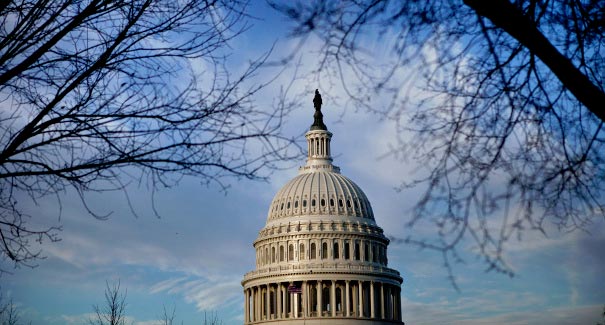
Source: Getty
President Obama may be forced to confront critical foreign policy issues over the next two years, despite a possible lack of political capital and numerous domestic preoccupations and divisions.
Source: Le Temps

At the same time, there is the continuing saga of Iran’s nuclear ambitions and two unfinished messy wars in Iraq and Afghanistan. Al Qaida may have been weakened but jihadism is alive and well, still threatening Europe and the United States. Britain, which has just decided to punch at a lower weight, has identified terrorism as a greater threat than nuclear proliferation. Climate change is still a problem but is no one’s priority.
Despite all this, President Barack Obama and the Democrats (who are usually considered weak and vulnerable on foreign policy) are contesting U.S. Congressional elections in early November in which foreign policy hardly figures.
On one level this is natural; unemployment and pocketbook issues are priorities for most people, especially in troubled times. People are too preoccupied to focus on other issues. They are also a little tired of foreign wars even though what remains of bipartisanship can be seen working in Afghanistan and Iraq. Even so, there is little appetite for new entanglements or financial commitments abroad.
Republicans and Tea Party candidates have not targeted foreign policy. Indeed, the Tea Party has no definable foreign policy; its candidates’ inclinations veer from isolationism through to assertive unilateralism.
The only "foreign" policy issue(s) in the campaign have been immigration and climate change. Growing skepticism about the second of these make it politically unrewarding and movement on it unlikely. On immigration, which President Obama promised to reform in his presidential campaign, there has been no progress. This has weakened his support among Hispanics. Meanwhile, Arizona has passed legislation which suggests parallels with the European anti-immigrant groups. The issue is divisive, politically charged, and has stalled.
Where the Democrats are vulnerable is on domestic politics. President Obama is accused of prioritizing the wrong issues (healthcare over unemployment and the economy); of a failure of leadership in leaving Congress to work out the details of important legislation (health and financial reform bills); of governing too much from the left (by some, mainly Republicans) and too much from the center (by others, mainly his own supporters). The President’s continuation of the financial stimulus bill (TARP) started by President George W. Bush is now seen by his critics as a “financial bail out” of undeserving elements, rather than a prudent attempt to prevent a deeper recession. Trying to balance Wall Street and main street’s needs, the President has antagonized both.
Unfortunately in the current climate, the President’s positive record on foreign policy does not count for much. He has reset and improved relations with Russia and stretched his hand out to the Muslim world. He has sought to reduce reliance on nuclear weapons. He has improved the atmosphere with Europe (even if he is reproached ––by Europeans––for not being terribly interested in Europe). He is exerting pressure on Iran through the United Nations, after finding out that engagement and an international embrace threatens the Islamic Republic more than isolation or threats.
He has sought movement in the peace process between Israel and the Palestinians, after the malign neglect of his predecessor. He has emphasized international institutions rather than impugning them. Indeed, in each case the Obama administration has sought to repair the damage inherited from the previous administration. (The parallels domestically with the budgetary deficit and tax cuts for the super rich left by Bush, are apparent.) In seeking a centrist course, the Obama administration may have over-extended itself as in Afghanistan. To depict that war as a necessary one as opposed to the Iraq war (of choice) may have been good electoral politics, but it was bad strategy. To be sure, given the political perception of the Democrats’ traditional weakness on national security issues, he could not run on a platform of leaving (i.e., “cutting and running” from) two wars. But, in not doing so and going along with a surge strategy, the President has made Afghanistan his own war. And it is surely a war that cannot by any realistic criterion be "won."
The major criticism of the Obama administration’s foreign policy is one made by experts rather than the public. It revolves around trying to do too much and lacking focus and by seeking to "manage" situations, which stems from a lack of strategic vision.
Perhaps this is because the White House is full of lawyers, who are operators not strategists. This may have its advantages.
President Obama, in any case, is being judged on his handling of domestic issues. But a blocked Congress as a result of the elections may see the President focus more on foreign affairs, while blaming his opponents for the domestic gridlock.
Alternatively, he could become so engrossed in domestic politics that he will have little attention or political capital to spare for the critical foreign policy issues that need his own personal involvement. He probably will not be in a position to choose as international problems, often appearing as crises, are a regular and unpredictable feature of international politics. He may simply have to deal with them, despite domestic preoccupations and divisions, rather than because of them.
Former Nonresident Senior Fellow, Nuclear Policy Program
Chubin, who is based in Geneva, focuses his research on nonproliferation, terrorism, and Middle East security issues. He was director of studies at the Geneva Centre for Security Policy, Switzerland, from 1996 to 2009.
Recent Work
Shahram Chubin
Shahram Chubin
Carnegie does not take institutional positions on public policy issues; the views represented herein are those of the author(s) and do not necessarily reflect the views of Carnegie, its staff, or its trustees.

Cargo traffic through Russia’s Northern Sea Route has increased because of the disruption caused by the conflict in the Middle East, the Ukraine war, and U.S.-China tensions.

Mikhail Korostikov

Sergei Kiriyenko used Russia’s parliamentary vote to further hone his strategy of corporate mobilization that is designed to maximize votes for United Russia.

Andrey Pertsev

Trump has promised Belarus a massive potash deal. But Minsk is seeking something greater: restored Western transit and greater room for maneuver from Russia.

Balázs Jarábik

The European far right might fail to steer EU policy in the direction Russia wants, but they will create enough chaos inside Europe to benefit the Kremlin.

Dimitar Bechev

Minsk clearly expected the dialogue with Washington to yield more results, in particular the lifting of EU sanctions and permission to export potash.

Artyom Shraibman