

Q&A
- +1
Amr Hamzawy, Andrew Leber, Eric Lob, …
{
  "authors": [
    "Marwan Muasher"
  ],
  "type": "legacyinthemedia",
  "centerAffiliationAll": "dc",
  "centers": [
    "Carnegie Endowment for International Peace",
    "Carnegie Europe",
    "Malcolm H. Kerr Carnegie Middle East Center"
  ],
  "collections": [
    "Arab Awakening"
  ],
  "englishNewsletterAll": "menaTransitions",
  "nonEnglishNewsletterAll": "",
  "primaryCenter": "Carnegie Endowment for International Peace",
  "programAffiliation": "MEP",
  "programs": [
    "Middle East"
  ],
  "projects": [],
  "regions": [
    "North Africa",
    "Libya",
    "Egypt",
    "Gulf",
    "Levant",
    "Maghreb",
    "Middle East"
  ],
  "topics": [
    "Security"
  ]
}
Source: Getty
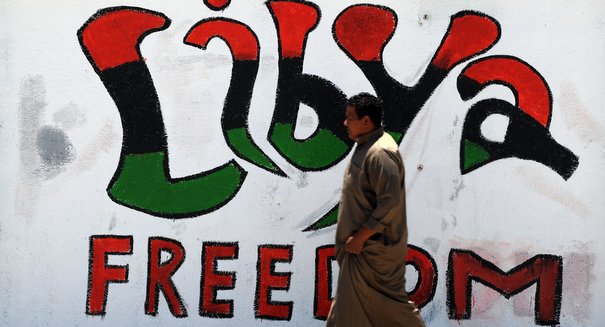
The Arab League’s call for the international community to impose a no-flight zone over Libya demonstrates that the League rejects Qaddafi’s violent crackdown and provides cover for international action.
Source: New York Times

The endorsement by the Arab League is the first time the group has ever voted unanimously to condemn or sanction a fellow Arab state. It only speaks to the extent of atrocity at the hands Qaddafi. The Libyan regime’s response to its domestic uprising is unacceptable and the Arab League has now acted accordingly. The call provides cover for international action — and it means that military intervention in the form of a no-flight zone should not be read as Western interference.
The international community — led by the United Nations — needs to move quickly now that the Arab countries have acted in unison. Even if there is no guarantee that a no-flight zone will stop Qaddafi, agreement on the action will send an unambiguous signal to Libya that it is now isolated and unwelcomed in the global arena.
This is a positive signal by the Arab states and sets a precedent for the future — Arab leaders clearly rejected this type of violent crackdown of peaceful protests. While there is still obvious opposition in the region to the United States interfering unilaterally and to the presence of foreign troops on the ground, the Arab League’s action means that a return to the status quo is unacceptable.

Vice President for Studies
Marwan Muasher is vice president for studies at Carnegie, where he oversees research in Washington and Beirut on the Middle East. Muasher served as foreign minister (2002–2004) and deputy prime minister (2004–2005) of Jordan, and his career has spanned the areas of diplomacy, development, civil society, and communications.
Recent Work



Amr Hamzawy, Andrew Leber, Eric Lob, …
Marwan Muasher
Carnegie does not take institutional positions on public policy issues; the views represented herein are those of the author(s) and do not necessarily reflect the views of Carnegie, its staff, or its trustees.

The European far right might fail to steer EU policy in the direction Russia wants, but they will create enough chaos inside Europe to benefit the Kremlin.

Dimitar Bechev

With the growth in points of friction between the great powers, organizations like the SCO will continue to play a role in the strategic adaptation of the smaller powers caught between them.

Temur Umarov

Two divergent trends—Putin’s hardline vision of how to prosecute the war in Ukraine, and a growing desire for change in Russia—could tear the regime apart.

Tatiana Stanovaya
Andrey Melnichenko’s essay offers no answer to the fundamental question of how, under any kind of negotiated settlement, Europe can protect itself from the Russian ressentiment that is inevitable in all scenarios except for an outright victory for Putin.

Leonid Bershidsky
The recent damage inflicted by Ukrainian drones and missiles on Russia has made Belarus aware of its own vulnerabilities—and surprisingly amenable to Kyiv’s demands.

Artyom Shraibman