Will Fukushima Force Iran to Reconsider Nuclear Program?
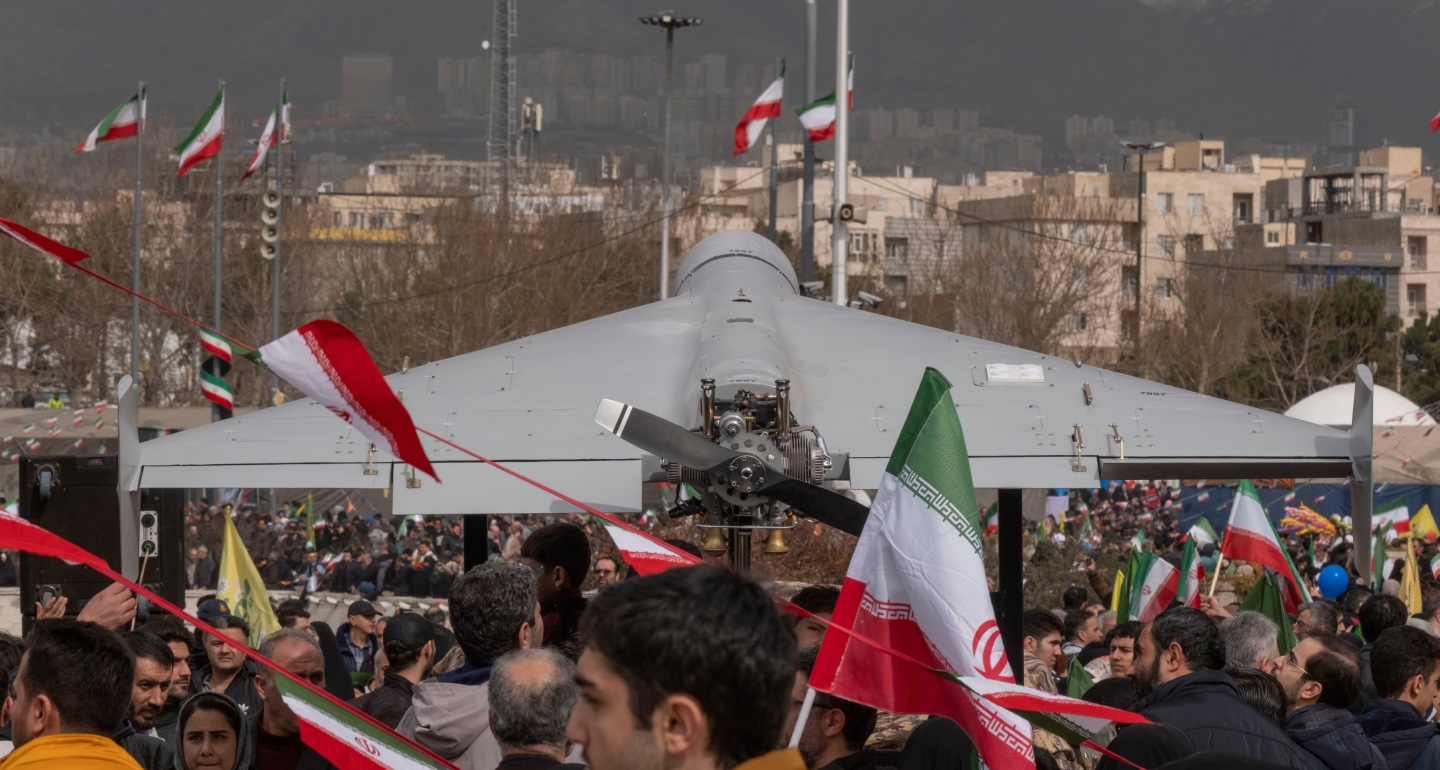
Since an earthquake and subsequent tsunami damaged Japan's Fukushima nuclear plant, a growing number of Iranian opinion makers are arguing that Tehran's nuclear program is in fact endangering, not enhancing, the security and economic well being of its citizenry.
Will Fukushima Force Iran to Reconsider Nuclear PrWhile Japan's unfolding nuclear and humanitarian crisis resurrected longstanding fears in the West about the safety of nuclear power and the potential vulnerabilities of the world's over 400 operational nuclear power plants, among Iranians it seems to have inaugurated a long overdue debate.
Though the Iranian government's nuclear program, dubiously marked by poor safety practices and earthquake-prone topography, creates the potential risk for a natural-cum-radioactive disaster like that at Fukushima, Japan, up until now there has been little of the way of a public debate in Iran. A combination of misguided nationalism and government misinformation has compelled many non-official Iranian elites -- including staunch regime critics -- to support the Islamic Republic's self-professed "inalienable" nuclear pursuits.
Since Japan's tragedy, however, a growing number of Iranian opinion makers are arguing in open letters, media interviews, and blogs that the government's nuclear program is in fact endangering, not enhancing, the security and economic well being of its citizenry. Will it make any difference?
Iranian officials' boasting about their nuclear security should only accentuate concerns about its safety. President Mahmoud Ahmadinejad - who has compared Iran's nuclear program to "a train with no breaks" and once claimed that a 16-year-old Iranian girl created atomic energy in her kitchen -- recently responded to safety concerns about the country's sole nuclear reactor in Bushehr by declaring that it meets "All safety rules and regulations and the highest standards."
Faulting Japan's outdated technology, Ahmadinejad asserted that a similarly massive earthquake wouldn't create "any serious problem" for Iran.
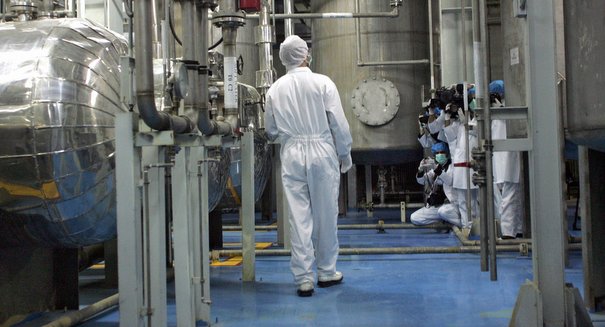
In reality, the Bushehr reactor today resembles a virtual petri dish of amalgamated, antiquated, and illicit technology -- from 1970s Germany, Russia, and rogue Pakistani scientist A.Q Khan -- ominously situated at the juncture of three tectonic plates.
A project that begin in 1974 by the Shah of Iran has turned into multi-billion dollar money pit -- beset by revolution, war, mismanagement, and sanctions -- that has produced nary a watt of nuclear energy. Heightened international pressure and persistent technical difficulties have prompted warnings even from normally incautious Russian nuclear officials about the possibility of a Chernobyl-style disaster in Bushehr.
In addition to its nuclear malpractice, the Islamic Republic's poor record of anticipatory governance and crisis management has left it far more vulnerable to natural disasters than many of its seismic-prone peers.
The 6.6 Richter earthquake that hit the Iranian city of Bam in 2003 resulted in nearly 60,000 casualties and 100,000 displaced. Eighty-five percent of Bam's buildings and infrastructure were destroyed, much of which has yet to be rebuilt. In contrast, a 6.5 Richter quake that struck San Simeon, California just a few days earlier resulted in only three fatalities and 40 damaged buildings.
While the Islamic Republic has defiantly portrayed its nuclear program as a symbol of Iranian technological advancement on par with landing on the moon, it has neglected to address basic questions about its preparedness for a nuclear emergency, including evacuation drills for Bushehr residents.
The risks of a nuclear meltdown and the release of radioactive material are not limited to Iran. Bushehr is closer in proximity to Kuwait, Bahrain, and Saudi Arabia's oil rich eastern province than it is to Tehran.
Notwithstanding these dangers, Iran, through an unrelenting propaganda campaign that has stifled open discussion, has seemingly managed to persuade much of its scientific elite -- including some in the diaspora -- that its avowed quest for an indigenous nuclear energy program is a noble and necessary endeavor in order to prepare for life after oil.
The economics of Iran's nuclear approach, however, suggests that its astronomical costs appear to dwarf its minimal benefits. The country's lost foreign investment in its energy infrastructure -- estimated to be around $60 billion -- is unlikely to ever be redeemed by nuclear energy, as power generated by the Bushehr plant can only satisfy two percent of Iran's projected electricity consumption. By comparison,18 percent of Iran's electricity is wasted through transmission because of technical problems and mismanagement.
The country's scarcity of domestic uranium resources and the inefficiency of its obsolete centrifuge technology mean that Iran's immense investment in uranium enrichment facilities will probably never pay off. In the most optimistic scenario, Iran's projected uranium reserves could only supply one nuclear reactor for less than a decade.
Respected Princeton University nuclear physicist Frank von Hippel has estimated that importing low-enriched uranium from abroad, rather than trying to produce it at home, could cost as little as 10 percent of what Iran is currently spending. Put another way, Iran's current nuclear approach is the financial equivalent of manufacturing Honda Civics at home for as much as $150,000 per car, rather than importing them from Japan for $15,000 each.
Those who believe that Iranian self-sufficiency is a pre-requisite for modernity should pay heed to the examples of Sweden and Belgium. Both countries derive much of their domestic energy needs from nuclear sources, both have the know-how to enrich uranium, yet both choose to import it from abroad given its cost-effectiveness.
The Islamic Republic's argument that it cannot rely on outside countries for its energy security is curious given its longtime reliance on imported gasoline. Moreover, European Union and U.S. attempts to allay Iranian mistrust by offering several years' worth of stockpiled low-enriched uranium to fuel its reactors have consistently been rejected out of hand.
At the end of the day, however, the economic cost-benefit calculations are rendered largely meaningless by the risk of a humanitarian catastrophe. While Japan's nuclear crisis isn't likely to compel Tehran's current leadership to reconsider its nuclear course, it has seemingly spurred a more serious debate amongst Iran's scientific, intellectual, business, and religious elites about the merits of such a project, and their heretofore understanding of nationalism and modernity.
Throughout the course of the last three decades, the rulers of the Islamic Republic have bestowed the title of "martyr" on hundreds of thousands of Iranian citizens whose lives were unnecessarily cut short -- in traffic accidents, natural disasters, or the prolonged eight-year war with Iraq -- often attributable to governmental mismanagement.
In a 21st century Iran, in which dignity, not martyrdom, is aspirational, Japan's devastation has seemingly enabled a growing number of Iranians to see their own nuclear ambitions in a different light. Nationalism does not have to mean gratuitous defiance, modernity cannot be reconciled with a culture that celebrates deaths that were wholly unavoidable, and an inalienable right to enrich uranium should not come at the expense of an inalienable right to liberty, security, and happiness.
Karim Sadjadpour is a senior fellow at the Carnegie Endowment for International Peace, where he focuses on Iran and U.S. foreign policy toward the Middle East.
Carnegie does not take institutional positions on public policy issues; the views represented herein are those of the author(s) and do not necessarily reflect the views of Carnegie, its staff, or its trustees.
Troubled by the growing salience of nuclear debates in East Asia, Moscow has responded in its usual way: with condemnation and threats. But by exacerbating insecurity, Russia is forcing South Korea and Japan to consider radical security options.
Although Ukrainian strikes have led to a noticeable decline in the physical volume of Russian oil exports, the rise in prices has more than made up for it.
The Russian leadership wants to avoid a dangerous precedent in which it is squeezed out of Iran by the United States and Israel—and left powerless to respond in any meaningful way.