

Commentary
The demands of the Kremlin’s war in Ukraine, demographic problems, and public hostility toward Central Asians mean Russia does not have enough workers.
Salavat Abylkalikov
{
  "authors": [
    "Uri Dadush",
    "Moisés Naím"
  ],
  "type": "legacyinthemedia",
  "centerAffiliationAll": "",
  "centers": [
    "Carnegie Endowment for International Peace"
  ],
  "collections": [],
  "englishNewsletterAll": "",
  "nonEnglishNewsletterAll": "",
  "primaryCenter": "Carnegie Endowment for International Peace",
  "programAffiliation": "",
  "programs": [],
  "projects": [],
  "regions": [
    "North America",
    "South America",
    "South Asia",
    "East Asia"
  ],
  "topics": [
    "Economy"
  ]
}
Source: Getty
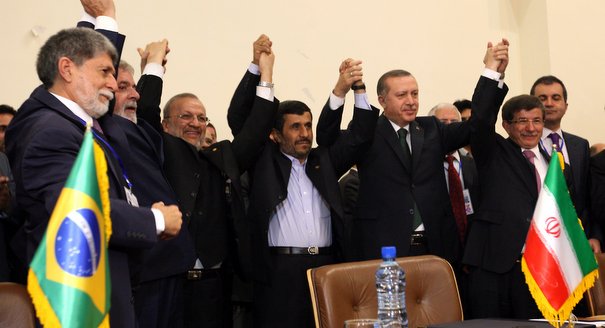
With inflation rising in the developing world, advanced countries are bearing the brunt of the post-crisis adjustment—including reestablishing fiscal sanity—with little help from the vibrant emerging economies upon which the world have come to rely.
Source: Financial Times

This world is one divided not just between countries with fast and slow growth, but also those with low and high inflation. The original two-speed world was the cousin of another hoped-for mantra, global rebalancing. This pushed emerging markets to stimulate domestic demand, and thus help sustain global growth, while the US and others took time out to fix the deficits that impaired their economic dynamism. But it is that same process that is now starting to stoke inflation in many parts of the world.
In a few countries, such as Venezuela, there is slow growth and high inflation. In a few others, such as Taiwan, there is fast growth and low inflation. But in most countries inflation and growth go together, as one would expect. In the slow-growing, advanced countries, inflation is contained at about 2 per cent, whereas in the fast-growing, developing countries it has become a threat, at 6 per cent or higher.
The larger developing countries, including China, India and Brazil, are among those now seeing inflation in excess of government targets. Higher prices, especially for food, cooking fuel and gas have also increased absolute poverty, according to the World Bank, while consumers in most advanced countries barely notice price increases in their personal expenditures.
As one emerging economy after another tightens fiscal and monetary policies to fight inflation, exchange rate appreciation and other symptoms of overheating, the notion that developing countries will keep the world economy motoring along even as the advanced countries slowly mend their broken economies is becoming harder to sustain.
And that is not all. As they try to deal with the repercussions of the four-speed world, advanced countries are showing signs of confusion too. One day they worry about how to ensure China and other fast-growing, developing countries contribute to global growth, the next day the same policy wonks in Washington agonise about these countries’ dangerously overheating economies.
The latest manifestation of this overheating anxiety is – in an ideological about-face – the International Monetary Fund’s recent embrace of capital controls. Another is the prodding to let exchange rates in emerging markets appreciate, to lower the prices of their imports and thus check inflation. This would make their exports less competitive and perhaps curb their growth.
This intellectual instability is also seen in another flawed assumption of those backing rebalancing – namely that China and other emerging markets representing 20 per cent of global gross domestic product can continue to serve as the new locomotive that pulls the rest along. This would require a large and sustained expansion of their import bill, driven not only by public spending but also an even greater appreciation of their exchange rates. To boost the growth of the rest of the world by just half a per cent of GDP, China and others like it would have to increase their net imports by about 2.5 per cent of their economies every year.
While China and a few others could do – and are likely to do a little – more, the strategy is not viable in the long term. Several of the emerging markets menaced by inflation are already rejecting this approach. And why wouldn’t they? With fragile banks in the main financial capitals, sovereign debt crises in Europe, the US outlook downgraded to negative and international interest rates bound to rise from record low levels, there are strong incentives to play it safe.
The point is that a four-speed world is one in which the advanced countries must bear the brunt of the adjustment to the mess that they themselves created. This means first and foremost re-establishing fiscal sanity. But it means doing this with little help from those friends in emerging countries upon whose vibrant economies we have come to rely.

Former Senior Associate, International Economics Program
Dadush was a senior associate at the Carnegie Endowment for International Peace. He focuses on trends in the global economy and is currently tracking developments in the eurozone crisis.

Distinguished Fellow
Moisés Naím is a distinguished fellow at the Carnegie Endowment for International Peace, a best-selling author, and an internationally syndicated columnist.
Carnegie does not take institutional positions on public policy issues; the views represented herein are those of the author(s) and do not necessarily reflect the views of Carnegie, its staff, or its trustees.

The demands of the Kremlin’s war in Ukraine, demographic problems, and public hostility toward Central Asians mean Russia does not have enough workers.
Salavat Abylkalikov

Minsk’s faith in the future of its larger neighbor’s economy is fading as Belarusian firms in Russia see record losses.

Olga Loiko

The cost of air defense has become an unregistered tax on revenue for businesses. While military rents are consolidated in the federal budget, the costs of defense are being spread across the balance sheets of companies and regional governments.

Alexandra Prokopenko
Tokyo would have to surmount a lot of obstacles—not least Western sanctions—if it wanted to return Russian oil imports to even modest pre-2022 volumes.

Vladislav Pashchenko
Troubled by the growing salience of nuclear debates in East Asia, Moscow has responded in its usual way: with condemnation and threats. But by exacerbating insecurity, Russia is forcing South Korea and Japan to consider radical security options.

James D.J. Brown