

Research
- +5
Alper Coşkun, Fatih Ceylan, Tacan İldem, …
{
  "authors": [
    "Sinan Ülgen"
  ],
  "type": "questionAnswer",
  "centerAffiliationAll": "",
  "centers": [
    "Carnegie Endowment for International Peace",
    "Carnegie Europe",
    "Malcolm H. Kerr Carnegie Middle East Center"
  ],
  "collections": [
    "Turkey’s Transformation"
  ],
  "englishNewsletterAll": "",
  "nonEnglishNewsletterAll": "",
  "primaryCenter": "Carnegie Europe",
  "programAffiliation": "",
  "programs": [],
  "projects": [],
  "regions": [
    "Middle East",
    "Europe",
    "Türkiye",
    "Levant"
  ],
  "topics": [
    "Political Reform"
  ]
}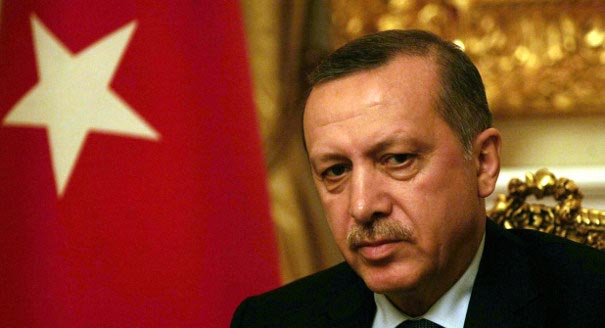
Source: Getty
The EU’s continuing troubles have greatly undermined its leverage with Turkey at a time when the country is becoming a more influential actor.
Turkey is increasingly taking a bold position on the world stage—chastising the Syrian regime for its crackdown on its citizens, denouncing the Israeli government for refusing to apologize for the 2010 flotilla raid that killed nine Turkish citizens, and threatening to freeze ties with the European Union if Cyprus takes over its rotating six-month presidency. In a Q&A, Sinan Ülgen looks at whether Turkey’s relations with the West are deteriorating and how much influence Turkey has in the Middle East.
Turkish policymakers believe that the country’s growing influence in the Middle East—and the Islamic world more generally—gives Ankara more maneuverability with its traditional allies in the West. The calculus seems increasingly to reflect the belief that Turkey has become such a key country in the region that its Western allies can ill afford to “lose” Turkey.
There is also a difference in the way Ankara perceives Washington and Brussels. The European Union’s continuing ineffectiveness as a foreign policy actor, stagnating economies, and the stalled accession negotiations with Turkey have greatly undermined the EU’s leverage with Turkey. From a Turkish perspective, the main global actor and interlocutor remains the United States, not the EU.
It is premature to claim that Turkey’s relationship with the West is deteriorating. It is true that Turkey has a more ambitious and assertive foreign policy. Ankara pursued an independent policy toward Iran and its relationship with Israel has seriously declined.
At the same time, however, Turkey remains a committed member of the NATO alliance. Turkey and the United States recently signed an agreement to host early warning radar systems of NATO’s missile defense shield in Turkey. Ankara’s policies vis-à-vis the crisis-prone countries of the Middle East—Libya and Syria—are increasingly being shaped in concert with its allies.
In short, Turkey is involved in a process of testing and understanding the limits of its own influence. This period of discovery will necessarily lead to tensions between Ankara and its partners in the West. But in time it will lead to a new equilibrium reflecting the changing balance of power in the region.
Turks are increasingly frustrated by the membership process. The intractability of the Cyprus problem combined with the rejectionist sentiments, as voiced by French President Nicolas Sarkozy, are fueling “euro-skepticism” in Turkey. There is a widespread sense that EU member states will never be able to reach a political consensus on Turkish accession.
The economic crisis affecting many European countries has also made the EU less popular in the eyes of the Turkish public. As a result, support for EU membership has now decreased to around 30 percent, down from a peak of 70 percent in 2004. The fact that Turkey is doing rather well economically tends to support visions of an independent Turkey.
In the short term, Europe has very few options to influence Turkey. The EU’s difficult political backdrop is not amenable to ambitious initiatives that would enhance the bloc’s leverage over Turkey. Instead, this period can best be utilized for progress in less politically sensitive domains, for instance, deepening the Turkey-EU customs union.
The EU has to overcome the problems generated by the euro crisis and regain its confidence as a global actor. This period of introversion has to end before Brussels and Ankara can rejuvenate their relationship in a mutually beneficial direction, even if a new framework for relations is very different than the membership path.
Turkish policymakers very much value their relationship with Washington. The United States remains a strategic partner for Turkey. The priority of the Middle East in Ankara’s foreign policy reinforces the importance of the relationship with Washington. The inability of Ankara and Brussels to institutionalize their foreign policy cooperation also adds to Washington’s influence.
The Turkish leadership’s anti-Israeli rhetoric has certainly helped boost Turkey’s popularity in the region. But this is not the only dynamic that explains Ankara’s growing soft power influence in the Middle East. Turkey’s economic success, liberal visa policies, and a desire to engage constructively with the main players in the region are also important factors.
This year’s Arab Attitudes, the annual survey carried out by Zogby International for the Arab American Institute Foundation, provides a clear confirmation of Turkey’s popularity in the Arab world. According to the survey, Turkey’s policies receive wide support in the Arab world, ranging from 45 percent approval in Jordan to 80 percent approval in Morocco and even 98 percent approval in Saudi Arabia. Even in Lebanon, a stronghold of Hezbollah, 93 percent have a favorable view of Turkey.
Unlike in Libya—where the Turkish position oscillated between neutrality and support for the opposition—Ankara’s stance on Syria has been very clear from the onset. Turkish policymakers sought to leverage the relationship and trust they had built over the years with the regime of President Bashar al-Assad to nudge Syria toward a path of reform.
Turkey’s pressure has delivered some results, with Assad speaking publicly about a calendar for reforms. A Turkish ultimatum was also instrumental in convincing the Assad regime to pull its troops back from Hama. But even Turkish pressure proved insufficient to steer the Syrian leadership towards more fundamental reforms.
On Syria, Turkey’s position and actions were fully in line with those of its Western partners and were fully coordinated with them. Turkey was and remains—with regard to Syria—the most influential member of the Western community. This principled position is creating tension in the Turkey-Iran relationship as Tehran has different priorities and a different agenda regarding the future of Syria.
Ankara has traditionally enjoyed good relations with Moscow. Russia is essentially an economic partner and has no leverage on Turkey’s domestic or international agenda. And Russia will never replace the United States or the EU on Ankara’s strategic roadmap.
Turkey’s relationship with Russia is dominated by economic concerns. Turkey is dependent on Russia for its natural gas imports. The country’s first nuclear plant is also set to be built by Russia’s state atomic energy corporation, Rosatom. Russia is also an important market for Turkish investors, particularly in the public works sector.
There is a natural limit to the rapprochement that can take place between Ankara and Moscow. That will remain the case even if Turkey continues to pursue its vision of becoming a regional power that can act independently of its Western partners.
The government’s track record on the democracy agenda is increasingly acquiring a more mitigated color. Gone are the ambitious days of democratic reform that the country witnessed during the Justice and Development (AK) Party’s initial years in power. Today it seems that the ruling party has lost much of its enthusiasm for large-scale reforms.
The rhetoric on the Kurdish issue is turning more acrimonious. Turkey is sliding back in the area of press freedom and the independence of the judiciary is being undermined by attempts to increase the executive’s influence.
Turkey’s fundamental challenge remains the delimitation of political power. The country needs to strengthen its institutions of horizontal accountability such as its judiciary and independent agencies to provide a counterweight to political power. This is the role that was espoused by the military in the previous era. Now the country has to find a more democratic solution to this fundamental structural deficiency.

Senior Fellow, Carnegie Europe
Sinan Ülgen is a senior fellow at Carnegie Europe in Brussels, where his research focuses on Turkish foreign policy, transatlantic relations, international trade, economic security, and digital policy.
Recent Work

Alper Coşkun, Fatih Ceylan, Tacan İldem, …
Carnegie does not take institutional positions on public policy issues; the views represented herein are those of the author(s) and do not necessarily reflect the views of Carnegie, its staff, or its trustees.

The truth of the strategic situation is that Europe and Russia are extremely unlikely to be able to “turn the page” on their confrontation within the next two decades.

Arkady Moshes

Putin’s conservative staffing policies and search for ever greater control have cemented parliament’s transformation into a bureaucratic appendage of the executive branch.

Andrey Pertsev

Ex-president Gurbanguly Berdimuhamedov remains interested in politics, but his son Serdar, Turkmenistan’s current president, is becoming increasingly independent and willing to break with his father’s legacy. If their covert rivalry goes too far, both risk losing power.

Galiya Ibragimova

Sergei Kiriyenko used Russia’s parliamentary vote to further hone his strategy of corporate mobilization that is designed to maximize votes for United Russia.
Andrey Pertsev

The European far right might fail to steer EU policy in the direction Russia wants, but they will create enough chaos inside Europe to benefit the Kremlin.

Dimitar Bechev