

Other
Michael D. Swaine
{
  "authors": [
    "Michael D. Swaine"
  ],
  "type": "legacyinthemedia",
  "centerAffiliationAll": "dc",
  "centers": [
    "Carnegie Endowment for International Peace",
    "Carnegie China"
  ],
  "collections": [
    "China’s Foreign Relations",
    "U.S.-China Relations"
  ],
  "englishNewsletterAll": "asia",
  "nonEnglishNewsletterAll": "",
  "primaryCenter": "Carnegie China",
  "programAffiliation": "AP",
  "programs": [
    "Asia"
  ],
  "projects": [],
  "regions": [
    "East Asia",
    "China",
    "North America",
    "United States",
    "South Asia",
    "India",
    "Southeast Asia"
  ],
  "topics": [
    "Political Reform",
    "Security",
    "Military",
    "Foreign Policy",
    "Arms Control"
  ]
}
Source: Getty
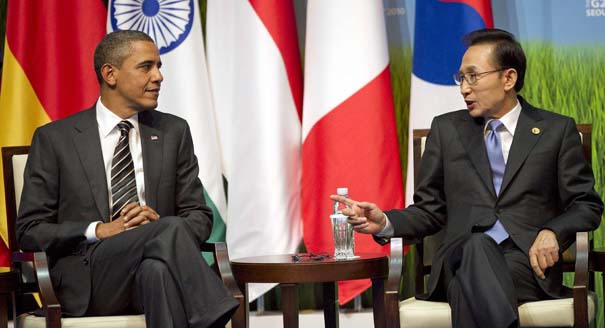
The execution of America’s strategic 'pivot' to Asia, and China's response, are combining to deepen mutual suspicions and potentially destabilize the entire area.
Source: National Interest

At that time, Washington moved decisively away from viewing China ominously as a rising "strategic competitor" (to quote George W. Bush) and toward significant levels of Sino-U.S. cooperation in combating terrorism and dealing with a growing array of common problems, from climate change to global economic instability. This shift brought Washington’s approach back into line with an earlier, long-standing U.S. policy of fostering greater Sino-American engagement while conducting low-key military hedging against the possibility of a future hostile China.
With President Obama and Secretary Clinton's recent trips to the South and Western Pacific, expanding U.S. involvement in multilateral economic and security-related fora, and a strengthening of Washington's traditional military alliances, the United States is now signaling an intention to move back toward the pre-9/11 strategic focus on a rising China. That focus places a premium on explicitly balancing against and constraining Chinese power and influence across the region.
This piece was originally published at the National Interest. Click here to continue reading.

Former Senior Fellow, Asia Program
Swaine was a senior fellow at the Carnegie Endowment for International Peace and one of the most prominent American analysts in Chinese security studies.
Recent Work
Michael D. Swaine
Michael D. Swaine
Carnegie does not take institutional positions on public policy issues; the views represented herein are those of the author(s) and do not necessarily reflect the views of Carnegie, its staff, or its trustees.

Putin’s conservative staffing policies and search for ever greater control have cemented parliament’s transformation into a bureaucratic appendage of the executive branch.

Andrey Pertsev

Russia’s AI-driven propaganda campaigns operate in a fragmented, chaotic, and often illogical manner. That’s not necessarily a problem for the Kremlin, though: It’s much easier to mimic genuine public debate that way.

Ilya Klishin

Without a ceasefire with Ukraine on attacking each other’s energy infrastructure—to which the Kremlin is unlikely to agree—the diesel agreement between Putin and Trump is largely for show, rather than representing a genuine increase in the volumes of Russian diesel on the global market.

Sergey Vakulenko

Russian strikes are weakening the economy sustaining Ukraine’s war effort. Closing the growing funding gap will require more European support and politically contentious reforms in Kyiv.

Balázs Jarábik

Ex-president Gurbanguly Berdimuhamedov remains interested in politics, but his son Serdar, Turkmenistan’s current president, is becoming increasingly independent and willing to break with his father’s legacy. If their covert rivalry goes too far, both risk losing power.

Galiya Ibragimova