

Report
- +3
James M. Acton, Alexey Arbatov, Vladimir Dvorkin, …
{
  "authors": [
    "Petr Topychkanov"
  ],
  "type": "legacyinthemedia",
  "centerAffiliationAll": "dc",
  "centers": [
    "Carnegie Endowment for International Peace",
    "Carnegie Russia Eurasia Center"
  ],
  "collections": [
    "U.S. Nuclear Policy"
  ],
  "englishNewsletterAll": "ctw",
  "nonEnglishNewsletterAll": "",
  "primaryCenter": "Carnegie Russia Eurasia Center",
  "programAffiliation": "NPP",
  "programs": [
    "Nuclear Policy"
  ],
  "projects": [],
  "regions": [
    "North America",
    "United States",
    "Middle East",
    "Iran",
    "Israel"
  ],
  "topics": [
    "Nuclear Policy"
  ]
}
Source: Getty
Mostafa Ahmadi Roshan, department supervisor at the Natanz uranium enrichment facility, was killed in a car bomb explosion in Tehran that Iranian officials have already accused both the United States and Israel in playing a part in.
Source: Voice of Russia

Voice of Russia: Yesterday’s assassination, a car bomb blast that killed the 32-year-old Mostafa Ahmadi Roshan, was the forth such killing reported in two years. Can you talk about some of the other scientists or the specificity of the fields that these scientists have found themselves murdered as a result of their assassination with Iran’s nuclear program?
Pyotr Topychkanov: Unfortunately, it’s very difficult to assess the importance of these people in Iran’s nuclear and missile programs. But, of course, it’s evident that over the last years several people were killed and, according to some assessments, it stopped or changed the speed of development of Iran’s nuclear program. Of course, it’s very difficult to assess possible countries and people involved in the organization of these assassinations. From the Iranian point of view, it’s, of course, Israel and the US, but if it’s so it’s a case for the international court and international investigation.
Voice of Russia: The way that the scientist was killed yesterday in northern Tehran – it was reported that there was a magnetic car bomb attached to his vehicle by an unidentified motorcyclist; the reports don’t indicate that this individual has been captured – is almost an echo of a similar situation two years ago, in January 2010, where a physics professor, Massoud Ali Mohammadi, was also assassinated in Tehran, where Iranian officials then again blamed the US and Israel. Has the Islamic Republic ever issued any evidence or any type of facts that would firmly link the US or Israel to these assassinations?
Pyotr Topychkanov: I’m not sure that the Iranian side has provided evidence and data about link between these assassinations and the US and Israel. But I’d also like to add that, of course, among the countries possibly involved in these assassinations we can find not only the US but also Saudi Arabia, Pakistan and even India – the countries, which are not interested in nuclear weaponization of Iran. There are many countries, many political regimes that are not interested in this process.
Voice of Russia: Let’s get back to the process of developing a nuclear weapon and also the issue of uranium enrichment, which Iran has stated publicly that they have been successful in. They actually offered African nations to enrich uranium for them if they are finding difficulty doing this in their own countries. Where is Iran’s nuclear program at present that we can estimate or assume?
Pyotr Topychkanov: It’s very important that Iran is trying to establish an enrichment facility in a safer place of Qom and that Iran is now ready to provide enrichment products to African countries. Iran is trying to demonstrate that in the framework of non-proliferation regime it can provide some very sensitive technologies and very sensitive products to the very unstable region of Africa. I believe this demonstration from the Iranian side will not help them to reach international understanding of their position. It seems to me as a kind of provocation on their side, and, maybe, it’s not a smart idea to react to this provocation. But, of course, it’s very important for the International Atomic Energy Agency to monitor Iran’s activities in Africa and other countries in the field of nuclear technologies and nuclear energy. But as to establishment of enrichment facilities in Iran itself, I believe it is a result of strong pressing from Israel, the US on Iran and its nuclear program. And it’s not good – I mean this construction in Qom isn’t good – because this place is more difficult to monitor by the International Atomic Energy Agency and to understand the place where Iran is right now in the process of possible nuclear weaponization.
Voice of Russia: The IAEA published a report last November claiming that Iranian scientists had possibly been engaged in continuing efforts to construct a nuclear weapon. Many in the nuclear community say that this was not new information. However, it certainly did incite a lot of concern and a lot of curiosity as to specifically what Iran was doing and then consequently forced the international community to impose further sanctions on Iran, in which Iran has now threatened to cut off the transport of oil through the Strait of Hormuz in the Persian Gulf. Do you believe that imposition of these sanctions on Iran is going to stymie their development of this program? Or do you think perhaps this is just more incentive for them to feel compelled to arm themselves in the nuclear fashion?
Pyotr Topychkanov: The problem is that the sanctions against Iran don’t work. This is a problem because, in the beginning, the US and Western countries decided to use sanctions against Iran as the only efficient means to stop Iran’s nuclear activities. Of course, it’s not a solution of Iran’s nuclear problem. A very important issue is stabilization of relations between Iran, the US and other Western countries. The political dialogue is very important. But I’d also like to add to your assessment of IAEA’s report that it stated Iran was possibly moving towards acquiring nuclear weapons. Iran stopped military nuclear program some years ago. Now it’s trying to get facilities that will be able to provide a base for nuclear weapons construction in the future. But Iran is not evidently trying to build nuclear weapons right now. I believe it’ll be a suicide for Iran to try to build nuclear weapons right now, in these circumstances.
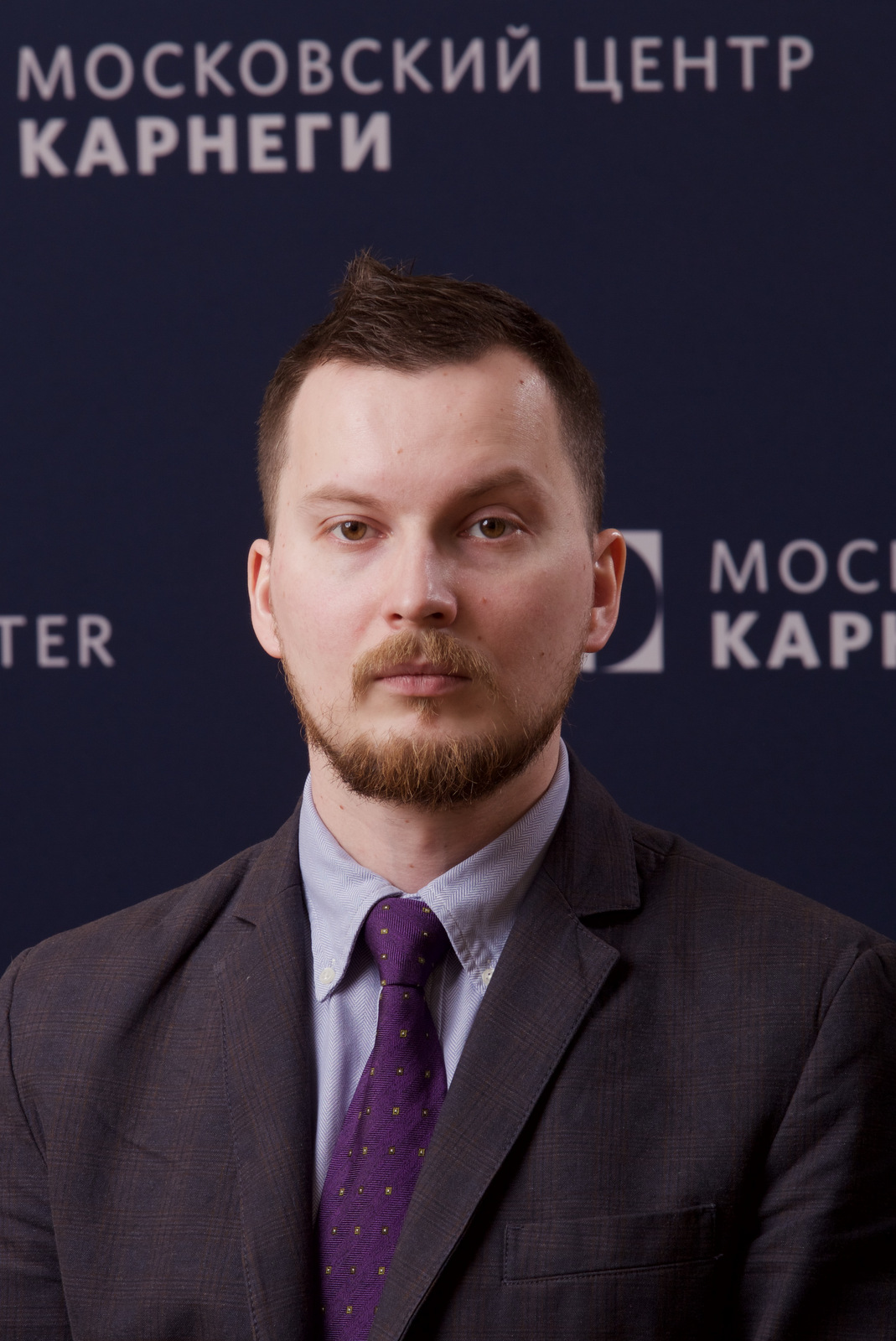
Former Fellow, Nonproliferation Program, Moscow Center
Topychkanov was a fellow in the Carnegie Moscow Center’s Nonproliferation Program.
Recent Work

James M. Acton, Alexey Arbatov, Vladimir Dvorkin, …
Petr Topychkanov
Carnegie does not take institutional positions on public policy issues; the views represented herein are those of the author(s) and do not necessarily reflect the views of Carnegie, its staff, or its trustees.

Trump has promised Belarus a massive potash deal. But Minsk is seeking something greater: restored Western transit and greater room for maneuver from Russia.

Balázs Jarábik

Minsk clearly expected the dialogue with Washington to yield more results, in particular the lifting of EU sanctions and permission to export potash.

Artyom Shraibman
Ongoing uncertainty in the Middle East allows Moscow to both increase its influence in Tehran and continue to enjoy the financial windfall of higher oil prices.

Nikita Smagin
This year’s wars have made alternative routes to transit through Russia no less risky for Central Asian countries.

Galiya Ibragimova
Governments in Estonia, Latvia, and Lithuania want to ensure that a U.S. military withdrawal would not leave them dangerously exposed to a Russian attack.

Sergejs Potapkins