• Research
  • Politika
  • About
Carnegie Russia Eurasia center logoCarnegie lettermark logo
  • Donate
{
  "authors": [
    "Michael Pettis"
  ],
  "type": "legacyinthemedia",
  "centerAffiliationAll": "dc",
  "centers": [
    "Carnegie Endowment for International Peace",
    "Carnegie Europe",
    "Carnegie China"
  ],
  "collections": [],
  "englishNewsletterAll": "asia",
  "nonEnglishNewsletterAll": "",
  "primaryCenter": "Carnegie China",
  "programAffiliation": "AP",
  "programs": [
    "Asia"
  ],
  "projects": [],
  "regions": [
    "East Asia",
    "China",
    "Asia"
  ],
  "topics": [
    "Economy"
  ]
}
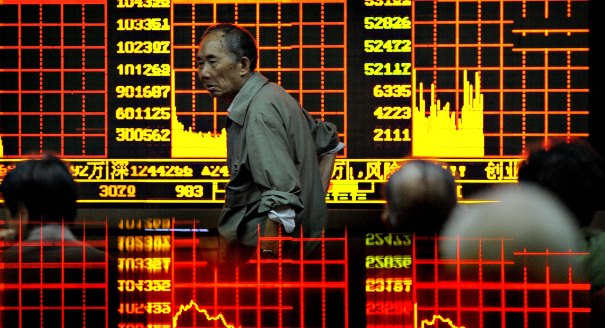
Source: Getty

In The Media
Carnegie China

China Needs a Growth Model, Not a Stimulus

China needs to enact tighter monetary policies in order to raise household consumption and rebalance toward a more sustainable growth model.

Link Copied
By Michael Pettis
Published on Mar 13, 2012

Source: Financial Times

China is slowing down. After growing by more than 10 per cent a year for more than a decade, its economy is decelerating. Dreams of double-digit growth are over, as premier Wen Jiabao admitted last week to the Chinese leadership. Many analysts have therefore concluded that China needs monetary easing. They are wrong.

There was some good news amid the Beijing gloom. On Friday we learnt that consumer price inflation had dropped to 3.2 per cent in February from 4.5 per cent the previous month.
 
Other data releases were, however, weaker than expected. Industrial output growth was sluggish. Retail sales growth had dropped sharply. This is important: because China must urgently rebalance its economy away from investment and towards consumption, any weakness in consumption growth is a bad sign.
 
The combination of good inflation numbers and bad growth numbers has led economists to call on the People’s Bank of China to goose the slowing economy by easing credit and perhaps even lowering interest rates. This, they argue, can spur consumption and investment growth, and with inflation dropping quickly, the authorities need not worry about igniting further price increases.
 
This advice is based on a fundamental misunderstanding of how monetary policy works in a financially repressed banking system. In the US, monetary easing tends to boost both investment (by lowering the cost of capital for businesses) and consumption (by lowering the cost of credit and increasing wealth).
 
But monetary easing doesn’t work that way in China. It does boost investment, as in the US. But Chinese monetary easing actually reduces consumption. Why? Because expanded credit and lower real interest rates increase the already very high financial repression tax imposed on Chinese households.
 
This implicit tax is the most important reason for China’s low household consumption rate, and increasing it will push consumption even lower as a share of gross domestic product. The PBoC must boost consumption by continuing to restrain credit growth and to force up the real deposit rate.
 
But with Chinese growth so overly dependent on investment, many analysts worry that tighter monetary conditions will cause growth to slow even more. They are right, but there are three reasons why this will still leave China better off.
 
First, by increasing the meagre returns to their high savings, it will allow household income and consumption to grow more quickly than the overall economy.
 
Second, China’s biggest risk – one that has afflicted every country in history that has followed a similar investment-driven growth strategy – is that debt levels become unsustainable. Chinese debt is already very high and growing much too quickly because ferocious investment growth funded by cheap debt is increasingly misspent. Tighter credit conditions are the only way to fix this.
 
Third, although tighter monetary conditions will slow growth substantially, this will not have the adverse social impact that so many fear. Why not? Because if China successfully rebalances its economy, household income growth will exceed GDP growth. Even if annual GDP growth slows to 4-5 per cent, in other words, real household wealth can grow at the 5-6 per cent a year that will keep households happy.
 
Some worry that slower GDP growth would lead to rising unemployment, but higher interest rates will force Chinese businesses to switch from a capital-intensive growth model dominated by inefficient state-owned enterprises to a much healthier labour-intensive growth model powered by nimbler small and medium-sized enterprises. China’s earlier attempts to rebalance by increasing wages have hurt labour-intensive industries and have actually worsened the imbalances. But this switch to a labour-intensive growth model would ensure higher employment per unit of GDP growth – or more bang for your renminbi.

About the Author

Michael Pettis

Nonresident Senior Fellow, Carnegie China

Michael Pettis is a nonresident senior fellow at the Carnegie Endowment for International Peace. An expert on China’s economy, Pettis is professor of finance at Peking University’s Guanghua School of Management, where he specializes in Chinese financial markets. 

    Recent Work

  • Commentary
    What GDP Means in a Soft Budget Economy Like China

      Michael Pettis

  • Commentary
    What’s New about Involution?

      Michael Pettis

Michael Pettis
Nonresident Senior Fellow, Carnegie China
Michael Pettis
EconomyEast AsiaChinaAsia

Carnegie does not take institutional positions on public policy issues; the views represented herein are those of the author(s) and do not necessarily reflect the views of Carnegie, its staff, or its trustees.

More Work from Carnegie Russia Eurasia Center

  • Commentary
    Carnegie Politika
    Why Are China and Russia Not Rushing to Help Iran?

    Most of Moscow’s military resources are tied up in Ukraine, while Beijing’s foreign policy prioritizes economic ties and avoids direct conflict.   

      • Alexander Gabuev

      Alexander Gabuev, Temur Umarov

  • Commentary
    Carnegie Politika
    How Trump’s Wars Are Boosting Russian Oil Exports

    The interventions in Iran and Venezuela are in keeping with Trump’s strategy of containing China, but also strengthen Russia’s position.

      • Mikhail Korostikov

      Mikhail Korostikov

  • Commentary
    Carnegie Politika
    Does Russia Have Enough Soldiers to Keep Waging War Against Ukraine?

    The Russian army is not currently struggling to recruit new contract soldiers, though the number of people willing to go to war for money is dwindling.

      Dmitry Kuznets
  • Commentary
    Carnegie Politika
    Japan’s “Militarist Turn” and What It Means for Russia

    For a real example of political forces engaged in the militarization of society, the Russian leadership might consider looking closer to home.

      James D.J. Brown

  • Commentary
    Carnegie Politika
    A New World Police: How Chinese Security Became a Global Export

    China has found a unique niche for itself within the global security ecosystem, eschewing military alliances to instead bolster countries’ internal stability using law enforcement. Authoritarian regimes from the Central African Republic to Uzbekistan are signing up.

      Temur Umarov

Get more news and analysis from
Carnegie Russia Eurasia Center
Carnegie Russia Eurasia logo, white
  • Research
  • Politika
  • About
  • Experts
  • Events
  • Contact
  • Privacy
  • For Media
Get more news and analysis from
Carnegie Russia Eurasia Center
© 2026 Carnegie Endowment for International Peace. All rights reserved.