

In The Media
Lahcen Achy
{
  "authors": [
    "Lahcen Achy"
  ],
  "type": "legacyinthemedia",
  "centerAffiliationAll": "",
  "centers": [
    "Carnegie Endowment for International Peace",
    "Malcolm H. Kerr Carnegie Middle East Center"
  ],
  "collections": [],
  "englishNewsletterAll": "",
  "nonEnglishNewsletterAll": "",
  "primaryCenter": "Malcolm H. Kerr Carnegie Middle East Center",
  "programAffiliation": "",
  "programs": [],
  "projects": [],
  "regions": [
    "Maghreb"
  ],
  "topics": [
    "Economy"
  ]
}
Source: Getty
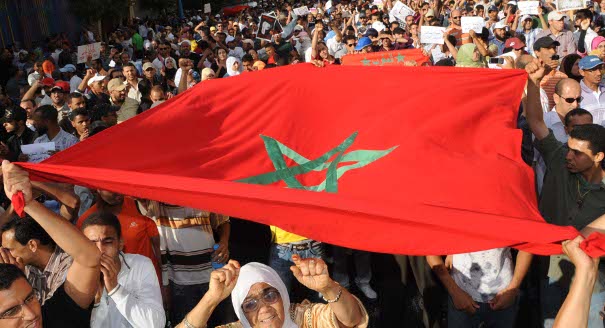
To help its citizens cope with drought conditions that have hit the country’s agricultural sector, Morocco's government should introduce an agricultural policy acknowledging climate variations and water shortages as permanent, structural conditions.
Source: Al-Hayat

These expectations, if realized, would represent a setback for the government led by the ruling Justice and Development Party, which had promised its voters 7 percent growth, later revised to 5.5 percent under the government program to which it committed itself, and which won it the trust of its allies in the parliamentary majority. The JDP subsequently proceeded to further revise its estimate of anticipated growth, reducing it to 4.2 percent during the presentation of this year’s draft budget.
While the ruling party is in no way responsible for adverse weather conditions, it is still responsible for promises made first to voters, then to the elected representatives in Parliament. From the start these promises seemed too optimistic, especially as the phenomenon of drought has become more prevalent in recent years, with no part of the country able to escape its scourge. In this context, studies have shown that in the past two decades, one out of every two years on average has been marked with drought. This is contrasted with one out of every eleven years at the beginning of last century, and one out of every seven during the 1960s.
Accounting for 15 percent of the GDP and 40 percent of all employment, the agricultural sector in Morocco is highly volatile and dependent on climatic conditions. In fact, only 15 percent of the country’s lands are irrigated, while the rest are rainfed crops. Almost three quarters of arable land is devoted to the cultivation of cereals. Most farmers possess limited lands that do not justify investment in new technologies. Indeed, seven out of ten farmers have no more than 2.1 ha. of land and struggle with frequent drought, in the absence of any appropriate protection mechanisms.
Moroccan farmers have adopted a number of strategies to cope with drought, depending on their level of income. For wealthier families, the strategy revolves around the level of consumption of stored grains and the sale of small animals such as sheep and goats, in addition to subsidies from the state. The strategy of poor families combines borrowing money with work beyond the farm, as well as potentially selling cattle or leasing their land. However, these latter strategies may be costly in the long run and prevent poor families from improving their financial situation. Indeed, when poor families sell their assets in drought years, this limits their productivity in good seasons to come, in turn trapping them in the vicious circle of poverty.
The expected decline of the agricultural sector's contribution to growth in Morocco has numerous repercussions for economic and social development. Thus, drought directly affects the level of grain production which is the essential ingredient in the diet of Moroccan families, particularly middle- to low-income families. However, imports of considerable quantities of grain to meet domestic demand will worsen the trade deficit — which has already reached record levels in recent years — and further deplete hard currency reserves, already unable to cover more than five months of imports, compared with nine months two years ago.
Given the global rise in prices of this staple, the state will be forced to increase the budget allocated for grants so as to avoid undermining the purchasing power of citizens, only serving to widen a budget deficit that topped 7 percent during the past year. High oil prices on world markets make this scenario even more likely, especially given that budget preparations were based on an average of $95 USD per barrel, while the current price exceeds $105 USD.
Clearly, the agricultural policy of previous governments is largely responsible for the negative impact of drought on farm incomes and the national economy in general. Indeed, for many decades, successive governments have persisted in implementing hasty and costly programs in order to mitigate the impact of drought on affected farmers, without introducing any effective policy to reduce the vulnerability of the agricultural sector or mitigate the heavy exposure to risk resulting from successive seasons of poor rains. Although the drought in Morocco is a structural phenomenon that requires a vision and a plan, officials continue to regard it as a circumstantial and even exceptional situation.
The Moroccan government has granted a number of incentives to reclaim agricultural land, to buy farm equipment and add value to agricultural products. It even grants subsidies to air exports of fruits, vegetables, flowers and decorative plants. Total agricultural subsidies in the State’s general budget have reached the equivalent of $200 million USD. Most of these incentives, however, are not directed at the poor. Instead, they mainly benefit rich farmers, given that income generated from agricultural activity between 1980 and 2013 is exempt from all forms of taxation.
If the government is serious about increasing economic growth in a sustainable manner, it should introduce an ambitious agricultural policy, with a medium and long term strategy that acknowledges climate variations and a constant shortage of water as permanent, structural conditions, rather than exceptions to the rule. This policy must also take the interests of small farmers into account, as part of an inclusive vision for Morocco.
This article originally appeared in Arabic in Al-Hayat.
Former Nonresident Senior Associate, Middle East Center
Achy is an economist with expertise in development, institutional economics, trade, and labor and a focus on the Middle East and North Africa.
Recent Work
Lahcen Achy
Lahcen Achy

A much-discussed disagreement over internet restrictions in Russia was never an existential threat for Putin: It was about elite groups protecting their interests.

Alexandra Prokopenko

The demands of the Kremlin’s war in Ukraine, demographic problems, and public hostility toward Central Asians mean Russia does not have enough workers.

Salavat Abylkalikov
Minsk’s faith in the future of its larger neighbor’s economy is fading as Belarusian firms in Russia see record losses.

Olga Loiko
The cost of air defense has become an unregistered tax on revenue for businesses. While military rents are consolidated in the federal budget, the costs of defense are being spread across the balance sheets of companies and regional governments.
Alexandra Prokopenko

Powerful lobbyists and inertia led to Russia’s coal-mining sector missing an excellent opportunity to solve its structural problems.
Alexey Gusev