

Commentary
The European far right might fail to steer EU policy in the direction Russia wants, but they will create enough chaos inside Europe to benefit the Kremlin.
Dimitar Bechev
{
  "authors": [
    "Ariel (Eli) Levite",
    "Jonathan Shimshoni"
  ],
  "type": "legacyinthemedia",
  "centerAffiliationAll": "dc",
  "centers": [
    "Carnegie Endowment for International Peace"
  ],
  "collections": [],
  "englishNewsletterAll": "menaTransitions",
  "nonEnglishNewsletterAll": "",
  "primaryCenter": "Carnegie Endowment for International Peace",
  "programAffiliation": "MEP",
  "programs": [
    "Middle East"
  ],
  "projects": [],
  "regions": [
    "Middle East",
    "Israel",
    "Palestine"
  ],
  "topics": [
    "Security"
  ]
}
Source: Getty
After the recent fighting in Gaza, both Israel and Hamas can point to military successes and limited losses, which could offer a way to escape the cycle of revenge that would have been triggered by the humiliation or defeat of either side.
Source: Haaretz

A few hallmarks of the recent exchange, likely to prove a more enduring legacy, are worth noting:
The Gaza exchange ended without a clear-cut military decision, yet with clear and substantial gains on both sides, political gains that were not correlated with operational outcomes in the field.
On the internal front, Israel demonstrated to its population not only its commitment, but also its growing ability to defend them, while driving home to Hamas the price Israel can levy in return for sustained harassment of Israel. On the international front, due mostly to the moral justification and operational efficiency of the campaign, Israel was able to wage this war without suffering the historical-normal international swell of publicly-motivated international pressure to desist and the interventions of such undesirable players (from her perspective) such as Turkey.
Hamas, on the other hand, was also able to seize on the conflict to demonstrate its commitment to avenge the killing of its military leader, to stand up to Israel militarily, and to enhance its position in the Palestinian political setting as well as its international standing as an indispensable party and increasingly legitimate partner.
If the recently negotiated ceasefire proves more enduring than its predecessors, it may be precisely because of the limited (if bruising) nature of the conflict that preceded it, together with the win-win nature of the outcome. For this outcome enables the parties to escape the 'normal' preoccupying and destabilizing imperative to avenge that attend cases of humiliation and total defeat.

Senior Fellow, Nuclear Policy Program, Technology and International Affairs Program
Levite was the principal deputy director general for policy at the Israeli Atomic Energy Commission from 2002 to 2007.
Jonathan Shimshoni
Massachusetts Institute of Technology
Jonathan (Yoni) Shimshoni served for 25 years with the IDF, in both field command and staff positions, culminating his career as Director of Planning for the Planning Division (J-2) with the rank of Brigadier General. He received his Ph.D. in Public Policy from the Woodrow Wilson School at Princeton, with a specialty in security policy. Yoni has taught at Princeton and has pursued research on strategic issues at MIT; he has published within the Cornell Studies in Security Affairs and in International Security on conventional deterrence, technology and doctrinal innovation, as well as in the leading Israeli daily (“Haaretz”). Yoni has served on several committees of the Israeli National Security Council and in the IDF reserves has continued to work extensively on challenging security issues – related to economics, technology, strategy and doctrine. In addition to these security and policy related endeavors, Yoni was Managing Partner of PWC Consulting in Israel and has led the establishment and management of a start-up company. He will be spending this coming year (2018-19) at the Woodrow Wilson Center in Washington, continuing research begun at SSP on societal warfare in the 21st century.
Carnegie does not take institutional positions on public policy issues; the views represented herein are those of the author(s) and do not necessarily reflect the views of Carnegie, its staff, or its trustees.

The European far right might fail to steer EU policy in the direction Russia wants, but they will create enough chaos inside Europe to benefit the Kremlin.

Dimitar Bechev

With the growth in points of friction between the great powers, organizations like the SCO will continue to play a role in the strategic adaptation of the smaller powers caught between them.

Temur Umarov

Two divergent trends—Putin’s hardline vision of how to prosecute the war in Ukraine, and a growing desire for change in Russia—could tear the regime apart.

Tatiana Stanovaya

Andrey Melnichenko’s essay offers no answer to the fundamental question of how, under any kind of negotiated settlement, Europe can protect itself from the Russian ressentiment that is inevitable in all scenarios except for an outright victory for Putin.

Leonid Bershidsky
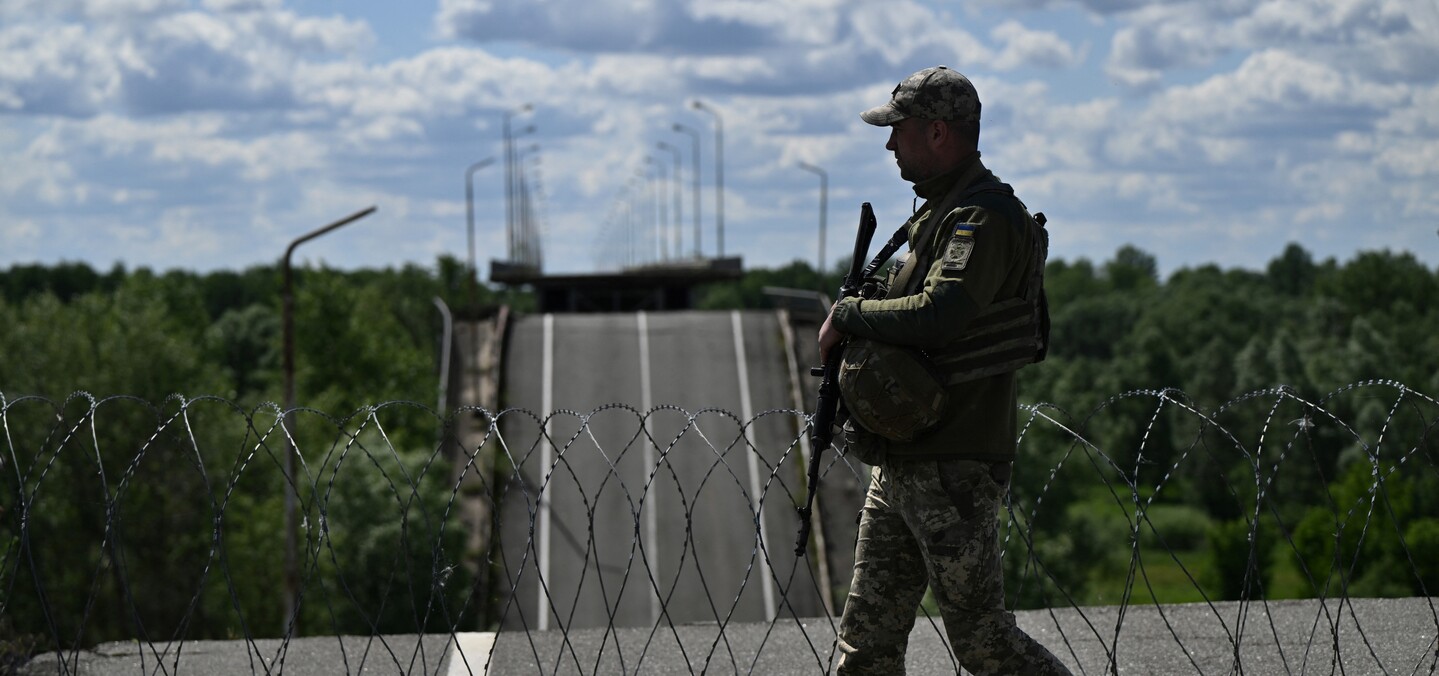
The recent damage inflicted by Ukrainian drones and missiles on Russia has made Belarus aware of its own vulnerabilities—and surprisingly amenable to Kyiv’s demands.

Artyom Shraibman