

Article
C. Raja Mohan, Darshana M. Baruah
{
  "authors": [
    "C. Raja Mohan"
  ],
  "type": "legacyinthemedia",
  "centerAffiliationAll": "dc",
  "centers": [
    "Carnegie Endowment for International Peace",
    "Carnegie China",
    "Carnegie India"
  ],
  "collections": [],
  "englishNewsletterAll": "ctw",
  "nonEnglishNewsletterAll": "",
  "primaryCenter": "Carnegie India",
  "programAffiliation": "SAP",
  "programs": [
    "South Asia"
  ],
  "projects": [],
  "regions": [
    "East Asia",
    "South Korea",
    "North Korea"
  ],
  "topics": [
    "Security",
    "Military",
    "Foreign Policy",
    "Nuclear Policy",
    "Arms Control",
    "Nuclear Energy"
  ]
}
Source: Getty
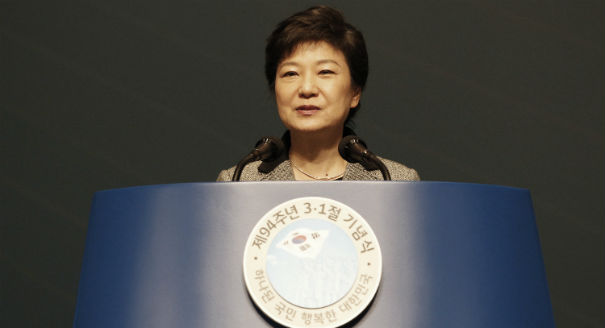
The United States will have trouble keeping South Korea from going nuclear if it can't contain the threat from Pyongyang.
Source: Indian Express
As the United States struggles to cope with the North Korean atomic challenge, there is a growing sentiment in South Korea in favor of building nuclear weapons. In a public opinion poll conducted after the third North Korean nuclear test in February, nearly two-thirds of South Koreans supported the development of a national nuclear arsenal.
Debating the nuclear weapon option has long been taboo in South Korea. That taboo is breaking down amidst Pyongyang's adventurism and the growing pessimism in Seoul about the United States’s ability to rollback North Korea's nuclear weapons program.As one of the world's leading economies with an advanced industrial base, South Korea has long had the wherewithal to quickly mount a significant nuclear weapons program. What held it back until now is a political decision to forego the nuclear weapon option.
Seoul did pursue the nuclear weapon option in the 1970s, but the United States persuaded South Korea to abandon the program. South Korea was encouraged instead to rely on the U.S. nuclear shield.
Faith in the U.S. nuclear umbrella allowed South Korea to take a stoic view of the North Korean nuclear and missile programs, until recently. But Seoul's patience has begun to snap in the last two years amidst the intolerable provocations from the North.
Making matters worse was the growing South Korean perception that a weakening America may no longer have the ability to either rein in North Korea or defend Seoul against Pyongyang's nuclear arsenal.
Some in Seoul call for strengthening the American nuclear umbrella by the redeployment of US tactical nuclear weapons in South Korea. The United States had withdrawn the tactical weapons from South Korea after the end of the Cold War in 1991 in a gesture of reconciliation towards North Korea. Others insist South Korea has no alternative but to acquire nuclear parity with the North.
In Washington, of course, there is little political appetite for a prospective South Korean nuclear weapons program. American policy is committed to keeping the Korean Peninsula free of nuclear weapons.
The problem, however, is that the United States finds itself unable to compel North Korea to give up its nuclear weapons while continuing to restrain its longstanding ally South Korea from matching the atomic arsenal of the North.
South Korea wants to produce enriched uranium and plutonium to fuel its expansive civil nuclear program and make it more efficient. The current U.S. policy bars countries that don't have these facilities from acquiring them, on the grounds that these technologies make it easier to build nuclear weapons.
When South Korean President Park Geun-hye visits Washington next month, she is expected to press Barack Obama to let Seoul strengthen its nuclear prowess. The non-proliferation community in Washington is dead set against the liberalization of the policy in favor of South Korea.
While Washington wrings its hands on the nuclear question, it has made one important concession to Seoul last year that lets South Korea match the North Korean missile program.
In an agreement with Washington in 2001, Seoul agreed not to develop or deploy ballistic missiles with a range of more than 300 kilometers and a payload of more than 500 kilograms. These restrictions were in line with the rules of the Missile Technology Control Regime and meant to reduce the dangers of missile proliferation in the Korean Peninsula.
South Korea's self-restraint made no difference to the North, which has steadily advanced towards developing longer range missiles. Under a new agreement announced last October, Washington has agreed that South Korea can build missiles with ranges up to 800 km. Seoul will also be free to develop missiles with ranges shorter than 800 km that can carry heavier warheads than 500 kg.
Once Seoul develops the new ballistic missiles in the coming years, it will have the capacity to target all of North Korea. The US justified the decision by saying that allowing South Korea to develop longer range missiles was a "proportionate" response to the threats.
As Pyongyang rattles the nuclear sabre, the tension between the deepening political crisis in the Korean Peninsula and the non-proliferation regime has become increasingly difficult to manage.
This article was originally published in the Indian Express.
Former Nonresident Senior Fellow, Carnegie India
A leading analyst of India’s foreign policy, Mohan is also an expert on South Asian security, great-power relations in Asia, and arms control.
Recent Work

C. Raja Mohan, Darshana M. Baruah


Alexander Gabuev, Paul Haenle, C. Raja Mohan, …
Carnegie does not take institutional positions on public policy issues; the views represented herein are those of the author(s) and do not necessarily reflect the views of Carnegie, its staff, or its trustees.

Russia’s AI-driven propaganda campaigns operate in a fragmented, chaotic, and often illogical manner. That’s not necessarily a problem for the Kremlin, though: It’s much easier to mimic genuine public debate that way.

Ilya Klishin

Without a ceasefire with Ukraine on attacking each other’s energy infrastructure—to which the Kremlin is unlikely to agree—the diesel agreement between Putin and Trump is largely for show, rather than representing a genuine increase in the volumes of Russian diesel on the global market.

Sergey Vakulenko

Russian strikes are weakening the economy sustaining Ukraine’s war effort. Closing the growing funding gap will require more European support and politically contentious reforms in Kyiv.

Balázs Jarábik

Despite a new textbook, an influx of Russian teachers and managers, and an end to the teaching of Ukrainian, the Kremlin is unlikely to have “reprogrammed” locals.

Konstantin Skorkin

Cargo traffic through Russia’s Northern Sea Route has increased because of the disruption caused by the conflict in the Middle East, the Ukraine war, and U.S.-China tensions.

Mikhail Korostikov