

Q&A
Stephen Tankel
{
  "authors": [
    "Stephen Tankel"
  ],
  "type": "legacyinthemedia",
  "centerAffiliationAll": "dc",
  "centers": [
    "Carnegie Endowment for International Peace"
  ],
  "collections": [],
  "englishNewsletterAll": "ctw",
  "nonEnglishNewsletterAll": "",
  "primaryCenter": "Carnegie Endowment for International Peace",
  "programAffiliation": "SAP",
  "programs": [
    "South Asia"
  ],
  "projects": [],
  "regions": [
    "South Asia",
    "Afghanistan",
    "Pakistan"
  ],
  "topics": [
    "Security",
    "Foreign Policy",
    "Civil Society",
    "Religion"
  ]
}
Source: Getty
Washington must begin reorienting its South Asian counterterrorism efforts to take into account the decreasing threat from al-Qaeda and growing potential for attacks against regional stability.
Source: Foreign Policy
The looming drawdown of U.S. and NATO troops from Afghanistan in 2014 has raised a multitude of concerns, among them fear that the al-Qaeda organization in Pakistan [hereafter AQC] will return to set up camp. This is overwrought. Any residual U.S. force should contain a heavy concentration of Special Forces operators whose top priority will be hunting al-Qaeda remnants who move back across the border into Afghanistan. AQC may be able to carve out small pieces of territory, but even a small number of U.S. troops in tandem with unmanned aerial vehicles should ensure it enjoys little more freedom of movement than at present in Pakistan's Tribal Areas.
Pakistani militants are likely to receive less attention. This is understandable. Yet their access to territory in Afghanistan, alongside the sanctuaries they already enjoy in Pakistan, is cause for significant concern, as it may amplify the threats they pose to India, to Pakistan, and to U.S. interests in the region. Moreover, as Secretary of State John Kerry seeks to jumpstart stalled peace negotiations, it is worth noting that their presence in Afghanistan further complicates the already tortuous search for a settlement.
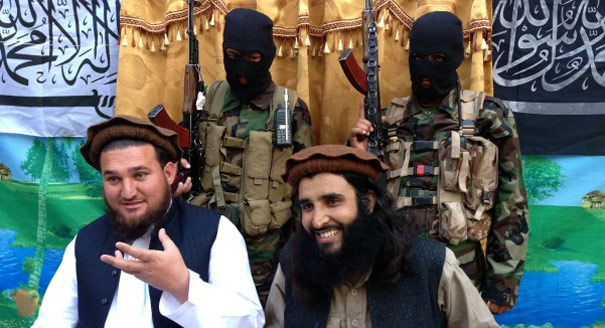
Most of the major Pakistani militant groups and a host of minor ones are active in Afghanistan. They fight alongside the Afghan Taliban and Haqqani Network, both of which enjoy sanctuary in and support from Pakistan. Some Pakistani organizations are also engaged in a revolutionary jihad against their own government, with the Tehrik-e-Taliban Pakistan leading that charge. Organizationally, whether to wage war against the state is the greatest dividing line among militant groups endogenous to and based in Pakistan. Operationally, it does not preclude collaboration on either side of the Durand Line.
Anti-state militants displaced by Pakistani military incursions into FATA and the Swat Valley in 2009-2010 have regrouped across the border in Afghanistan. From there, they launch cross-border raids into Pakistan. The two countries have been waging a low-level border war since the late 2000s, fueling suspicions in Pakistan that Afghan forces are providing sanctuary and support to these militants. Even if true, such assistance would pale in comparison to Pakistan's well-documented support for insurgents fighting in Afghanistan.
Militants fighting against the Pakistani state are sometimes co-located in Northeastern Afghanistan with those from Pakistan's proxy organizations, most notably members of Lashkar-e-Taiba (LeT) who have been active there since the mid-2000s. Though still small in number, LeT's presence in Afghanistan has grown since 2010. This likely owes to an increased need for a safety release valve following pressure on the group to reduce its India-centric activities after the 2008 Mumbai attacks, as well as the appeal of the Afghan front for those motivated to fight America or simply to join the biggest jihad in town. Pakistan's intelligence services also may have endorsed this expansion as a means of gathering information about those anti-state militants pushed across the border. The past several years have witnessed attempts by LeT to solidify its presence in the Salafi-strongholds of northern Afghanistan where the group has longstanding roots.
In short, though militants overwhelmingly remain based across the border in Pakistan, Northeastern Afghanistan has become a sanctuary not only for Pakistani militants arrayed against the state, but also those aligned with it.
No one knows with certainty how the conflict in Afghanistan will evolve once U.S. and NATO troops draw down or what the cascading impacts will be on Pakistan, India or the region. But several broad pathways are easy to envision. The worst-case scenario is a conflagration that draws in regional actors, most notably India. The more likely outcome is an ongoing insurgency that does not lead to the overthrow of the state, but also does not escalate into a full-blown proxy war involving countries other than Afghanistan and Pakistan. Hopes for a political settlement between the Afghan government and the insurgents don't look good at present, but even this best-case result wouldn't come without challenges. In all cases, the drawdown of U.S. and NATO forces brings with it the opportunity for Pakistani militants - pro- and anti-state - to take greater advantage of cross-border sanctuaries in Afghanistan.
In the absence of a negotiated settlement and amidst an ongoing insurgency, relations between Afghanistan and Pakistan could deteriorate further, leading Kabul to provide the TTP and associated anti-Pakistan militants the type of support Islamabad already suspects they are receiving. As a result, Pakistan could face not only a domestic jihadist insurgency, but also the sort of durable threat of cross-border jihadist violence that it has long supported against its neighbors. Moreover, an escalating proxy war could create conditions for a greater instability along both sides of the border. A conflict that draws in regional actors, particularly India, would exacerbate this dynamic. But even increased bilateral tensions, fueling and fueled by a cross-border proxy war, would have a destabilizing impact. For U.S. officials, this would further complicate an already labyrinthine regional environment and could impact the operations of any residual force.
Regardless of the outcome in Afghanistan, LeT is likely to keep a small presence in the Northeast where its members have worked to carve out territory. The group is also likely to agitate for regenerating the jihad directly against India, both in the form of terrorist attacks against the mainland and increased activity in Kashmir. The latter has been torpid since the late 2000s. Several incidents there this year may augur the rumblings of renewed jihadist activity, though it is too early to know whether they will amount to much. Important here is that access to safe haven in Afghanistan for LeT and other Pakistani proxy groups conceivably reduces ISI situational awareness of what their members there are doing. This would increase plausible deniability for militant leaders under some form of Pakistani state control and, thus, for the Pakistani state itself. Each could conceivably claim they did not sanction plots orchestrated from across the border, with the result being to heighten the likelihood of such attacks occurring. This is of most concern to New Delhi. Given LeT's past readiness to include Westerners in its target set for attacks in India, this rightly concerns U.S. policymakers and practitioners too.
In the event of a settlement that enabled the Afghan Taliban and Haqqani Network to migrate back across the border into Afghanistan, it is possible that elements from among them would provide at least a modicum of assistance to India-centric groups with factions operating there. More troubling, it is far from certain that all Afghan-centric militants would buy into any settlement. Questions exist regarding how much control the Quetta Shura (leaders of the Afghan Taliban currently or previously based in Quetta, Balochistan) has over its own foot soldiers, much less those operating under the banner of the Haqqani Network or the Pakistani Taliban. Some could be expected to fight on and, depending on the posture of the Pakistani state, to assist the TTP in launching cross-border attacks as well. Once again, the result could be a durable threat of cross-border jihadist violence. As a result, accounting for Islamabad's compulsions vis-à-vis those militant groups straddling the Durand Line and waging a domestic insurgency against Pakistan also adds another wrinkle to any peace negotiations.
Multiple variables including host nation preferences, domestic political and budgetary constraints and broader U.S. defense policy objects will (and should) determine the size, composition, and focus of any residual U.S. force in Afghanistan post-2014. It is unrealistic to imagine that the main focus of any residual force will not remain on supporting the Afghan National Army and targeting al-Qaeda along with other actors that have the intent and capabilities to launch transnational attacks. However, the presence of anti-Pakistan militants and possibility for escalating cross-border jihadist violence means U.S. and NATO officials will need to contend with whether to target them too.
Doing so could help serve a political purpose, reducing the threat to Pakistan's internal stability and in so doing possibly helping to defuse regional tensions. However, there is no guarantee such a payoff would accrue. More tangibly, it might provide a means for transactional targeting, i.e. the U.S. removes anti-Pakistani militants from the Afghan battlefield in exchange for assistance capturing, killing or otherwise curtailing militants of significant concern in Pakistan. Yet even this would mean sparing sparse resources and require buy-in from a host government in Kabul that has very different priorities.
Hunting India-centric militants hiding in Afghanistan, though likely to engender less animosity in Kabul, would come with its own set of hurdles. To begin with, debates persist about the costs and benefits of aggressively pursuing the small number of LeT militants in Afghanistan if the group is not actively targeting the U.S. homeland. The direct threat consists primarily in the form of terrorist attacks against India that could include Western interests. Indirectly, of course, are concerns another Indo-Pak crisis might eventuate. Either way, it is unclear what role, if any, the small number of LeT militants in Afghanistan would play in generating such attacks. As already noted, the more relevant issue is one of plausible deniability. This suggests the need to realign intelligence officers and analysts whose expertise will be essential for identifying emerging and evolving jihadist threats in the region, thus making it more difficult for militants to carry forward plots or plausibly claim no involvement in them.
The U.S. invaded Afghanistan and re-forged its relationship with Pakistan in order to destroy al-Qaeda Central. Finishing that job is important. However, with the drawdown looming and AQC's capability to strike the homeland severely degraded, Washington must begin reorienting its South Asian counterterrorism architecture in line with the decreasing threat from al-Qaeda and growing potential for regional attacks against U.S. interests and regional instability post-2014. Although it is but one component among many, the availability of sanctuary for Pakistani militants in Afghanistan should inform this process. It also must factor in broader U.S. foreign and defense policy planning for South Asia, including any strategy designed to reach a negotiated settlement in Afghanistan.

Former Nonresident Scholar, South Asia Program
Tankel was a nonresident scholar at the Carnegie Endowment, where his research focuses on insurgency, terrorism, and the evolution of nonstate armed groups.
Recent Work
Stephen Tankel
Stephen Tankel
Carnegie does not take institutional positions on public policy issues; the views represented herein are those of the author(s) and do not necessarily reflect the views of Carnegie, its staff, or its trustees.

The Russian state has opted for complete ideological control of the internet and is prepared to bear the associated costs.

Maria Kolomychenko

After four years of war, there is no one who can stand up to the security establishment, and President Vladimir Putin is increasingly passive.

Tatiana Stanovaya
Although Ukrainian strikes have led to a noticeable decline in the physical volume of Russian oil exports, the rise in prices has more than made up for it.

Sergey Vakulenko
The Russian leadership wants to avoid a dangerous precedent in which it is squeezed out of Iran by the United States and Israel—and left powerless to respond in any meaningful way.

Nikita Smagin
It’s true that many Armenians would vote for anyone just to be rid of Pashinyan, whom they blame for the loss of Nagorno-Karabakh, but the pro-Russia opposition is unlikely to be able to channel that frustration into an electoral victory.
Mikayel Zolyan