Source: CNN
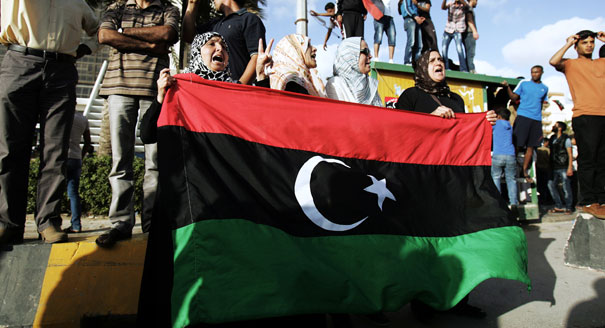
Libya may want to move on from its past, but a law passed earlier this month with the backing of more than 90 percent of lawmakers is the wrong way to go about it.
The “Political Isolation” law would be sweeping enough if it just stuck to the provisions barring anyone that held a senior position in the Gadhafi regime from holding office again for a decade. But it also states that intellectuals, academics, civil servants, security and army officials and leading media personnel should also be barred from doing so. Even exiles and defectors in opposition during Gadhafi’s reign who held senior positions in the distant past could also be barred from serving again for 10 years.
The law, which will effectively be policed by an “Isolation Commission” tasked with vetting officials, was pushed through in the wake of increased activism by Libyan militias. Indeed, militias were quick to seize on the aftermath of the bombing of the French Embassy on April 23, one of a string of attacks in the past year on foreign interests, to help further their agenda. And, even as Prime Minister Ali Zidan’s cabinet attempted to draw up a response for the international community, revolutionary and rogue militias seized four key ministries at gunpoint, demanding that the law be passed.
Yet the sweeping nature of the law – and the power of the new Isolation Commission – should be of considerable concern to those who want to see a stable transition in Libya. After all, if the Commission fully utilizes the powers granted it by the new law, potentially thousands of government officials, civil servants and security personnel could see themselves affected.
Leading figures in the previous regime with close ties to Gadhafi were always bound to feel the brunt of the revolution, but now a significant block of Libya’s leading technocrats could also be affected, including General National Congress Chairman Mohamed Magariaf, who was Libya’s ambassador to India before he defected in 1981. In addition, Prime Minister Ali Zidan and Juma’a Atiga, first deputy of the GNC who served in Saif Gadhafi’s charitable foundation, could also be targeted. This despite the fact that all three men spent time in exile.
More from GPS: Why have we forgotten Libya?
Already, within 24 hours of the law passing, Defense Minister Mohammed Barghati had resigned before being reinstated. The fate of the head of the head of the country’s ground forces, Yousef Mangoush, meanwhile, has already been decided, and he will leave office in the next 30 days.
Unfortunately, the government is unlikely to be able to push back against the arbitrary application of the law – any move by the army or militias loyal to the state to permanently end the siege of government ministries could spark a massive episode of violence, with Libya’s police force and revolutionary Supreme Security Committee being no match for the revolutionary militias.
The long-term fallout from all this could be severe. For a start, national reconciliation is under threat, as are the still fragile political bonds between ministries, the police and the SSC. In addition, members of the army’s border control could be culled across the south, east and west of the country, putting at risk decades of logistical knowledge of the terrain and local tribes.
The new law should be of real concern to the international community, in part because it could undermine domestic security, but also because it could ultimately result in the collapse of the Zidan government.
How should it respond?
The international community can and should support the general process of political reconciliation in spite of the new law, although it will need to tread carefully and avoid issuing overtly strong statements either for or against the law to avoid further politicization within Libya. Meanwhile, immediate technical assistance should be provided to the new Isolation Commission to help soften its reading of the law, which could be done by highlighting best practices from similar experiences in Latin America, Germany, Iraq and South Africa.
But however “gently” the new law is applied by the Commission, large numbers of bureaucrats could be culled, and the international community – especially through the U.N. Service Mission in Libya – should stand ready to provide technical support and skills-based training to inexperienced replacements.
Libya’s troubles did not end with the overthrowing of the Gadhafi regime, and much remains to be done if it is to capitalize on the optimism that marked the revolution in 2011. If other nations want to help Libya rebuild its fortunes, they could start by helping to ensure that Libyan civil society is allowed a free voice for moderation, civility and a democratic future.
This article was originally published in CNN.