

Commentary
Trump has promised Belarus a massive potash deal. But Minsk is seeking something greater: restored Western transit and greater room for maneuver from Russia.
Balázs Jarábik
{
  "authors": [
    "Zhang Chuanjie"
  ],
  "type": "legacyinthemedia",
  "centerAffiliationAll": "",
  "centers": [
    "Carnegie Endowment for International Peace",
    "Carnegie China"
  ],
  "collections": [
    "U.S.-China Relations",
    "China’s Foreign Relations"
  ],
  "englishNewsletterAll": "",
  "nonEnglishNewsletterAll": "",
  "primaryCenter": "Carnegie China",
  "programAffiliation": "",
  "programs": [],
  "projects": [],
  "regions": [
    "North America",
    "United States",
    "East Asia",
    "China",
    "North Korea"
  ],
  "topics": [
    "Security",
    "Nuclear Policy"
  ]
}
Source: Getty
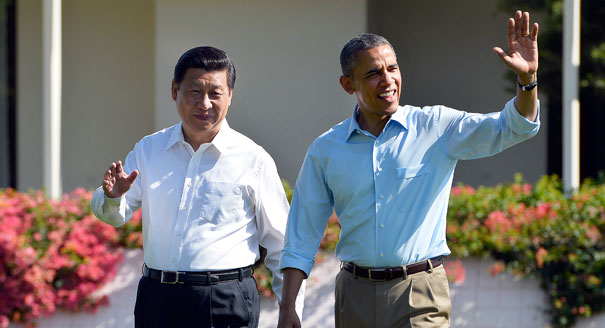
The informal surroundings at Sunnylands enable Xi and Obama to have private and meaningful discussion about critical bilateral and global issues.
Source: CCTV
Speaking on CCTV, Carnegie’s Zhang Chuanjie explained that the benefit of the informal meeting in Sunnylands, California between Presidents Xi Jinping and Barack Obama is that “neither has any pressure to come up with an agreement.”
He predicted that cybersecurity will be an important point of discussion between the two leaders. Zhang suggested that both countries should send groups to work out “rules and regulations” to help improve cooperation on cybersecurity. Another commonality that the two countries should cooperate on is North Korea, since both have a vested interest in stability on the peninsula, he added.
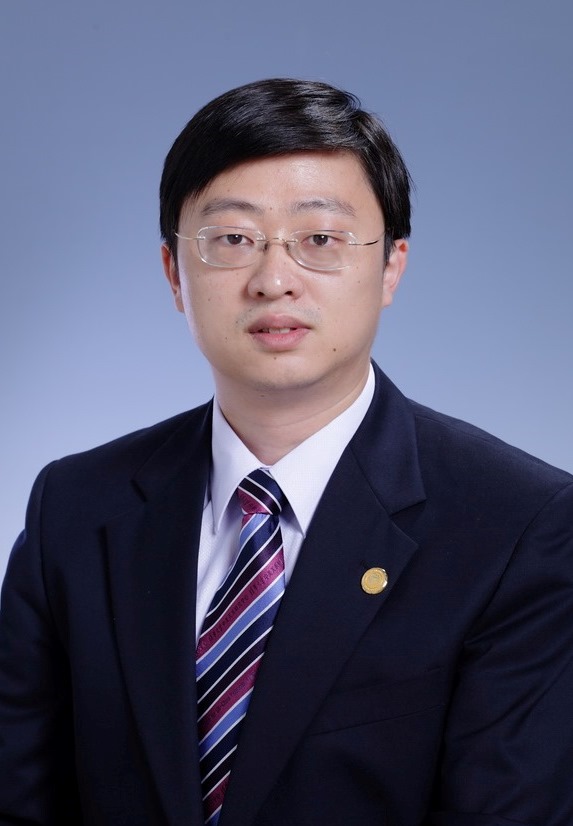
Zhang Chuanjie
Former Resident Scholar, Carnegie-Tsinghua Center for Global Policy
Zhang Chuanjie was a resident scholar at the Carnegie-Tsinghua Center until June 2020.
Carnegie does not take institutional positions on public policy issues; the views represented herein are those of the author(s) and do not necessarily reflect the views of Carnegie, its staff, or its trustees.

Trump has promised Belarus a massive potash deal. But Minsk is seeking something greater: restored Western transit and greater room for maneuver from Russia.

Balázs Jarábik

The European far right might fail to steer EU policy in the direction Russia wants, but they will create enough chaos inside Europe to benefit the Kremlin.

Dimitar Bechev

Minsk clearly expected the dialogue with Washington to yield more results, in particular the lifting of EU sanctions and permission to export potash.

Artyom Shraibman

With the growth in points of friction between the great powers, organizations like the SCO will continue to play a role in the strategic adaptation of the smaller powers caught between them.

Temur Umarov

Two divergent trends—Putin’s hardline vision of how to prosecute the war in Ukraine, and a growing desire for change in Russia—could tear the regime apart.

Tatiana Stanovaya