

Commentary
Yukon Huang, Isaac B. Kardon, Matt Sheehan
{
  "authors": [
    "Yukon Huang"
  ],
  "type": "legacyinthemedia",
  "centerAffiliationAll": "dc",
  "centers": [
    "Carnegie Endowment for International Peace"
  ],
  "collections": [],
  "englishNewsletterAll": "asia",
  "nonEnglishNewsletterAll": "",
  "primaryCenter": "Carnegie Endowment for International Peace",
  "programAffiliation": "AP",
  "programs": [
    "Asia"
  ],
  "projects": [],
  "regions": [
    "East Asia",
    "China"
  ],
  "topics": [
    "Economy",
    "Trade"
  ]
}
Source: Getty
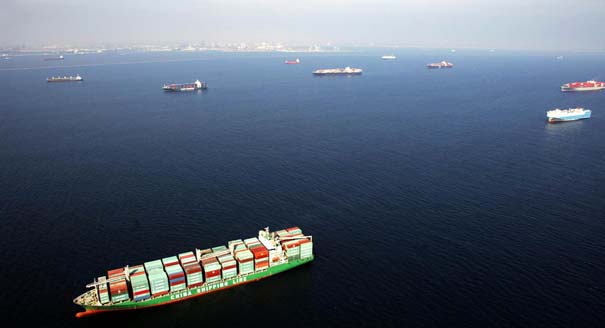
China is giving more consideration to the possibility of joining the Trans-Pacific Partnership.
Source: Channel News Asia
The process of reforming and opening up the Chinese economy has accelerated under the new leadership, said Carnegie's Yukon Huang, speaking on Channel NewsAsia. The reappointment of Zhou Xiaochuan as central bank director sends a positive signal in this regard, and specific policies to liberalize interest rates, encourage more capital inflows, and open entry to foreign banks have already been introduced.
With respect to trade liberalization, Huang said that perspectives on the Trans-Pacific Partnership deal are shifting in China. Beijing realizes that of the three major trade agreements under negotiation (the TPP, the ASEAN-led Regional Comprehensive Economic Parternship, and the U.S.-EU Transatlantic Trade and Investment Partnership), the TPP discussions are most advanced and have potentially important impacts on international trade norms. Several sensitive issues that are of interest to China are being negotiated in the TPP, including treatment of state-owned enterprises, government procurement policy, and labor and environmental standards.
It was previously thought that China was not ready to move on these issues, Huang said, but leaders in Beijing increasingly realize that every country has sensitive trade issues. He cited the example of protected agricultural sectors in Canada, the United States, and Japan, all members of the TPP negotiations. Developing countries are much more inclined to support open trade regimes than they were a decade ago, Huang added. This gives China more confidence to enter the TPP, as its policies are no more restrictive than others and it is even more keen on open trade.

Senior Fellow, Asia Program
Huang is a senior fellow in the Carnegie Asia Program where his research focuses on China’s economy and its regional and global impact.
Recent Work

Yukon Huang, Isaac B. Kardon, Matt Sheehan
Yukon Huang, Genevieve Slosberg

Depleted financial reserves and a shrinking tax base mean it is no longer possible to simultaneously deliver high defense spending, price stability, and economic growth.

Alexandra Prokopenko

With the growth in points of friction between the great powers, organizations like the SCO will continue to play a role in the strategic adaptation of the smaller powers caught between them.

Temur Umarov

When faced with fuel shortages in the past, Central Asian governments could always count on additional supplies from Moscow. That safety net no longer exists.

Galiya Ibragimova
Russia looks set to reap economic benefits from closer ties with Southeast Asian countries that are keen to find reliable energy suppliers and diversify trade ties.

Alexander Gabuev
If it proves impossible for the Russian authorities to avoid a gasoline deficit, the question then becomes how they will organize the distribution of a scarce resource.

Sergey Vakulenko