

Commentary
In the tenth year of his presidency, President Mirziyoyev’s system is becoming even more personalized than that of his predecessor Karimov.
Galiya Ibragimova
{
  "authors": [
    "Nathan J. Brown",
    "Nathan J. Brown"
  ],
  "type": "legacyinthemedia",
  "centerAffiliationAll": "dc",
  "centers": [
    "Carnegie Endowment for International Peace",
    "Malcolm H. Kerr Carnegie Middle East Center"
  ],
  "collections": [
    "Arab Awakening"
  ],
  "englishNewsletterAll": "menaTransitions",
  "nonEnglishNewsletterAll": "",
  "primaryCenter": "Carnegie Endowment for International Peace",
  "programAffiliation": "MEP",
  "programs": [
    "Middle East"
  ],
  "projects": [],
  "regions": [
    "North Africa",
    "Egypt"
  ],
  "topics": [
    "Political Reform"
  ]
}
Source: Getty
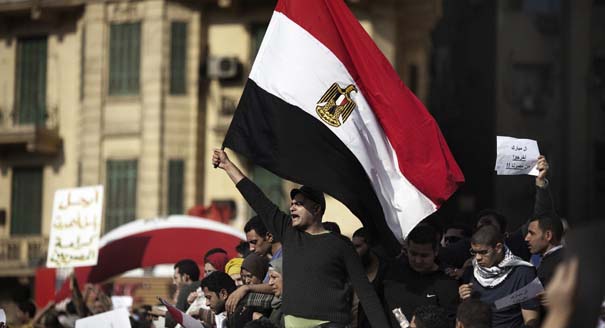
Egypt’s new rulers have to make a decision on whether they want an open democratic system. They can either have the Muslim Brotherhood on board or chose to crush them, and thus far they have been sending signals in both directions.
Source: NPR’s Weekend Edition
More protests are expected Sunday after the new government named Nobel Peace laureate Mohamed ElBaradei as interim prime minister — and then later backtracked and said consultations were continuing. Weekend Edition Sunday host Rachel Martin talks to Nathan Brown, professor of international affairs at George Washington University, about what the ouster of President Morsi means for Egypt's democracy.
RACHEL MARTIN, HOST:
This is WEEKEND EDITION from NPR News. I'm Rachel Martin. Egypt is gripped in the violent aftermath of revolution - again. Dozens of people have been killed in clashes between the supporters and opponents of Mohamed Morsi, the former president of Egypt who was pushed out last week by the Egyptian military. The Obama administration released a statement yesterday condemning the violence and urging a transition to a, quote, "sustainable democracy." Nathan Brown is a professor of political science at George Washington University and he's written several books about politics in the Arab world. He stopped in our studios yesterday, and I asked him what all of this means for Egypt's nascent democracy.
NATHAN BROWN: Well, in one sense what it means is that they're going back to February 2011 when Mubarak was forced out of office and trying to start over again. The problem is that they're doing so not in some great moment of national unity but with the Muslim Brotherhood very embittered, who have staked out very strong positions on which way the country should go, whether they're civilian political actors, some military, some other state institutions. So, it's going to be very hard to steer the country in any kind of political direction, much less a democratic one.
MARTIN: This is also a blow to the Muslim Brotherhood. Both Mohamed Morsi and the Brotherhood had been elected in presidential and parliamentary elections, respectively. They've now been booted out. What does this mean?
BROWN: I think this is probably one of the most critical moments in the Brotherhood's history. For the last generation or so they've been slowly trying to build themselves as an established political actor; they've tried to communicate the message we're willing to play by the rules even if we don't like those rules and that vindication of that strategy seemed to be the election of Mohamed Morsi and the tremendous showing that they did in parliamentary elections. And it's not just that they've been thrown out of power by military coup; they have probably the majority of Egyptian society really strongly arrayed against them. So, over the long term, what they've got to ask themselves is was this a winning strategy, are we ever going to be able to get what we want to form ourselves as a political party and try to govern.
MARTIN: The interim president, Chief Justice Adly Mansour, said this past week that he was looking forward to new elections that would express what he said would be, quote, "the true will of the people." How should we interpret what that means?
BROWN: Well, we don't know what it means. The new rulers of Egypt really I think have to make a decision. Do they want to have a real open democratic system? Do they want the Muslim Brotherhood onboard or do they want to crush it? And they've been sending signals in both directions right now.
MARTIN: The Obama administration has been notably quiet about what's been happening over the past few days. The U.S. didn't have the best relationship with Morsi, but it was functional, and he was democratically elected. But the U.S. is not exactly speaking out against his ouster.
BROWN: The Americans position towards Morsi was in a sense subtle. Most Egyptians who opposed Morsi thought not simply that the United States backed him but the United States actually helped get him into power. And the United States did have some criticisms of Morsi, especially as time went on - they became increasingly severe - but they tended to be voiced in private discussions between the embassy and the presidency. So, Egyptians never heard any of that.
MARTIN: What happens now?
BROWN: I absolutely think that there will be elections. The real question is what are Egyptians going to be voting for, according to what rules and so on? The military made an interesting announcement. They didn't say the constitution was cancelled; they said it was suspended and would be amended. What the military, I think, was signaling there was to say, we're going to step in and we're going to oversee some kind of transition back to civilian rule. I expect Egypt's non-Islamist political actors, I expect them to accept that deal.
MARTIN: You see this as a blip in the road on Egypt's longer path towards a stable democracy.
BROWN: I would say it's...
MARTIN: ...bigger than a blip.
BROWN: ...much bigger than a blip. The question is whether it's a speed bump or a brick wall.
MARTIN: Nathan Brown. He is a professor at George Washington University. He's also the author most recently of "When Victory is Not an Option: Islamist Movements in Arab Politics." Professor Brown, thanks for coming in.
BROWN: Thanks for having me.

Nonresident Senior Fellow, Middle East Program
Nathan J. Brown, a professor of political science and international affairs at George Washington University, is a distinguished scholar and author of nine books on Arab politics and governance, as well as editor of five books.
Nonresident Senior Fellow, Middle East Program
Nathan J. Brown, a professor of political science and international affairs at George Washington University, is a distinguished scholar and author of nine books on Arab politics and governance, as well as editor of five books.
Carnegie does not take institutional positions on public policy issues; the views represented herein are those of the author(s) and do not necessarily reflect the views of Carnegie, its staff, or its trustees.

In the tenth year of his presidency, President Mirziyoyev’s system is becoming even more personalized than that of his predecessor Karimov.

Galiya Ibragimova

The greater threat to Zelensky comes not from Fedorov alone, but from the convergence between the former defense minister’s political campaign and the anti-corruption investigations moving ever closer to the presidential administration.

Balázs Jarábik

With his public call for new elections in Ukraine, ex-defense minister Mykhailo Fedorov has opened Pandora’s box.

Konstantin Skorkin

In the discussions made possible by the State Duma election campaign, one question is being asked more and more loudly. “What next?”

Andrey Pertsev

Two divergent trends—Putin’s hardline vision of how to prosecute the war in Ukraine, and a growing desire for change in Russia—could tear the regime apart.

Tatiana Stanovaya