

Paper
Ashley J. Tellis
{
  "authors": [
    "Ashley J. Tellis"
  ],
  "type": "other",
  "centerAffiliationAll": "dc",
  "centers": [
    "Carnegie Endowment for International Peace"
  ],
  "collections": [
    "Iranian Proliferation",
    "Japan's Nuclear Crisis"
  ],
  "englishNewsletterAll": "ctw",
  "nonEnglishNewsletterAll": "",
  "primaryCenter": "Carnegie Endowment for International Peace",
  "programAffiliation": "SAP",
  "programs": [
    "South Asia"
  ],
  "projects": [],
  "regions": [
    "North America",
    "United States",
    "Middle East",
    "South Asia",
    "India",
    "Pakistan",
    "East Asia",
    "South Korea",
    "China",
    "Russia",
    "North Korea"
  ],
  "topics": [
    "Security",
    "Military",
    "Foreign Policy",
    "Nuclear Policy",
    "Arms Control",
    "Nuclear Energy"
  ]
}
Source: Getty
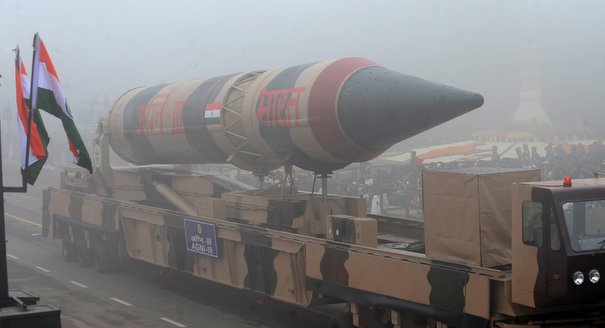
Although the emergence of new nuclear powers in the post–Cold War era has triggered fears of widespread nuclear proliferation and renewed calls for nuclear abolition, the pursuit and development of nuclear weapons in Asia are likely to only increase in the years ahead.
Source: National Bureau of Asian Research
This chapter examines the logic of nuclear weapons abolitionism, surveys the contemporary nuclear developments in Asia that are described in this volume, and highlights implications for the U.S. and its ambitions regarding comprehensive nuclear disarmament.Although the emergence of new nuclear powers in the post–Cold War era has triggered fears of widespread nuclear proliferation and renewed calls for nuclear abolition, the pursuit and development of nuclear weapons in Asia are likely to only increase in the years ahead. Continuing interstate competition, along with the expectations of many states that nuclear weapons will enhance their security and offer deterrence value, ensures that regional arsenals will grow. The U.S., therefore, must prepare for a reality that is quite different from the vision offered by nuclear abolitionism: an Asia that hosts many nuclear powers whose arsenals vary in capacity, architecture, and doctrine.
This chapter is the introduction to Strategic Asia 2013-14: Asia in the Second Nuclear Age. Read more about Strategic Asia, including information on how to order the complete book, here.
Former Senior Fellow
Ashley J. Tellis was a senior fellow at the Carnegie Endowment for International Peace.
Recent Work
Ashley J. Tellis
Ashley J. Tellis
Carnegie does not take institutional positions on public policy issues; the views represented herein are those of the author(s) and do not necessarily reflect the views of Carnegie, its staff, or its trustees.

Japan’s long-term security policy is driven by concerns about China, and there is little appetite for (or interest in) pursuing a confrontation with Moscow.

James D.J. Brown

The truth of the strategic situation is that Europe and Russia are extremely unlikely to be able to “turn the page” on their confrontation within the next two decades.

Arkady Moshes
Russia spent years building a “sovereign internet,” concentrating web infrastructure exclusively within Russian territory. Ukrainian drone attacks have shown how vulnerable that approach has left the Russian internet.

Maria Kolomychenko

Putin’s conservative staffing policies and search for ever greater control have cemented parliament’s transformation into a bureaucratic appendage of the executive branch.

Andrey Pertsev

Russia’s AI-driven propaganda campaigns operate in a fragmented, chaotic, and often illogical manner. That’s not necessarily a problem for the Kremlin, though: It’s much easier to mimic genuine public debate that way.

Ilya Klishin