

In The Media
Lilia Shevtsova
{
  "authors": [
    "Lilia Shevtsova"
  ],
  "type": "commentary",
  "centerAffiliationAll": "",
  "centers": [
    "Carnegie Endowment for International Peace",
    "Carnegie Russia Eurasia Center"
  ],
  "collections": [],
  "englishNewsletterAll": "",
  "nonEnglishNewsletterAll": "",
  "primaryCenter": "Carnegie Russia Eurasia Center",
  "programAffiliation": "",
  "programs": [],
  "projects": [],
  "regions": [
    "North America",
    "Russia",
    "Eastern Europe",
    "Ukraine",
    "Western Europe"
  ],
  "topics": [
    "Security",
    "Foreign Policy"
  ]
}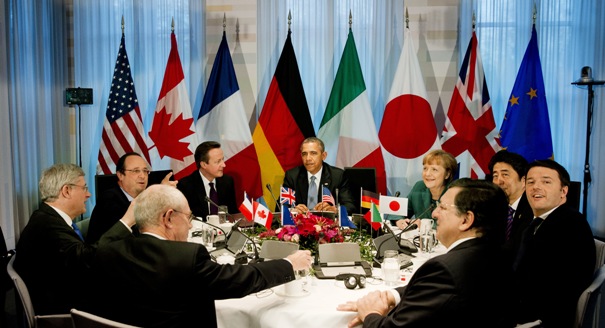
Source: Getty
Those who believe that the Kremlin will be satisfied with Crimea and will agree to return to a new “reset” do not understand the nature of the Russian personalized power and its logic that tries to prolong its life at the expense of breaking the rules and even destroying the world order.
I have to admit that I am perplexed. I am less perplexed by the reality of the unfolding international crisis, than what is being written about it. One can’t help but notice that quite a few Western politicians and analysts are engaged in creating new myths and illusions. Why do they do it? Perhaps, it is done to justify their lack of vision and inadequate response to the latest events. Or is it an attempt to explain their failure to predict the dramatic developments? Anyway, this myth-making ultimately complicates the search for a real, not imitational this time, resolution of the most serious crisis in the 21st century.
“The Kremlin is reacting to the chaos in Ukraine, as well as to the strengthening of Ukrainian nationalists and the threat of Ukraine’s joining NATO. It is also responding to Kiev’s attempt to sign the Association Agreement with the EU, the desires of the Russian-speaking population to return to Russia, and the humiliation Moscow suffered at the hands of the West and the United States; the Crimean status had a tenuous character.”
I would argue that these explanations all but mirror the Kremlin’s rhetoric.
True, there are a growing number of Western experts and politicians who acknowledge the gravity of the situation. But they try to concentrate on one issue—the Russian invasion and annexation of Crimea. As if this is just a paranoid deviation of the Kremlin’s policy, or the result of President Vladimir Putin becoming delusional. Let’s deal with this annexation and return to the business as usual, say the new Realists.
I agree with Philip Zelikow who in his recent Financial Times article (“We Require a Strategy Not Just a Reaction to Russia”) writes, “In the West, the conversation is dominated by discussion of how to punish and isolate Russia for its role in the invasion and annexation of Crimea. That is a reaction not a strategy.” Exactly! But what strategy does Zelikow suggest? A “new international agreement” that will aim “to protect a new status quo.” This means that the West has to agree to the Russian annexation and think about how to prevent further Russian incursions. This is exactly what the Kremlin would expect from the West—to endorse the current status quo, which the Kremlin will see as an invitation for new adventures.
Those who believe that the Kremlin will be satisfied with Crimea and will agree to return to a new “reset” do not understand the nature of the Russian personalized power and its logic.
Let me explain: what the Kremlin is doing on the global stage today does not reflect Putin’s venom, or aggressiveness, or him being “delusional.” This is the result of the Iron Logic of the Russian Matrix that tries to prolong its life into perpetuity at the expense of breaking the rules and even destroying the world order. Thus, “international agreement” on the new status quo will not solve anything if the political regime has decided to survive by turning to the War Paradigm and will be looking for a pretext to keep the nation in the War mood.

Former Senior Associate, Russian Domestic Politics and Political Institutions Program, Moscow Center
Shevtsova chaired the Russian Domestic Politics and Political Institutions Program at the Carnegie Moscow Center, dividing her time between Carnegie’s offices in Washington, DC, and Moscow. She had been with Carnegie since 1995.
Recent Work
Lilia Shevtsova
Lilia Shevtsova
Carnegie does not take institutional positions on public policy issues; the views represented herein are those of the author(s) and do not necessarily reflect the views of Carnegie, its staff, or its trustees.

Two divergent trends—Putin’s hardline vision of how to prosecute the war in Ukraine, and a growing desire for change in Russia—could tear the regime apart.

Tatiana Stanovaya
Ultimately, Zelensky sided neither with the reform camp nor with the military establishment as such, but with political control.

Balázs Jarábik
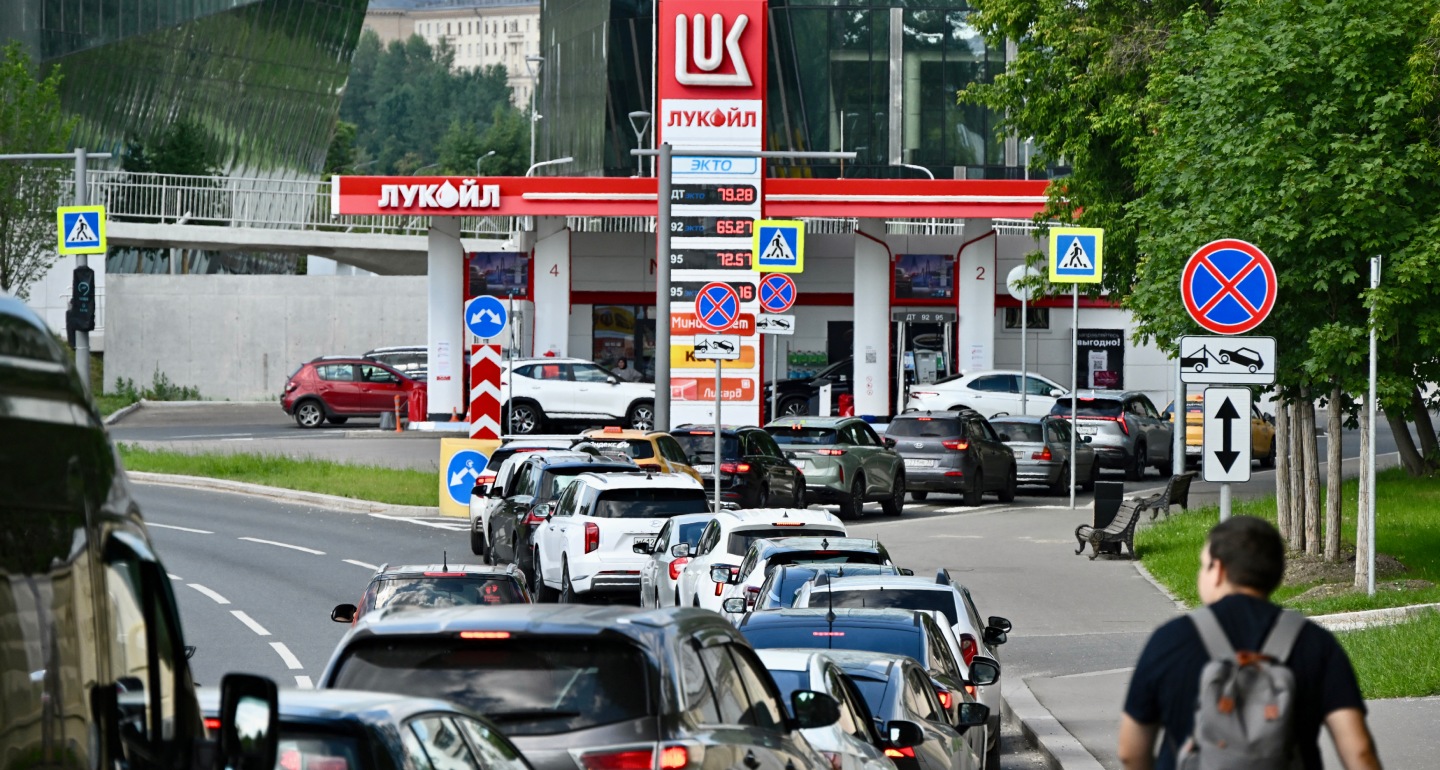
Official discussions about mini oil refineries are unlikely to come to anything—but the mere fact they’re happening reveals the regime is failing to deliver a functioning economy.

Sergey Vakulenko
The security forces are targeting Arkady and Boris Rotenberg’s patronage network—and in Putin’s Russia, it’s extremely hard to stop a purge once it’s under way.
Mikhail Komin

Andrey Melnichenko’s essay offers no answer to the fundamental question of how, under any kind of negotiated settlement, Europe can protect itself from the Russian ressentiment that is inevitable in all scenarios except for an outright victory for Putin.

Leonid Bershidsky