

Article
Deborah Gordon, Stephen D. Ziman
{
  "authors": [
    "Deborah Gordon"
  ],
  "type": "legacyinthemedia",
  "centerAffiliationAll": "dc",
  "centers": [
    "Carnegie Endowment for International Peace"
  ],
  "collections": [],
  "englishNewsletterAll": "ctw",
  "nonEnglishNewsletterAll": "",
  "primaryCenter": "Carnegie Endowment for International Peace",
  "programAffiliation": "SCP",
  "programs": [
    "Sustainability, Climate, and Geopolitics"
  ],
  "projects": [
    "Carnegie Oil Initiative"
  ],
  "regions": [
    "North America",
    "United States"
  ],
  "topics": [
    "Climate Change"
  ]
}
Source: Getty
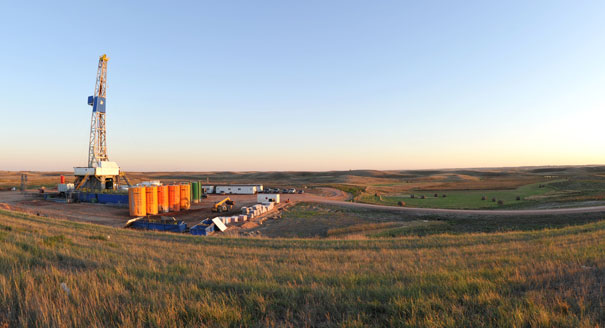
The burning question is whether America can manage the geoeconomic, security, and climate impacts of its new bounty of oils.
Source: National Interest
It’s unlikely that anyone can stop the flow of oil—one of the world’s most durable and sought-after resources. Nevertheless, since 1975, U.S. crude oil exports (with a few exceptions) have technically been banned. The president has executive authority to reverse the ban, but Congress and interest groups have begun to weigh in as U.S. oil production is projected to ramp up to 9.6 million barrels a day (bpd) in 2016—a peak not seen since 1970.
Should the forty-year-old decision to ban U.S. crude oil exports be reversed? The right answer is murkier than those in favor or against suggest. In reality, it depends on what the new rules are for the array of new oils surfacing around the globe. Given the contentious politics surrounding this decision, a healthy debate is necessary to avoid falling into traps set by numerous unanswered questions.
First, oil exports are only actually banned in theory. In reality it depends on how you define “oil.” While raw, unrefined American crude oil generally cannot be exported, there is no legal limit on exporting refined oil products. In fact, product exports have increased four-fold over the past eight years, to 3.6 million barrels per day in January 2014. While crude exports were once the industry hallmark set by the five nations that founded OPEC in 1960, today’s oil trade is increasingly driven by more valuable diesel, gasoline, jet fuel, fuel oil and petrochemical feedstocks. Through November 2013, the U.S. exported $120 billion in oil products, up 10 percent from a year earlier. New export-oriented refinery capacity in the Middle East and Asia will further tilt global trade from crude to oil products in the years ahead.Second, the world’s refineries don’t crave American oil given the way they are currently set up. Crudes are very different from one another and most nations in fact run their transport and industry on diesel and heavier residual fuels. Gasoline is not in high demand. Because of this international preference, the U.S.—the only nation that prefers gasoline to diesel—has recently invested tens of billions in Gulf Coast and Midwest complex refineries that are designed to maximize diesel exports by processing heavier global crudes. Thus, the majority of U.S. refineries—and a growing number of refineries overseas—cannot be fed a steady diet of America’s light-tight oils despite the ease of refining these oils into gasoline, jet fuel, and petrochemical feedstock. The reality is that the oil industry did not see the U.S. oil boom coming. As a result, U.S. oil is incompatible with the recently retrofitted refining sector that will require revamping to handle America’s fracked oils.
Third, exporting oil won’t necessarily increase reliance on foreign supplies. It is true, for example, that U.S. oil imports from Nigeria witnessed a 50 percent drop between 2011 and 2012, the lowest since 1986. Angolan oil experienced even greater reductions. This was due in part to the boom in production from Texas and North Dakota as well as the idling in late 2011 of two refineries on the East Coast that were significant buyers of North Africa’s light crude. On the other hand, refining U.S. light-tight oils at home currently requires the blending of substantial amounts of heavy oil from Venezuela, Saudi Arabia, and Canada, which must be imported. The truth is that, despite newfound resources at home, the U.S. will never be free from foreign supplies in an increasingly oil-interdependent world.
Fourth, some parts of the U.S. economy benefit from oil exports, others do not. While the decision to export oil is economically driven, it will not leave everyone better off. Exporting mounting U.S. oil supplies will benefit oil producers and refiners; keeping it at home will benefit the manufacturing sector. As for consumers, gas prices are unlikely to drop precipitously whether oil is exported or not. Global markets govern crude oil and petroleum product supplies. As such, sabotage in Nigeria, political problems in Libya, unplanned outages that reduce spare OPEC capacity, and future disruptions limit the effect rising U.S. production—or exports—has on global oil prices.
Fifth, U.S. oil exports are not as bad for the environment as heavier foreign oils. While clearing the way for U.S. crude exports could make it easier to transport the bounty of North American oils to Asia and elsewhere, many fracked U.S. oils are some of the lightest and sweetest on Earth. This makes them naturally less polluting than other higher carbon and sulfur substitutes. U.S. oils are easier to transport, require less energy to refine, and result in lower yields of bottom-of-the-barrel residuals with the largest carbon footprints. Exporting U.S. oils to simple refineries may make environmental sense. The climate impacts of U.S. oil exports require further analysis before a clear-cut climate decision can be made.
America is one of the first in line to win the unconventional oil lottery. But the queue is longer than it first appears. Canada, Venezuela, Brazil, Russia, Australia, Libya, and even China are stocked with an array of oils and other hydrocarbons that can be transformed into tomorrow’s highly demanded petroleum products.
The burning question is whether America can manage the geoeconomic, security, and climate impacts of its new bounty of oils. If U.S. policymakers think through their position on oil exports and enact effective safeguards to minimize unintended consequences, they are well positioned to chart a way forward that others can follow.
This article was originally published in the National Interest.

Former Director and Senior Fellow, Energy and Climate Program
Gordon was director of Carnegie’s Energy and Climate Program, where her research focuses on oil and climate change issues in North America and globally.
Recent Work
Deborah Gordon, Stephen D. Ziman
Deborah Gordon, Smriti Kumble, David Livingston
Carnegie does not take institutional positions on public policy issues; the views represented herein are those of the author(s) and do not necessarily reflect the views of Carnegie, its staff, or its trustees.

When faced with fuel shortages in the past, Central Asian governments could always count on additional supplies from Moscow. That safety net no longer exists.

Galiya Ibragimova
Official discussions about mini oil refineries are unlikely to come to anything—but the mere fact they’re happening reveals the regime is failing to deliver a functioning economy.

Sergey Vakulenko

Ongoing uncertainty in the Middle East allows Moscow to both increase its influence in Tehran and continue to enjoy the financial windfall of higher oil prices.

Nikita Smagin

Governments in Estonia, Latvia, and Lithuania want to ensure that a U.S. military withdrawal would not leave them dangerously exposed to a Russian attack.

Sergejs Potapkins
Tokyo would have to surmount a lot of obstacles—not least Western sanctions—if it wanted to return Russian oil imports to even modest pre-2022 volumes.

Vladislav Pashchenko