

Article
Deborah Gordon, Stephen D. Ziman
{
  "authors": [
    "Deborah Gordon"
  ],
  "type": "legacyinthemedia",
  "centerAffiliationAll": "dc",
  "centers": [
    "Carnegie Endowment for International Peace"
  ],
  "collections": [],
  "englishNewsletterAll": "ctw",
  "nonEnglishNewsletterAll": "",
  "primaryCenter": "Carnegie Endowment for International Peace",
  "programAffiliation": "SCP",
  "programs": [
    "Sustainability, Climate, and Geopolitics"
  ],
  "projects": [
    "Carnegie Oil Initiative"
  ],
  "regions": [
    "North America",
    "United States"
  ],
  "topics": [
    "Climate Change"
  ]
}
Source: Getty
The debate on oil exports necessitates more and better data than is currently available. The United States must be a global leader in the oil sector, which requires careful consideration of new and better data.
Source: Inside Sources
A forty-year fixation with sustaining oil imports has suddenly been supplanted by a major debate on oil exports. A year ago the idea of exporting oil in significant quantities wasn’t even on the table.
This change in the United States’ place in the international flow of oil was so unexpected because official data did not suggest it. As recently as 2005, the government (and many other experts) projected low oil prices and entirely missed the U.S. oil bounty brought on by fracking. Forecasts by the Energy Information Administration (EIA)—an independent research arm of the U.S. Department of Energy—overlooked nearly one in three barrels of oil being produced in America today. Moreover, vast increases in oil (and gas) imports were predicted. In reality, crude imports have declined 24 percent from an all-time high in 2005.
What a difference a decade makes. The conventional wisdom that there was not enough new oil remaining has been dispelled. Yet today’s technically recoverable oil prospects are five times greater than in 2000. And the expanding assortment of future oils that could be turned into even more petroleum products makes the total resource potential even greater.China’s economy grew red-hot while the U.S. and the rest of the world hummed along before the bubble burst, leading to a surge in oil demand. This pushed oil prices to over $100 a barrel, thus spurring innovation. Prospects of durable profits drove investments in novel ways to extract oil and expand infrastructure. The oil value chain—from upstream production to midstream refining to downstream marketing—began to be transformed amid newfound resource abundance.
The truth is, we know precious little about the wide array of oils and how best to manage them. They are more complex, costly, and concerning than their conventional predecessors. As such, lifting the U.S. ban on exporting domestic crude deserves careful evaluation, utmost transparency, and a serious debate. America’s oil bounty must be considered within a global context that is at the same time highly dynamic and too opaque.
Congress has called on the EIA to conduct a strategic analysis of U.S. crude oil exports. But the EIA lacks sufficient data. It never established critical standardized global oil reporting requirements. Instead, the Agency performs sophisticated statistical analysis on the figures industry chooses to collect. This is not necessarily the most illuminating. Traditional data focuses more on oil volumes and not enough on the unique signatures of different oils—with different cost implications, security consequences, and environmental impacts—that matter more over time as the types of global oils diversify.
Data collection should consider the full implications of the technological breakthroughs that are unlocking previously inaccessible resources—changing operating conditions that affect the welfare of communities, changing oil quality that must be consistently assessed to determine both infrastructure requirements and climate impacts, and changing oil and petroleum product specifications.
New information on global oils is needed to close the growing void between stakeholders—oil producers (international oil companies, independent producers, and national oil companies), refiners, manufacturers, investors, government agencies, policymakers, and the public. There are deep divisions on the matter, among policymakers, within industry, and between citizens.
As one of the world’s fastest-growing oil producers, the United States has the opportunity and responsibility to be a global leader in the oil sector. This will require a “go-slow” approach to maintain market stability and minimize price volatility.
It will also be important to mitigate the climate risks associated with the oil value chain. At the same time as new oil resources have been surfacing, climate change has been slipping down the policy agenda. But carbon emissions need to be taken into account when determining future investment decisions.
Crude markets are confounded by different costs for various production techniques, transportation modes, and oil qualities. Simply relaxing the oil export ban could invite cost-cutting arbitrage of U.S. and international crudes with unpredictable outcomes. A prerequisite for navigating the complex and constrained oil market is gathering reliable information about oil.
Lifting the ban on U.S. crude exports would affect the U.S. energy industry, consumers, and society as a whole. Policymakers will need critical information in order to uncover the unknowns about the economic, security, and climate impacts of the new bounty of oils. This is a central energy challenge facing the United States and the whole world.

Former Director and Senior Fellow, Energy and Climate Program
Gordon was director of Carnegie’s Energy and Climate Program, where her research focuses on oil and climate change issues in North America and globally.
Recent Work
Deborah Gordon, Stephen D. Ziman
Deborah Gordon, Smriti Kumble, David Livingston
Carnegie does not take institutional positions on public policy issues; the views represented herein are those of the author(s) and do not necessarily reflect the views of Carnegie, its staff, or its trustees.

When faced with fuel shortages in the past, Central Asian governments could always count on additional supplies from Moscow. That safety net no longer exists.

Galiya Ibragimova
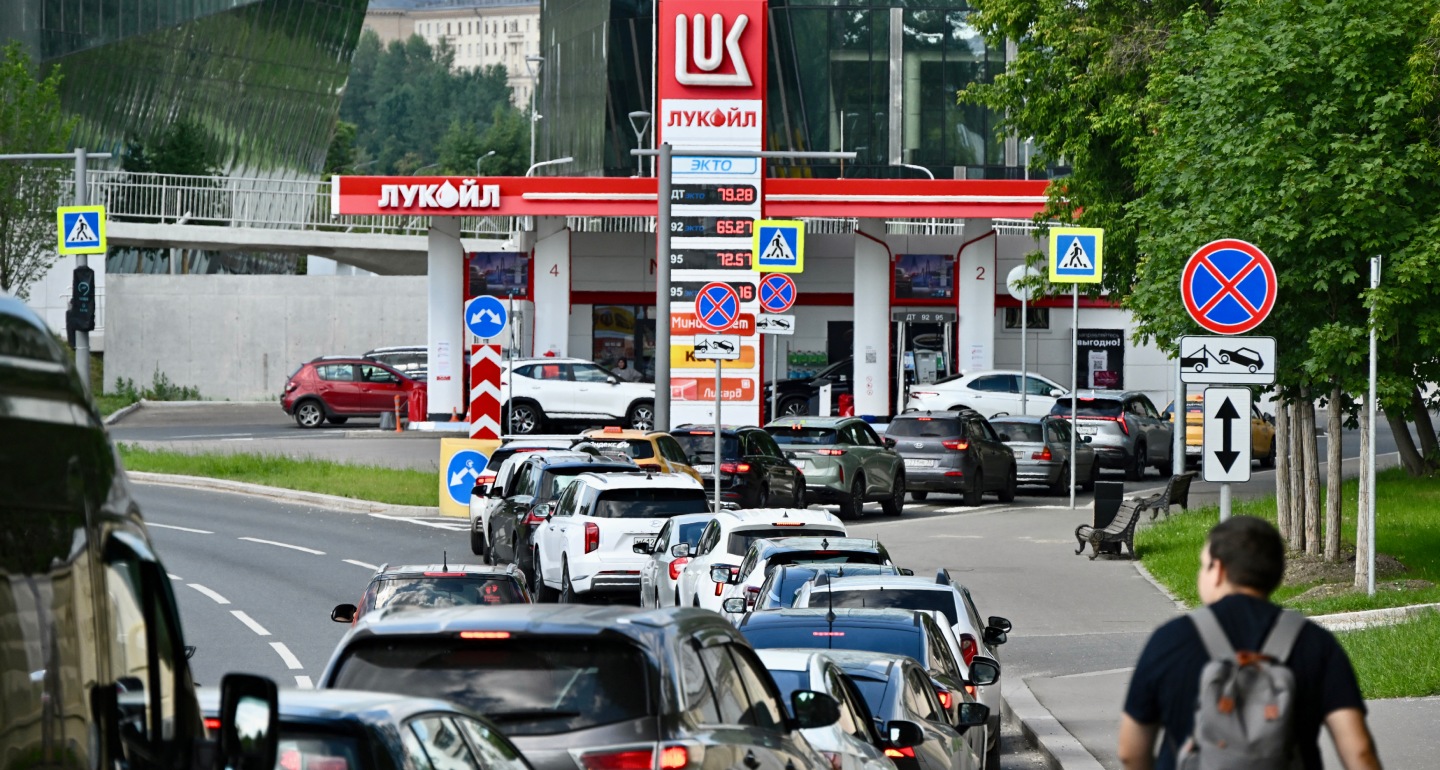
Official discussions about mini oil refineries are unlikely to come to anything—but the mere fact they’re happening reveals the regime is failing to deliver a functioning economy.

Sergey Vakulenko

Ongoing uncertainty in the Middle East allows Moscow to both increase its influence in Tehran and continue to enjoy the financial windfall of higher oil prices.

Nikita Smagin

Governments in Estonia, Latvia, and Lithuania want to ensure that a U.S. military withdrawal would not leave them dangerously exposed to a Russian attack.

Sergejs Potapkins
Tokyo would have to surmount a lot of obstacles—not least Western sanctions—if it wanted to return Russian oil imports to even modest pre-2022 volumes.

Vladislav Pashchenko