

Commentary
Alexey Malashenko
{
  "authors": [
    "Alexey Malashenko"
  ],
  "type": "commentary",
  "centerAffiliationAll": "",
  "centers": [
    "Carnegie Endowment for International Peace",
    "Carnegie Russia Eurasia Center"
  ],
  "collections": [],
  "englishNewsletterAll": "",
  "nonEnglishNewsletterAll": "",
  "primaryCenter": "Carnegie Russia Eurasia Center",
  "programAffiliation": "",
  "programs": [],
  "projects": [],
  "regions": [
    "Russia",
    "Eastern Europe",
    "Ukraine"
  ],
  "topics": [
    "Political Reform",
    "Foreign Policy",
    "Civil Society",
    "Religion"
  ]
}
Source: Getty
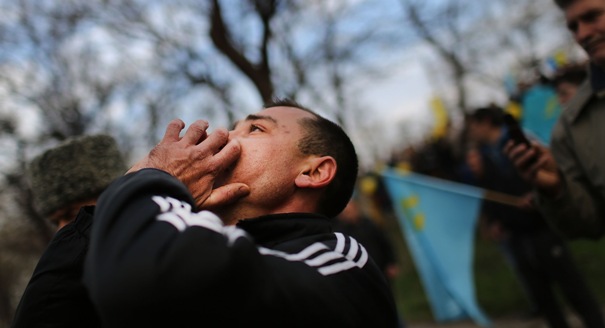
The situation around Crimea’s Tatars remains complicated despite Moscow’s evident readiness to compromise.
The euphoria over the annexation of Crimea is now increasingly accompanied by a realization that the Russian Federation has shouldered quite a burden by making the peninsula its subject. “All of this is our headache now,” Prime Minister Dmitry Medvedev has had to admit. But there are different kinds of headaches, and in the Crimean case some are of ethnic and ethno-religious in nature. The issue is the Crimean Tatars.
The Mejlis initially put forward an idea of “alternative referendum” on Crimea’s status, but so far has not followed through on it. An attempt to conduct such a referendum would inevitably escalate the political situation on the peninsula. Eventually, a compromise was reached between the Mejlis and the Crimean administration, now part of the Russian federal state structure, and Moscow. On March 29, the Mejlis Kurultai (Congress) decided against the referendum, setting a different goal—that of establishing a national autonomy.
Addressing the Kurultai, the Mejlis current head Refat Chubarov stated that a territorial autonomy is also on the agenda. Chubarov stressed that he intends to discuss the issue not only with Russia but also with Ukraine, as well as with the Council of Europe, the OSCE and the UN. It is unclear how he intends to go about it, though. Moscow will clearly not allow such multilateral consultations to take place, since they now concern Russia’s internal affairs. The Tatar dispersion around the Crimean peninsula makes the formation of a new ethnically-based territorial entity extremely difficult, if not impossible. Besides, its establishment will unsettle Crimea’s ethnic Russian majority.
On the other hand, escalating tensions is the last thing the Kremlin needs at this point. Thus, the Russian leadership is willing to “butter up” the Mejlis and the entire Crimean Tatar community. The Tatars were offered two ministerial positions in Crimea’s regional government, including one of a first deputy prime minister. The Crimean Tatar language is set to become one of the republic’s three official languages, alongside Russian and Ukrainian. On the eve of the referendum, the Tatars were also promised that a new mosque would be built in Crimea.
As a further sign of Moscow’s openness to dialogue, the Crimean Kurultai was attended by Ravil Gaynutdin, who heads the Russian Council of Muftis. For his part, Tatarstan’s President Rustam Minnikhanov has agreed to mediate the Mejlis dialogue with Moscow. However, one should not overstate their role in this matter. The Crimean and Volga Tatars are different peoples, whose historical narratives and views of Russia differ. Besides, the Crimean Tatars fear that Moscow might use the Volga Tatars as an instrument of political pressure.
Whatever the case may be, the situation around Crimea’s Tatars remains complicated despite Moscow’s evident readiness to compromise. It is still hard to say whether all these overtures will satisfy the Tatars, particularly the nationalist and more importantly radical Islamist elements in their midst. Hizb ut-Tahrir, an organization outlawed in Russia, claims a few hundred adherents in Crimea. Further radicalization of Crimean Muslims may have unpredictable consequences, especially in light of the fact that a number of local Muslims sympathized with the Chechen separatists during the first war in Chechnya. Dozens of Chechen militants healed their wounds in Crimea, hosted by the local Tatars.
The Russian annexation of Crimea can revive the problem of interethnic and interreligious relations and foster the growth of radical Islam. In any event, not all Crimean Tatars will share the sentiments with the rest of Russians when they celebrate Victory Day in the Great Patriotic War.
Former Scholar in Residence, Religion, Society, and Security Program
Malashenko is a former chair of the Carnegie Moscow Center’s Religion, Society, and Security Program.
Recent Work
Alexey Malashenko
Alexey Malashenko
Carnegie does not take institutional positions on public policy issues; the views represented herein are those of the author(s) and do not necessarily reflect the views of Carnegie, its staff, or its trustees.

Blurring the line between humans and animals is a long-standing tradition in social utopian prose. In his latest novel, Leonid Bershidsky reminds us that in social experiments, people are often treated no differently than animals.

Alexander Baunov

In the tenth year of his presidency, President Mirziyoyev’s system is becoming even more personalized than that of his predecessor Karimov.

Galiya Ibragimova
While France and Australia are seeking to establish the legal obligations of messaging apps like Telegram, Russia wants total subordination.

Maria Kolomychenko
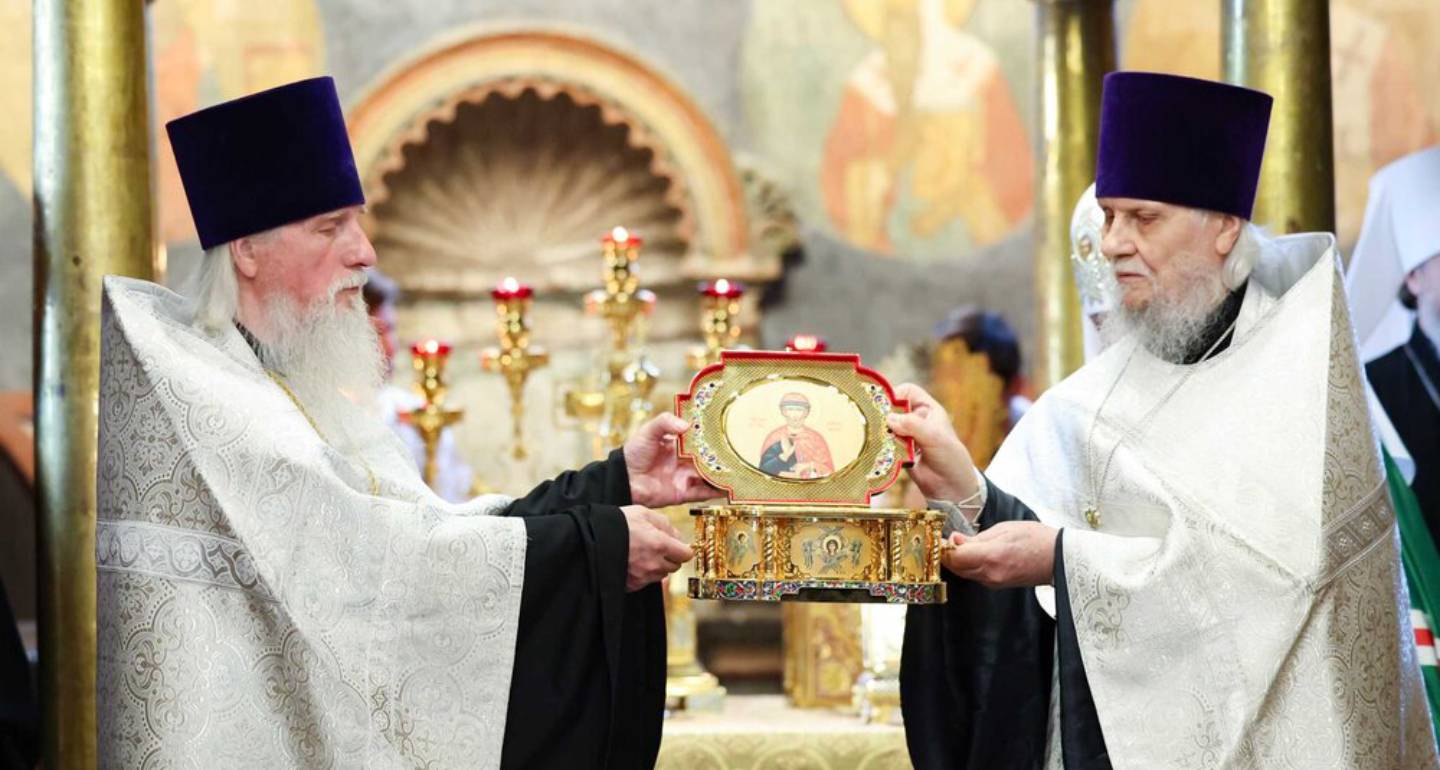
The recent uncovering of Dmitry Donskoy’s relics in the Cathedral of the Archangel is yet another attempt by the Russian Orthodox Church to help the state solve its problems. However, parroting the state’s version of Russian history leaves the Church with no message except “patriotism.”
Alexander Zanemonets

With the growth in points of friction between the great powers, organizations like the SCO will continue to play a role in the strategic adaptation of the smaller powers caught between them.

Temur Umarov