

Commentary
Dmitri Trenin
{
  "authors": [
    "Dmitri Trenin"
  ],
  "type": "commentary",
  "centerAffiliationAll": "",
  "centers": [
    "Carnegie Endowment for International Peace",
    "Carnegie Russia Eurasia Center"
  ],
  "collections": [],
  "englishNewsletterAll": "",
  "nonEnglishNewsletterAll": "",
  "primaryCenter": "Carnegie Russia Eurasia Center",
  "programAffiliation": "",
  "programs": [],
  "projects": [],
  "regions": [
    "Russia",
    "Eastern Europe",
    "Ukraine"
  ],
  "topics": [
    "Political Reform",
    "Security",
    "Foreign Policy"
  ]
}
Source: Getty
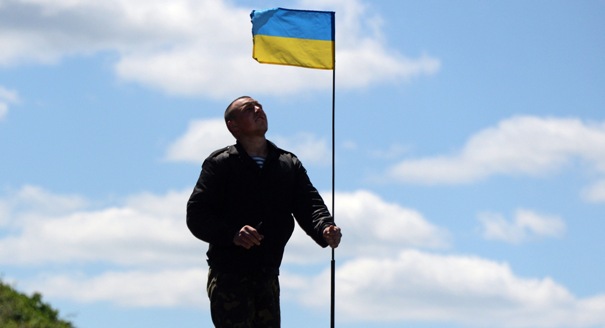
Russia certainly pursues its interests in Ukraine, as does the United States, but the actual forces engaged there are the locals. The victorious Maidan has proven both unwilling and powerless to bridge or stitch together the fault lines which have emerged.
Ten days ago, it was the murderous fire in Odessa. Last Friday, the shooting in Mariupol. Both the actions and the inactions of the interim authorities in Kiev helped to split Ukraine, in the name of saving it. The notion that the prime source of Ukraine’s current troubles lies in the Kremlin and that the Ukrainian military and security forces are facing terrorists in the east is self-delusion. Developments in Ukraine follow their own dynamic, and its pace is quickening. The presidential elections set for May 25 will not bring a magic solution. A point may soon be reached when an internally federalized and internationally neutralized Ukraine—Moscow’s mantra—will not be possible.
One can dismiss the regional referenda as illegal, although it is a weak argument in Ukraine’s post-revolutionary context. One can dismiss the real internal divisions in Ukraine only at one’s own peril. Russia certainly pursues its interests in Ukraine, as does the United States, but the actual forces engaged there are the locals. The victorious Maidan has nudged Ukraine off its post-Soviet immobility, but it has proven both unwilling and powerless to bridge or stitch together the fault lines which have emerged. Ukraine will not die, but it can multiply.
Former Director, Carnegie Moscow Center
Trenin was director of the Carnegie Moscow Center from 2008 to early 2022.
Recent Work
Dmitri Trenin
Dmitri Trenin
Carnegie does not take institutional positions on public policy issues; the views represented herein are those of the author(s) and do not necessarily reflect the views of Carnegie, its staff, or its trustees.
In the discussions made possible by the State Duma election campaign, one question is being asked more and more loudly. “What next?”

Andrey Pertsev

While the Nazis rushed ahead in a revolutionary fervor, Russia’s modern crusaders against enemies of the state work methodically, giving their targets time to adjust to restrictions before closing the loopholes.

Leonid Bershidsky

When faced with fuel shortages in the past, Central Asian governments could always count on additional supplies from Moscow. That safety net no longer exists.

Galiya Ibragimova

Reading the purported correspondence of celebrity Ksenia Sobchak sheds light on her role within the system, and how journalism and politics function in Putin’s Russia.
Vladislav Gorin

When political power is concentrated in the hands of a small circle of people, a country invariably ends up with technological stagnation.
Aleksei Kiselev