

Commentary
A leak of Russian gas price data helps establish that China is paying Russia far less than Central Asian countries and Gazprom’s former European customers.
Sergey Vakulenko
{
  "authors": [
    "David Kelm"
  ],
  "type": "commentary",
  "centerAffiliationAll": "",
  "centers": [
    "Carnegie Endowment for International Peace",
    "Carnegie Russia Eurasia Center"
  ],
  "collections": [],
  "englishNewsletterAll": "",
  "nonEnglishNewsletterAll": "",
  "primaryCenter": "Carnegie Endowment for International Peace",
  "programAffiliation": "",
  "programs": [],
  "projects": [
    "Eurasia in Transition"
  ],
  "regions": [
    "North America",
    "United States",
    "Middle East",
    "Iraq",
    "South Asia",
    "Afghanistan",
    "Russia"
  ],
  "topics": [
    "Security",
    "Military"
  ]
}
Source: Getty
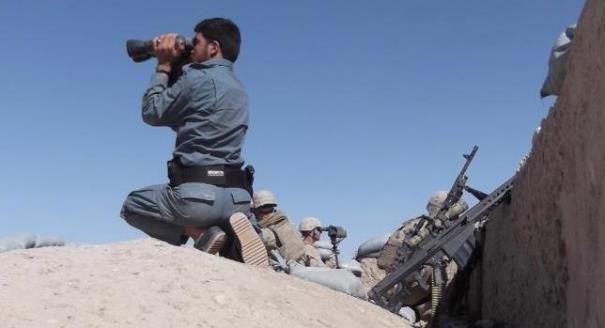
Some say the chaos in western Iraq is foreshadowing of what awaits post-2014 Afghanistan. But Kabul knows its vulnerabilities and will not shun outside help.
When militants from the Islamic State of Iraq and the Levant, or ISIS, overwhelmed Iraqi security forces and captured Mosul on June 10, the news shocked the world. Those who know something about the country’s ethnic and tribal alliances, however, probably saw the dominoes begin to fall six months ago along with the city of Fallujah.
Foreign troops left Iraq in December 2011, but not exactly because they wanted to. Months prior to the withdrawal, coalition leaders urged Iraqi Prime Minister Nouri al-Maliki to extend the agreement that provided immunity from Iraqi prosecution to foreign troops in the country; it was an inflexible prerequisite for continuing the international presence. Immunity was not extended, and the foreign troops left.
Now the Iraqis want military assistance back, namely air support, but this does not magically fall from the sky. Targets are developed from timely and reliable intelligence, and strikes are usually guided by troops on the ground; personnel left behind in 2011 could have possibly provided this. But foreign help will likely come back. While the United States and others contemplate the terms of their assistance, Russia has already delivered half a squadron’s worth of Su-25 attack aircraft.
Some predict that Afghanistan, too, will swiftly suffer Iraq’s fate following the December 2014 scale-down of the NATO-led mission. It is a reasonable enough prediction, but there are a few reasons why Afghanistan will at least avoid the Iraqi mistake of spurning foreign assistance too early.
First, there will be no outright winner in Afghanistan. When coalition troops left Iraq in 2011, violence was a fraction of its 2006-07 peak; Sunni insurgent movements like Al Qaeda and ISIS had already lost their steam by 2008. The Taliban, conversely, control swaths of territory in Afghanistan’s south and east. While Iraqi security forces were able to effectively combat elements that did not reconcile with the government, Afghan forces cannot, not country-wide. Kabul will be eager to continue receiving foreign security assistance.
Second, Afghanistan will never achieve economic dependence while spending so heavily on its security. Iraq’s oil reserves have driven the recovery of its post-occupation economy, now the world’s 45th largest, but Afghanistan’s economy is one-tenth the size of Iraq’s. The shadow economy is an aspect of everyday life in Afghanistan, and its notrious drug trade is the most lucrative component. While Iraq can sustain itself economically, years and likely decades of foreign-led assistance and reforms will be needed to push the Afghan economy towards viability.
Third, the Afghans seem to actually want outside assistance. A November 2013 loya jirga, or meeting of tribal elders from across Afghanistan, agreed to the same immunity agreement for foreign troops that Iraq rejected. Despite outgoing President Hamid Karzai’s failure to support the loya jirga’s endorsement with binding legislation, foreign troops seem likely to stay. Barack Obama announced in May that 10,000 U.S. troops will stay in Afghanistan after 2014, possibly indicating he received assurances from the two candidates currently vying for the Afghan presidency.
The international community is committed to staying, for now. NATO’s foreign ministers met last week to reportedly put the finishing touches on Resolute Support, the alliance’s post-2014 mission in Afghanistan. The separate, U.S.-led counterterrorism mission in the country, Operation Enduring Freedom, will also keep robust intelligence and special operations capabilities in the country. Even President Vladimir Putin wants NATO to finish the job in Afghanistan, and Russia was selling aircraft and supplies to the Afghan Air Force before the Syria and Ukraine crises.
The adroit manipulation of ethnic and tribal networks that led to Fallujah’s rapid fall could easily be duplicated in Kandahar, the birthplace of the Taliban and a hub of its Pashtun support base. But think twice before predicting that Afghanistan will inevitably go the way of Iraq. If Afghan and world leaders avoid the Iraqi misstep of ending cooperation too soon, Kandahar does not have to be Afghanistan’s Fallujah.
David Kelm is a former U.S. military officer and an intern at the Carnegie Moscow Center.
David Kelm
Carnegie does not take institutional positions on public policy issues; the views represented herein are those of the author(s) and do not necessarily reflect the views of Carnegie, its staff, or its trustees.
A leak of Russian gas price data helps establish that China is paying Russia far less than Central Asian countries and Gazprom’s former European customers.

Sergey Vakulenko

Japan’s long-term security policy is driven by concerns about China, and there is little appetite for (or interest in) pursuing a confrontation with Moscow.

James D.J. Brown

The truth of the strategic situation is that Europe and Russia are extremely unlikely to be able to “turn the page” on their confrontation within the next two decades.

Arkady Moshes
Russia spent years building a “sovereign internet,” concentrating web infrastructure exclusively within Russian territory. Ukrainian drone attacks have shown how vulnerable that approach has left the Russian internet.

Maria Kolomychenko

Putin’s conservative staffing policies and search for ever greater control have cemented parliament’s transformation into a bureaucratic appendage of the executive branch.

Andrey Pertsev