

Commentary
Dmitri Trenin
{
  "authors": [
    "Dmitri Trenin"
  ],
  "type": "commentary",
  "centerAffiliationAll": "",
  "centers": [
    "Carnegie Endowment for International Peace",
    "Carnegie Russia Eurasia Center"
  ],
  "collections": [],
  "englishNewsletterAll": "",
  "nonEnglishNewsletterAll": "",
  "primaryCenter": "Carnegie Russia Eurasia Center",
  "programAffiliation": "",
  "programs": [],
  "projects": [],
  "regions": [
    "North America",
    "United States",
    "Russia"
  ],
  "topics": [
    "Foreign Policy"
  ]
}
Source: Getty
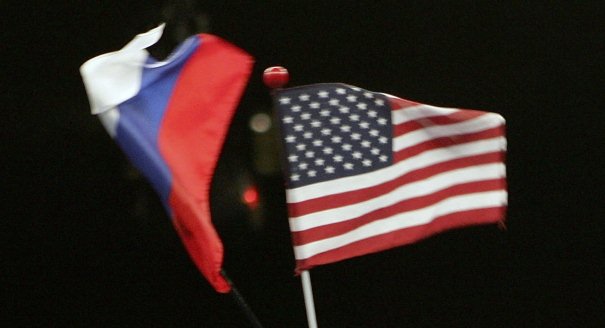
This week the U.S. government has presented to Moscow the candidacy of its future envoy for customary prior approval by the host country. Then, at some point, the Russian government not objecting and the U.S. Senate willing, a small but important element of U.S.-Russian diplomatic normalcy will be restored.
The absence of a U.S. ambassador in Moscow ever since the beginning of the Ukraine crisis has been striking. This never happened during the Cold War, when ambassadors were the prime conduits of dialogue between the superpowers. Not so these days. Sergey Lavrov and John Kerry have met many times during the past four months, and have spoken even more often. Occasionally, the two presidents also engage in telephone diplomacy. What the absence of a resident ambassador means today is that the government responsible for such a vacancy deprives itself of day-to-day contact with senior figures in the other country, and this limits its understanding of the host nation's policies.
Initially, the lack of replacement for Michael McFaul, who left Moscow on February 21, 2014, could have been seen as a sign of Washington's disapproval of Russia's actions in Crimea and with regard to Ukraine, an unspoken addition to the sanctions package. Yet, the longer the Spaso House, the U.S. ambassador's residence in Moscow's historical Arbat district, stays unoccupied, the more punishing the situation becomes for the United States: the Russian ambassador in Washington, Sergey Kislyak, has, of course, continued working in Washington. Now, the U.S. government has taken the usual step of presenting to Moscow the candidacy of its future envoy for customary prior approval by the host country.
Yet, this does not mean that Moscow will necessarily turn Tefft down. He would be coming to Moscow under starkly different circumstances than McFaul in January 2012. President Putin's popularity has never been stronger. Anti-government protests in Moscow have long died down. The Russian public attitude toward the United States has hardened. Also, John Tefft is a traditional career diplomat. He would do what diplomats are supposed to be doing under difficult circumstances: reaching out to key figures, listening to what they have to say, and seeking to explain his own government's intentions. He will be an interlocutor par excellence, not a negotiator.
On the Fourth of July, there will still be no U.S. ambassador to greet guests at Spaso. Then, at some point, the Russian government not objecting and the U.S. Senate willing, a small but important element of U.S.-Russian diplomatic normalcy will be restored.
Former Director, Carnegie Moscow Center
Trenin was director of the Carnegie Moscow Center from 2008 to early 2022.
Recent Work
Dmitri Trenin
Dmitri Trenin
Carnegie does not take institutional positions on public policy issues; the views represented herein are those of the author(s) and do not necessarily reflect the views of Carnegie, its staff, or its trustees.

Depleted financial reserves and a shrinking tax base mean it is no longer possible to simultaneously deliver high defense spending, price stability, and economic growth.

Alexandra Prokopenko
Blurring the line between humans and animals is a long-standing tradition in social utopian prose. In his latest novel, Leonid Bershidsky reminds us that in social experiments, people are often treated no differently than animals.

Alexander Baunov
While France and Australia are seeking to establish the legal obligations of messaging apps like Telegram, Russia wants total subordination.

Maria Kolomychenko
The recent uncovering of Dmitry Donskoy’s relics in the Cathedral of the Archangel is yet another attempt by the Russian Orthodox Church to help the state solve its problems. However, parroting the state’s version of Russian history leaves the Church with no message except “patriotism.”
Alexander Zanemonets

With the growth in points of friction between the great powers, organizations like the SCO will continue to play a role in the strategic adaptation of the smaller powers caught between them.

Temur Umarov