

Q&A
Dara Massicot, Aaron David Miller, Andrew S. Weiss
{
  "authors": [
    "Andrew S. Weiss"
  ],
  "type": "commentary",
  "centerAffiliationAll": "",
  "centers": [
    "Carnegie Endowment for International Peace",
    "Carnegie Russia Eurasia Center"
  ],
  "collections": [],
  "englishNewsletterAll": "",
  "nonEnglishNewsletterAll": "",
  "primaryCenter": "Carnegie Endowment for International Peace",
  "programAffiliation": "",
  "programs": [],
  "projects": [],
  "regions": [
    "Eastern Europe",
    "Ukraine"
  ],
  "topics": [
    "Political Reform"
  ]
}
Source: Getty
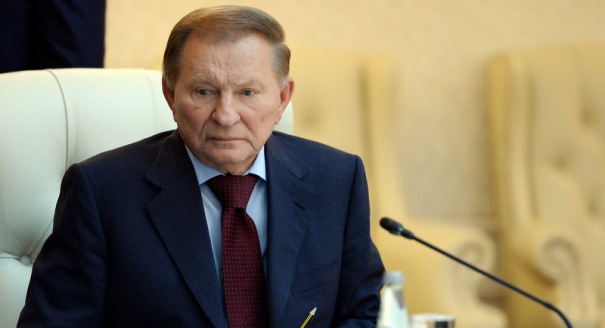
Leonid Kuchma deserves credit for stepping forward at a moment of national peril. A realist and truth-teller of Kuchma’s calibre is a strikingly rare commodity in Kyiv and the West these days.
Not surprisingly, recent Ukrainian-Russian negotiations under OSCE auspices in Minsk have touched off a political firestorm in Kyiv. Petro Poroshenko will presumably spend much of his time on the campaign trail on the defensive, explaining why the September 5 cease-fire agreement and other steps that conceivably could lead to a frozen conflict in parts of Donetsk and Luhansk were the best deal that Kyiv could get after a series of dramatic setbacks on the battlefield. And like any properly messy Ukrainian compromise, this one involved a little funny business—specifically, a scandalous secret vote in the Rada last week on the granting of special status to Donetsk and Luhansk that relied on well-established techniques of backroom politicking and anti-democratic manipulations of parliamentary procedures.
Poroshenko’s lead negotiator at the talks, former President Leonid Kuchma, must feel right at home. Kuchma has engineered a remarkable comeback during the crisis. He has reinvented himself as a statesman capable of standing above day-to-day politics and cutting unpalatable deals with the Kremlin on Poroshenko’s behalf. The two agreements signed by Kuchma in Minsk undoubtedly will provide plenty of ammunition to Poroshenko’s (and Kuchma’s) critics.
Still, Kuchma deserves credit for stepping forward at a moment of national peril. His public statements about the crisis have been generally constructive and thoughtful. At the Yalta European Strategy annual meeting in mid-September, Kuchma called for a UN force to monitor the Ukrainian-Russian border, which makes eminent sense given the lack of OSCE capabilities. It must be exceedingly frustrating for Kuchma and other Ukrainian officials to see key Western governments pushing the beleaguered and ineffectual OSCE as the main mechanism for implementing the cease-fire. As we know from the Balkans and other conflict zones, peacekeeping on the cheap is usually a formula for resumed bloodshed and avoidable civilian suffering.
As his scandal-laden reputation attests, Kuchma may be many things, but he is no fool. In a candid interview with RFE/RL in mid-April, Kuchma wisely warned not to expect the West to make big sacrifices on Ukraine’s behalf in the face of Russian aggression. According to Kuchma, “there are dozens of examples in the world in which, at the beginning, everyone makes noise about but then Americans don't want to get involved and most importantly they don't want to waste their money.”
Kuchma surely knows what he’s talking about. After all, he was the Ukrainian signatory of the 1994 Budapest memorandum and witnessed the limitations of the security assurances first-hand. In his memoirs, After the Maidan: the President’s Writings, Kuchma described how Western powers overruled his request to invoke the agreement’s consultative mechanism after Ukraine’s security was threatened during a 2003 Russian-Ukrainian territorial dispute over Tuzla Island.
A realist and truth-teller of Kuchma’s calibre is a strikingly rare commodity in Kyiv and the West these days.
James Family Chair, Vice President for Studies
Andrew S. Weiss is the James Family Chair and vice president for studies at the Carnegie Endowment for International Peace, where he oversees research on Russia, Ukraine, and Eurasia. His graphic novel biography of Vladimir Putin, Accidental Czar: the Life and Lies of Vladimir Putin, was published by First Second/Macmillan in 2022.
Recent Work

Dara Massicot, Aaron David Miller, Andrew S. Weiss

Frances Z. Brown, Nate Reynolds, Priyal Singh, …
Carnegie does not take institutional positions on public policy issues; the views represented herein are those of the author(s) and do not necessarily reflect the views of Carnegie, its staff, or its trustees.

The European far right might fail to steer EU policy in the direction Russia wants, but they will create enough chaos inside Europe to benefit the Kremlin.

Dimitar Bechev

If the Russian-speaking community in Latvia cannot articulate their interests without being seen as disloyal, they could end up embracing a pro-Kremlin agenda.

Sergejs Potapkins

Russia’s ruling party would have benefited from Putin appearing as its distant patron, but as an active frontman imposing his views on the public, he has done nothing but harm both the party’s election campaign and the ruling system overall.

Andrey Pertsev

In the tenth year of his presidency, President Mirziyoyev’s system is becoming even more personalized than that of his predecessor Karimov.

Galiya Ibragimova

The greater threat to Zelensky comes not from Fedorov alone, but from the convergence between the former defense minister’s political campaign and the anti-corruption investigations moving ever closer to the presidential administration.

Balázs Jarábik