

Commentary
A leak of Russian gas price data helps establish that China is paying Russia far less than Central Asian countries and Gazprom’s former European customers.
Sergey Vakulenko
{
  "authors": [
    "Eugene Satanovsky"
  ],
  "type": "commentary",
  "centerAffiliationAll": "",
  "centers": [
    "Carnegie Endowment for International Peace",
    "Carnegie Russia Eurasia Center"
  ],
  "collections": [],
  "englishNewsletterAll": "",
  "nonEnglishNewsletterAll": "",
  "primaryCenter": "Carnegie Endowment for International Peace",
  "programAffiliation": "",
  "programs": [],
  "projects": [],
  "regions": [
    "North America",
    "United States",
    "Middle East",
    "Israel",
    "Russia"
  ],
  "topics": [
    "Foreign Policy"
  ]
}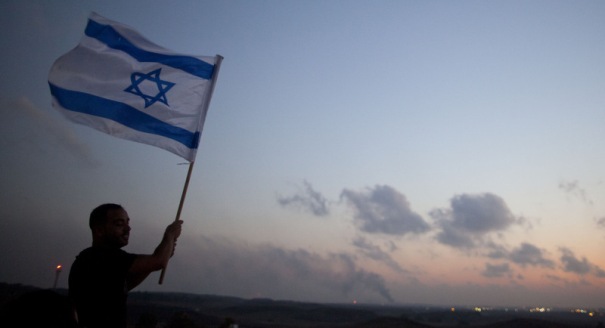
Source: Getty
Israel will maintain its relations with the United States and the European Union, but it will also continue to develop its relations with Russia.
Israel has suspended its military-technological cooperation with Ukraine, just as it did in the case of Georgia in 2008. It is not going to choose sides. Jews do not aspire to the role of the arbiter in Russia’s dispute with Ukrainians or Georgians, and the Jewish state is not going to serve as an instrument for the U.S.’s anti-Russian policies. What for?
Obama does not like Putin, which was reason enough for him to start the Cold War, but it is not the Russians that cut off the heads of Americans—it is done by Islamist militants financed by Qatar, the country that has too many ties to the American president. But Obama does not like Netanyahu, either. And he does not like Israel, in contrast to the Muslim Brotherhood and its numerous clones.
He disowned all of his predecessors’ obligations to cooperate with Israel against Iran. It was his pressure along with his refusal to supply Israel with ammunition and jet fuel that ensured Hamas’ survival. With such allies, shouldn’t Israel start seeking alternative partners?
Тhere is visa-free travel between Israel and Russia. More than a million Russian speakers from the former Soviet Union live in Israel. Thousands of Israelis work in Russia. A lot of Russians have friends and relatives in Israel. Half of the Israeli government and a large number of Knesset members speak Russian. Russian is spoken in the Israeli high-tech sector, science and academia, and, of course, in the military.
Russia-Israel trade volume amounts to slightly over three billion dollars. However, the EU sanctions against Russia and the Russian countersanctions allow for the expansion of Russia’s trade with Israel. This year Israel’s fruit and vegetable imports into Russia will increase three times; besides, unlike the EU, Russia does not restrict Israeli agricultural exports from Judea, Samaria, and the Golan Heights.
There are tremendous opportunities for technological cooperation between Israel and Russia, including cooperation in the military sphere. So far, potential projects have been consistently foiled by the United States, but Obama’s policies undermined many of his predecessors’ achievements in regards to controlling the Israeli military industrial complex.
Politicians’ personal relations play a much greater role for their countries than is generally believed. In this respect, Israeli leaders have much better working relations with the Russian president than with the American administration. Netanyahu’s visits to Russia take place in a much warmer atmosphere than his visits to the United States. Perhaps, it proceeds from the fact that Russia fights the same enemy as Israel—and does so on its own turf.
Theoretically, the United States is also fighting a war against radical Islam. But Israelis believe that the current administration has in fact lost the war, deserted from the battlefield, and is trying to strike a deal with the enemy at Israel’s expense. Obama’s loud pronouncements on the war against ISIS merely underscore this fact.
As a consequence, Israel will maintain its relations with the United States and the European Union, but it will also continue to develop its relations with Russia regardless of which post-Soviet country will become the next testing ground for another State Department democratization strategy. Moscow understands it on every level, especially in light of Israel’s choice not to participate in the UN vote on the American version of the resolution on Ukraine, which clearly demonstrates its neutrality.
Eugene Satanovsky is the president of Institute for Middle Eastern Studies in Moscow.
Eugene Satanovsky
Carnegie does not take institutional positions on public policy issues; the views represented herein are those of the author(s) and do not necessarily reflect the views of Carnegie, its staff, or its trustees.

A leak of Russian gas price data helps establish that China is paying Russia far less than Central Asian countries and Gazprom’s former European customers.

Sergey Vakulenko

Japan’s long-term security policy is driven by concerns about China, and there is little appetite for (or interest in) pursuing a confrontation with Moscow.

James D.J. Brown

The truth of the strategic situation is that Europe and Russia are extremely unlikely to be able to “turn the page” on their confrontation within the next two decades.

Arkady Moshes
Russia spent years building a “sovereign internet,” concentrating web infrastructure exclusively within Russian territory. Ukrainian drone attacks have shown how vulnerable that approach has left the Russian internet.

Maria Kolomychenko

Putin’s conservative staffing policies and search for ever greater control have cemented parliament’s transformation into a bureaucratic appendage of the executive branch.

Andrey Pertsev