

Article
C. Raja Mohan, Darshana M. Baruah
{
  "authors": [
    "C. Raja Mohan"
  ],
  "type": "legacyinthemedia",
  "centerAffiliationAll": "dc",
  "centers": [
    "Carnegie Endowment for International Peace",
    "Carnegie India"
  ],
  "collections": [],
  "englishNewsletterAll": "ctw",
  "nonEnglishNewsletterAll": "",
  "primaryCenter": "Carnegie India",
  "programAffiliation": "SAP",
  "programs": [
    "South Asia"
  ],
  "projects": [],
  "regions": [
    "South Asia",
    "India"
  ],
  "topics": [
    "Security",
    "Foreign Policy"
  ]
}
Source: Getty
Although both the United States and India see terrorism as a great threat to their societies, they have different priorities in the war against it.
Source: Indian Express
Will he or won’t he? As Prime Minister Narendra Modi wraps up his visit to the United States in Washington, there has been much speculation on whether New Delhi might join President Barack Obama’s renewed war on terror in the Middle East, this time focused on the Islamic State (IS).
All those looking for the “Obama-twists-Modi’s-arms” narrative — a long tradition in Indian media coverage of relations with America — have focused on what the prime minister might say on the latest turn of events in the Middle East and India’s approach to the international coalition that Obama is trying to put together against the IS.
Modi did not give away much. In his address to the United Nations General Assembly and the talk at the Council on Foreign Relations in New York, Modi condemned terrorism as a great challenge for humanity as a whole and insisted that it can be defeated only through collective action. In a vision statement issued after their dinner meeting at the White House on Monday, Modi and Obama declared “together, we will combat terrorist threats and keep our homelands and citizens safe from attacks”. Delightfully vague again; for clarity, sometimes, is the enemy of sensible diplomacy.Contrary to the “pressure theory”, there was no expectation in official Washington that India will become a major element of the international coalition against the IS. Even limited support from India, diplomatic and rhetorical, would be welcome in Washington. Realists in both countries know that the success or failure of the campaign against the IS will depend on the political dynamic in the Middle East and on the shifting equations between Washington and different regional players in the region, especially Iran, Saudi Arabia, Egypt and Turkey.
In his public remarks, Modi touched on India’s traditional concerns about international double standards on terrorism. He pointed to the fact that only when a country is directly affected by terrorism is it prepared to appreciate the kind of challenge that violent extremism poses.
Modi’s reference to shifting American attitudes towards terrorism is equally applicable to India. Delhi used to dismiss Western concerns on terrorism in the Middle East during the 1970s. India’s line then was pretty simple: solve the dispute between Israel and Arabs and terrorism would simply disappear. Much like those in Pakistan who say terrorism will cease if India allows “self-determination” in Jammu and Kashmir. It was only when India’s own house was on fire, starting from the 1980s, that Delhi started getting more serious about international terrorism. But even today, India is not as vocal about terrorism in the Middle East and the support for it from some of Delhi’s friends in the region. Official India tends to talk largely about Pakistan and its support of cross-border terrorism.
There are some in Delhi’s foreign policy establishment who say that the policies of the US and its allies have led to the rise of the IS; therefore, India should have nothing to do with the war against the IS. This is a mirror image of the argument in Washington that says that Delhi’s policies have boosted terrorism in the subcontinent and asks why America should bother to cooperate with India. Modi and Obama, fortunately, are not so myopic.
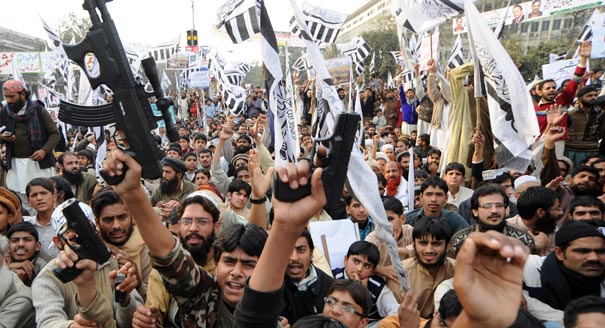
The real issue is not about double standards on terrorism. Nor is hypocrisy a monopoly of either America or India. The problem is different. Although both America and India see terrorism as a great threat to their societies, they have different priorities in the war against it.
Since the 1990s, Washington’s main target has been al-Qaeda and now the IS. For Delhi, the Lashkar-e-Toiba and other anti-India terror groups based in Pakistan are of prime concern. Yet India and the US are beginning to discover that these terror groups do not operate in isolation from each other and have deep interconnections. The US is no longer immune from threats from South Asian groups like the LeT. Nor can India turn a blind eye to the rise of the IS and its impact on Delhi’s growing interests in the Middle East. Delhi is also concerned about how the IS might influence extremist groups in India.
There is huge scope, then, for a significant expansion of India-US bilateral cooperation on terrorism, despite their different priorities. Since the 26/11 attacks on Mumbai, there has been a steady growth in the engagement between the intelligence and security establishments of the two countries. All indications are that Modi and Obama will elevate this to a more productive level.
This article was originally published in the Indian Express.
Former Nonresident Senior Fellow, Carnegie India
A leading analyst of India’s foreign policy, Mohan is also an expert on South Asian security, great-power relations in Asia, and arms control.
Recent Work

C. Raja Mohan, Darshana M. Baruah


Alexander Gabuev, Paul Haenle, C. Raja Mohan, …
Carnegie does not take institutional positions on public policy issues; the views represented herein are those of the author(s) and do not necessarily reflect the views of Carnegie, its staff, or its trustees.

Cargo traffic through Russia’s Northern Sea Route has increased because of the disruption caused by the conflict in the Middle East, the Ukraine war, and U.S.-China tensions.

Mikhail Korostikov

The European far right might fail to steer EU policy in the direction Russia wants, but they will create enough chaos inside Europe to benefit the Kremlin.

Dimitar Bechev

Minsk clearly expected the dialogue with Washington to yield more results, in particular the lifting of EU sanctions and permission to export potash.

Artyom Shraibman

With the growth in points of friction between the great powers, organizations like the SCO will continue to play a role in the strategic adaptation of the smaller powers caught between them.

Temur Umarov

When faced with fuel shortages in the past, Central Asian governments could always count on additional supplies from Moscow. That safety net no longer exists.

Galiya Ibragimova