

Article
C. Raja Mohan, Darshana M. Baruah
{
  "authors": [
    "C. Raja Mohan"
  ],
  "type": "legacyinthemedia",
  "centerAffiliationAll": "dc",
  "centers": [
    "Carnegie Endowment for International Peace",
    "Carnegie China",
    "Carnegie India"
  ],
  "collections": [
    "China’s Foreign Relations"
  ],
  "englishNewsletterAll": "ctw",
  "nonEnglishNewsletterAll": "",
  "primaryCenter": "Carnegie India",
  "programAffiliation": "SAP",
  "programs": [
    "South Asia"
  ],
  "projects": [],
  "regions": [
    "Asia",
    "South Asia",
    "Afghanistan",
    "East Asia",
    "China"
  ],
  "topics": [
    "Security",
    "Arms Control",
    "Foreign Policy"
  ]
}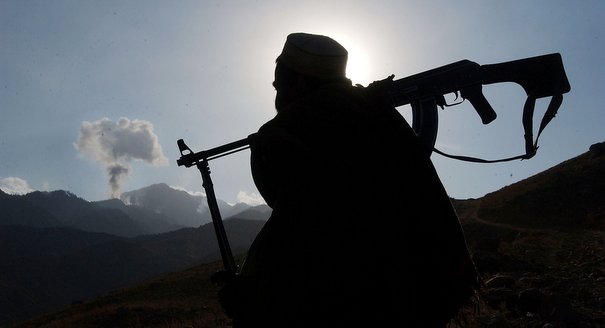
Source: Getty
As the American occupation of Afghanistan comes to an end, China is getting ready to play a significant role in a country that has seen many great powers bite the dust.
Source: Indian Express
As the American occupation of Afghanistan comes to an end, China is getting ready to play a significant role in a country that has seen many great powers bite the dust. In a meeting with the Afghan leader Abdullah Abdullah in Astana, Kazakhstan, this week, Chinese Premier Li Keqiang said Beijing is ready to play a “constructive role” in promoting national reconciliation and economic development in Afghanistan.
Although China’s articulation of its Afghan policy is understated, India must come to terms with one important transformation unfolding in the northwestern subcontinent. Afghanistan, which has long been a contested zone among Euro-Atlantic powers, may now see an Asian power take the lead role in the Great Game. New Delhi must also recognise that there is widespread international and regional support for Beijing’s strategic entry into Afghanistan. Kabul has been urging China to take greater interest in Afghanistan for many years now. Former President Hamid Karzai travelled frequently to Beijing to press the Chinese leadership to launch big development projects and persuade its close ally Pakistan to stop destabilising Kabul. His successor, Ashraf Ghani, who has chosen Beijing as his first foreign destination after he took charge of Afghanistan, is betting on China to secure the nation’s future.
Exhausted by its longest war ever, America has ended its combat role in Afghanistan this month. Almost all of its remaining 10,000-odd troops in the country will go home by the end of 2016. The US and its Nato allies are now more than happy to see someone else pick up the pieces in Afghanistan. Russia, which is one of Beijing’s major political partners, supports a stronger role for China in Afghanistan.China has good relations with most of Afghanistan’s neighbours, including Iran and the three Central Asian Republics — Tajikistan, Uzbekistan and Turkmenistan. But it is Beijing’s emerging partnership with the Pakistan army in Afghanistan that is the most interesting new element in the region.
Post-Partition geography has made Pakistan the most important regional actor in Afghanistan.
Despite its best efforts, the Pakistan army could not gain a decisive say in Afghan affairs. Given its limited national resources, Rawalpindi’s reach always exceeded its grasp in Afghanistan. But in alignment with a great power, Pakistan has had great impact in Afghanistan.
After the Soviet occupation of Afghanistan at the end of 1979, the Pakistan army joined America in setting up the jihad against “godless” communists and ousting Russian troops by the end of the 1980s. But Pakistan found it hard to control the developments in Afghanistan after the US turned its back on the latter in the 1990s. America drafted Pakistan into the great war on terror after the 9/11 attacks on Washington and New York in 2011. This time, the US “alliance” with Pakistan was a forced one. It was based on America’s threat to bomb Pakistan to the stone-age rather than a convergence of interests.
Pakistan waited patiently to undermine American strategy in Afghanistan. As it sees off the Americans, Pakistan is drawing China in to achieve its long-term strategic goal of establishing a friendly regime in Afghanistan and a special say in Kabul’s internal affairs. For its part, Beijing hopes that collaboration with the Pakistan army in Afghanistan will help weaken the negative forces of violent extremism, religious fundamentalism and separatism that threaten China’s internal security, especially in the restive Muslim majority province of Xinjiang.
China values the geographic centrality of Afghanistan in promoting transborder economic linkages between western China, Central Asia, the Persian Gulf and the subcontinent. A stable AfPak region, Beijing believes, can help consolidate China’s “Go West” strategy and strengthen its influence in inner Asia.
In the last couple of years, China has stepped up its Afghan diplomacy. While strengthening ties with Kabul, Beijing has established direct contacts with the Taliban with the help of the Pakistan army. Beijing is now ready to “facilitate” a conversation among all the Afghan factions. Beijing has plans to extend its ambitious silk road initiative to cover Afghanistan and integrate it with the project to develop the China-Pakistan corridor. The biggest imponderable, however, remains the Taliban. It has set near-impossible conditions for the peace process — the withdrawal of all foreigners from the country, ending Kabul’s military partnerships with foreign powers and the imposition of Sharia law.
In the past, development incentives offered by outsiders did not make a difference to the Taliban’s worldview. Many in Pakistan say the Taliban has changed and is ready for pragmatic engagement with the world. For China, though, the proof of the pudding will be in the eating. Rawalpindi’s capacity to reorient the Taliban holds the key to a potentially successful Chinese role in Afghanistan.
This article was originally published in the Indian Express.
Former Nonresident Senior Fellow, Carnegie India
A leading analyst of India’s foreign policy, Mohan is also an expert on South Asian security, great-power relations in Asia, and arms control.
Recent Work

C. Raja Mohan, Darshana M. Baruah


Alexander Gabuev, Paul Haenle, C. Raja Mohan, …
Carnegie does not take institutional positions on public policy issues; the views represented herein are those of the author(s) and do not necessarily reflect the views of Carnegie, its staff, or its trustees.

Minsk clearly expected the dialogue with Washington to yield more results, in particular the lifting of EU sanctions and permission to export potash.

Artyom Shraibman

With the growth in points of friction between the great powers, organizations like the SCO will continue to play a role in the strategic adaptation of the smaller powers caught between them.

Temur Umarov

When faced with fuel shortages in the past, Central Asian governments could always count on additional supplies from Moscow. That safety net no longer exists.

Galiya Ibragimova

Two divergent trends—Putin’s hardline vision of how to prosecute the war in Ukraine, and a growing desire for change in Russia—could tear the regime apart.

Tatiana Stanovaya

Andrey Melnichenko’s essay offers no answer to the fundamental question of how, under any kind of negotiated settlement, Europe can protect itself from the Russian ressentiment that is inevitable in all scenarios except for an outright victory for Putin.

Leonid Bershidsky