

Research
- +4
Milan Vaishnav, Rahul Verma, Rukmini S., …
{
  "authors": [
    "Christophe Jaffrelot"
  ],
  "type": "legacyinthemedia",
  "centerAffiliationAll": "dc",
  "centers": [
    "Carnegie Endowment for International Peace"
  ],
  "collections": [],
  "englishNewsletterAll": "ctw",
  "nonEnglishNewsletterAll": "",
  "primaryCenter": "Carnegie Endowment for International Peace",
  "programAffiliation": "SAP",
  "programs": [
    "South Asia"
  ],
  "projects": [],
  "regions": [
    "North America",
    "United States",
    "South Asia",
    "India",
    "Pakistan"
  ],
  "topics": [
    "Economy",
    "Security",
    "Foreign Policy"
  ]
}
Source: Getty
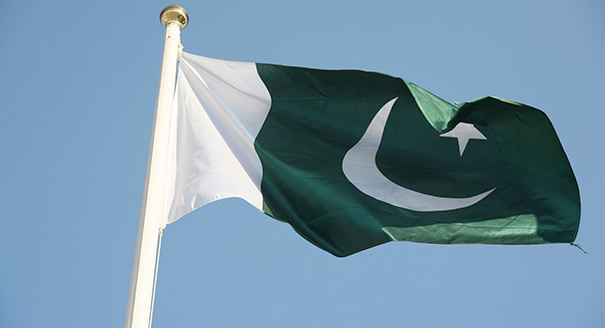
A relaunch of U.S.-India relations may affect the U.S.-Pakistan equation.
Source: Indian Express
President Barack Obama’s Republic Day visit to India will be seen as the symbol of a growing warmth in US-India relations. Pakistan army chief General Raheel Sharif’s visit to Washington last month also symbolised a rapprochement between Pakistan and the US. He spent a whole week on the official visit, received warmly by civilian leaders such as Secretary of State John Kerry, National Security Advisor Susan Rice, Deputy Secretary of Defence Bob Work and the US special representative for Pakistan and Afghanistan, Dan Feldman, as well as military leaders, including the chairman of the joint chiefs of staff, General Martin Dempsey, and the Central Command (Centcom) chief, General Lloyd Austin. During the visit, General Sharif was conferred the US Legion of Merit “in recognition of his brave leadership and efforts to ensure peace in the region”.
The contrast with the situation only two years ago, in the wake of the Osama bin Laden raid, is striking. How can we explain this?
First, the situation had started to improve in 2012-2013, after the US decided to resume the financial support that had been suspended in 2011. This was in exchange for the possibility of using Pakistan’s roads again. Such access was vital as the US pulled out of Afghanistan. Once again, Pakistan was able to extract geopolitical rent from its location on the map.Second, and more importantly, the US has been greatly appreciative of the North Waziristan operation initiated by General Sharif in June, under the name of Zarb-e-Azb, the sword used by Prophet Mohammad in the battles of Badr and Uhud. By mid-November, the army claimed “1,198 terrorists have been killed, 356 injured, 227 have been arrested”, while 42 officers and security forces personnel had been killed and 155 injured in the operation. Further, it claimed “11 private jails, 191 secret tunnels, 39 IED factories, 4,991 various types of ready-made IEDs, 132 tonnes [of] explosive material, 2,470 sub-machine guns, 293 machine guns, 111 heavy machine guns have also been recovered during the operation”.
Senior journalist Zahid Hussain, who went to Miramshah and Mir Ali in November, underlined the magnitude of the operation. According to him, it was “unique in many ways”, partly because “the role of intelligence has contributed hugely to the targeting precision of militant sanctuaries”. The army also claimed that the Haqqani network had not been spared, something Washington was bound to approve of. Indeed, Lieutenant General Joseph Anderson, an American senior commander of the Nato forces based in Afghanistan, told The Washington Post in mid-November that the North Waziristan operation had “disrupted” the network’s “efforts here and has caused them to be less effective in terms of their ability to pull off an attack here in Kabul”. And General Austin, after welcoming General Sharif in Washington, lauded the Pakistan army for its “commitment, professionalism and achievement in the fight against terror” and in Operation Zarb-e-Azb.
Third, Washington was also happy to see a degree of rapprochement between Kabul and Islamabad in the post-Karzai era. General Sharif, incidentally, played a part in this thaw. On a visit to Kabul in early November, he “offered the full range of training courses and facilities in Pakistan’s training institutions to Afghan security forces”. Pakistan had made the same offer before, but this time, Kabul did not turn it down immediately. Later that month, President Ashraf Ghani made a trip to Pakistan, the third country he visited as head of state, after China and Saudi Arabia. The visit began at the Rawalpindi GHQ, where he met General Sharif again. Washington, which feels better relations between Kabul and Islamabad are key to regional stability, saw the visit as confirmation of the new warmth. On November 21, Obama called Pakistan Prime Minister Nawaz Sharif, not only to inform the latter of his forthcoming visit to India, but also to talk about Af-Pak relations. Obama said that he “appreciated Prime Minister Sharif’s efforts in this regard and called it pivotal for the peace and stability of the region”. He also expressed willingness to take US-Pakistan relations “one step beyond” current levels.
How deep and sustainable can the US-Pakistan rapprochement be this time? This primarily depends on the Pakistan army’s determination to fight Islamist groups in toto. If it does not, the North Waziristan operation may not be such a turning point. It was possibly launched under pressure from China, which is increasingly fearful of Uighur militants, who are trained in the Federally Administered Tribal Areas. The Uighurs, as well as their Uzbek allies, might have been the operation’s main targets, while the Pakistan army may continue to protect some of its old Islamist partners, including Lashkar-e-Toiba activists. According to Associated Press journalist Ken Dilanian, “Several US officials said in interviews that the double game continues, because key Haqqani leaders were warned in advance about the [North Waziristan] offensive and decamped to Pakistani cities.”
Second, the US-Pakistan relationship will not be fully back on track if the former does not respect the sovereignty of the latter more explicitly. In the past, when the US and Pakistan worked in tandem, the former was respectful of the latter’s sovereignty — this is evident from the way in which former Pakistan President Zia-ul-Haq could do almost anything he wanted with American money that was meant to be channelled towards the Afghan mujahideen. Today, drone strikes are a bone of contention and will continue to be controversial unless responsibility for them is handed over to the Pakistan army. In spite of the decreasing number of strikes, the complete termination of such operations does not seem probable. According to the New America Foundation, the number of strikes has fallen from 73 in 2011 to 48 in 2012, 27 in 2013 and 22 in 2014. The number of casualties has followed the same trend: 849 in 2010, 517 in 2011, 306 in 2012, 153 in 2013 and 143 in 2014. But even 20 drone strikes a year can be instrumentalised in the political arena by Imran Khan and others.
Third, the relaunch of US-India relations may affect the US-Pakistan equation. Obama’s 2010 visit to India was not received well in Islamabad — all the more because he never went to Pakistan. And Obama’s next visit to India, scheduled for January 2015, charged with the symbolic load of Republic Day celebrations, may not be appreciated either if it results in a substantial rapprochement.
Last but not least, mutual distrust at the societal level has reached unprecedented heights. According to a July 2014 Pew survey, 14 per cent of Pakistanis had a favourable opinion of the US (the corresponding number for 2006 was 27 per cent), while 18 per cent of Americans viewed Pakistan positively.
The Pakistani and American people have never been close. Their leaders have always had transactional relationships, not based on ideological affinities, trade connections or diasporic ties. At different points of time, the US has wanted to use Pakistan to contain the USSR, to reach out to China or to fight terrorism. And Pakistan was prepared to accommodate the US, at least partly, in order to receive dollars and weapons to strengthen itself against India (and to allow its establishment to lead a better life). At the very least, this relationship will continue, given that if the US breaks away from Pakistan, its striking force against Islamism would be diminished and its knowledge (based on spying activities?) about a nuclear programme that makes it nervous would be cut off. Pakistan, for its part, would accept remaining Uncle Sam’s client if it is unable to effectively turn to China and Saudi Arabia for alternative financial support. None of them can compete with Washington, which has recently upgraded its aid at $2.6 billion in 2013, only 31 per cent of which is not security-related. That takes the total amount of financial support post-9/11 to $28.5 billion.US-Pakistan relations are bound to improve further if, after the Peshawar tragedy of December 16, General Sharif’s army fights Islamist groups even more resolutely and helps Ghani stabilise Afghanistan. The Peshawar tragedy has already made collaboration between Kabul and Islamabad, or for that matter, Rawalpindi, more likely, as was evident from General Sharif and the ISI director general’s trip to Afghanistan the day after the massacre.
This article was originally published in the Indian Express.

Former Nonresident Scholar, South Asia Program
Jaffrelot’s core research focuses on theories of nationalism and democracy, mobilization of the lower castes and Dalits (ex-untouchables) in India, the Hindu nationalist movement, and ethnic conflicts in Pakistan.
Recent Work

Milan Vaishnav, Rahul Verma, Rukmini S., …
Christophe Jaffrelot
Carnegie does not take institutional positions on public policy issues; the views represented herein are those of the author(s) and do not necessarily reflect the views of Carnegie, its staff, or its trustees.

Trump has promised Belarus a massive potash deal. But Minsk is seeking something greater: restored Western transit and greater room for maneuver from Russia.

Balázs Jarábik

The European far right might fail to steer EU policy in the direction Russia wants, but they will create enough chaos inside Europe to benefit the Kremlin.

Dimitar Bechev

Minsk clearly expected the dialogue with Washington to yield more results, in particular the lifting of EU sanctions and permission to export potash.

Artyom Shraibman

Depleted financial reserves and a shrinking tax base mean it is no longer possible to simultaneously deliver high defense spending, price stability, and economic growth.

Alexandra Prokopenko

With the growth in points of friction between the great powers, organizations like the SCO will continue to play a role in the strategic adaptation of the smaller powers caught between them.

Temur Umarov