

Article
Deborah Gordon, Stephen D. Ziman
{
  "authors": [
    "Deborah Gordon"
  ],
  "type": "testimony",
  "centerAffiliationAll": "dc",
  "centers": [
    "Carnegie Endowment for International Peace"
  ],
  "collections": [],
  "englishNewsletterAll": "ctw",
  "nonEnglishNewsletterAll": "",
  "primaryCenter": "Carnegie Endowment for International Peace",
  "programAffiliation": "SCP",
  "programs": [
    "Sustainability, Climate, and Geopolitics"
  ],
  "projects": [
    "Carnegie Oil Initiative"
  ],
  "regions": [
    "United States",
    "North America"
  ],
  "topics": [
    "Economy",
    "Climate Change"
  ]
}
Source: Getty
Oils are changing. A more complex array of hydrocarbon resources is replacing conventional oils. The truth is that precious little is known about these new resources.
Source: House Committee on Energy and Commerce, Energy and Power Subcommittee
Subcommittee Chairman Whitfield, Ranking Member Rush, distinguished members of the Subcommittee, thank you for the opportunity to testify today to examine the Energy Policy Conservation Act of 1975 in an era of energy transition.
I am the director of the Energy and Climate program at the Carnegie Endowment for International Peace, a non-partisan think tank. I began my career with Chevron as a chemical engineer and then spent over two decades researching transport energy policy at Yale University, the Union of Concerned Scientists, and for a wide array of non-profit, public, and private sector clients. I have authored several books and numerous reports on transportation, oil, and climate policymaking.In my remarks today, I will make three key points: the need to understand the changing conditions influencing today’s crude oil market; the need for better information about the chemical characteristics, quality, and operational specifications of U.S. oils; and the need to deal with the environmental consequences from an unconditional lifting of the oil export ban.
The bottom line is that oils are changing. A more complex array of hydrocarbon resources is replacing conventional oils. The truth is that precious little is known about these new resources. The nation needs reliable, consistent, detailed, open-source data about the composition and operational elements of U.S. oils. Significant information gaps have accompanied the nation’s increase in oil production, impeding sound decision making. Public and private stakeholders need to fully understand the environmental impacts inherent to different oils. The best way to position America for success in an era of energy abundance is to generate the information necessary to make wise decisions among the many oil options. Without this information, the debate over lifting the ban on U.S. crude oil exports is taking place in a context in which policymakers are essentially operating blindly.
The Energy Policy Conservation Act of 1975 (EPCA) can serve as a template for addressing some of the shortcomings that exist today as America struggles to manage the economic, geopolitical, and climate impacts of its new bounty of oils.
See our infographic on how global oils are becoming increasingly complex.
See some examples of oil data that is not consistently or publicly available.

Former Director and Senior Fellow, Energy and Climate Program
Gordon was director of Carnegie’s Energy and Climate Program, where her research focuses on oil and climate change issues in North America and globally.
Recent Work
Deborah Gordon, Stephen D. Ziman
Deborah Gordon, Smriti Kumble, David Livingston
Carnegie does not take institutional positions on public policy issues; the views represented herein are those of the author(s) and do not necessarily reflect the views of Carnegie, its staff, or its trustees.

Depleted financial reserves and a shrinking tax base mean it is no longer possible to simultaneously deliver high defense spending, price stability, and economic growth.

Alexandra Prokopenko

When faced with fuel shortages in the past, Central Asian governments could always count on additional supplies from Moscow. That safety net no longer exists.

Galiya Ibragimova
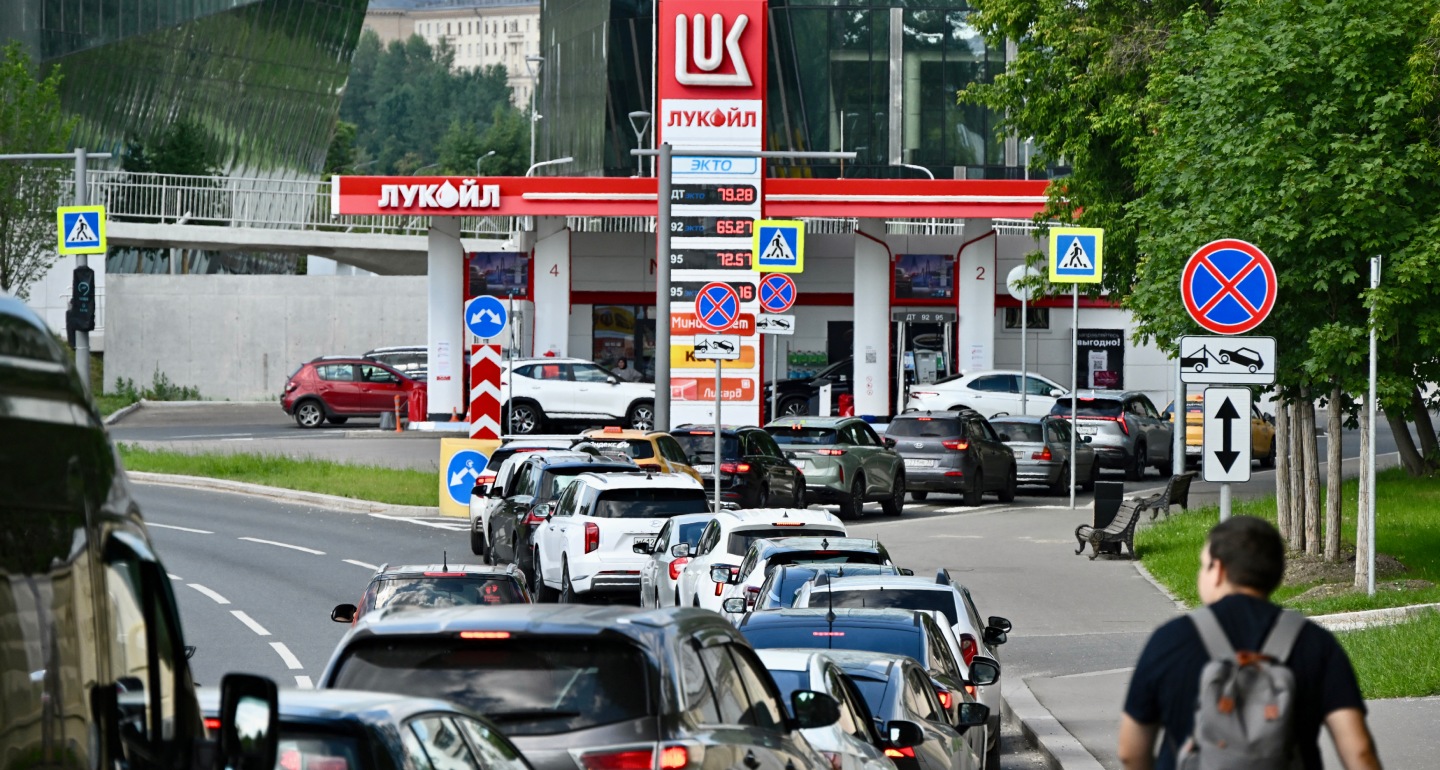
Official discussions about mini oil refineries are unlikely to come to anything—but the mere fact they’re happening reveals the regime is failing to deliver a functioning economy.

Sergey Vakulenko

Ongoing uncertainty in the Middle East allows Moscow to both increase its influence in Tehran and continue to enjoy the financial windfall of higher oil prices.

Nikita Smagin

A much-discussed disagreement over internet restrictions in Russia was never an existential threat for Putin: It was about elite groups protecting their interests.
Alexandra Prokopenko